


Student Loans
Juno Student Loans Review 2026
If you have been staring down high interest rates on private student loans or wondering whether refinancing is worth the hassle, Juno student loans might be the answer you have not heard enough about. The platform does not lend money itself. Instead, it pools borrowers together and makes banks compete for their business, the same way a large employer negotiates better health insurance rates for its workforce. The result can be interest rates significantly below what you would get walking into a lender’s website on your own. This review covers exactly how Juno works, what rates look like in 2026, who stands to benefit most, and where the platform still leaves questions unanswered.
Table of Contents
What Is Juno Student Loans?
Juno, originally launched as LeverEdge, is a free membership platform that turns individual borrowers into a collective bargaining unit. The company was founded in 2019 by Nikhil Agarwal and Chris Abkarians, two Harvard Business School students who used the same group negotiation strategy to fund their own MBA tuition. Rather than applying for loans one by one, they organized their classmates, approached lenders as a bloc, and secured rates no single student could have gotten alone.

Juno is not a bank or a direct lender. It negotiates with partner lenders including Earnest, Splash, KeyBank, Nelnet Bank, and Laurel Road, then presents the winning bids to members. As of June 2026, the platform reports over 269,000 members, more than $1 billion in loans facilitated, and roughly $26 million in cumulative borrower savings. Membership is free, and there is no obligation to accept any rate offer. You can join, see what rates you qualify for, and walk away if the numbers do not work.
How Juno’s Group Negotiation Model Works
The mechanics behind Juno are straightforward, but the concept is unusual enough in the lending world that it deserves a clear breakdown. Most borrowers are accustomed to shopping for loans in isolation. Juno flips that model on its head.
The Bidding Process
Juno sorts members into negotiating groups based on shared characteristics: loan type, estimated credit score range, cosigner status, and borrowing amount. Once a group reaches critical mass, Juno invites its partner lenders to submit competitive bids for the entire group’s business. Lenders know they are competing against each other for a large pool of qualified borrowers, which pushes rates lower than what any individual applicant would typically receive. Members then receive the negotiated rates and decide whether to accept or decline. There is zero obligation to move forward.

Signing Up Is Fast and Free
Registration takes under two minutes. Juno does not run a credit check or require a Social Security number to join. You provide an estimated credit score, annual income, the loan amount you need, and whether you plan to apply with a cosigner. That information helps Juno place you in the right negotiating group. After the negotiation round completes, you see your rate offers and can compare them before submitting a formal application with the lender.
The Rate Match Guarantee
Juno offers a rate match guarantee through its primary lending partner. If you find a lower rate from a competing lender after receiving Juno’s negotiated offer, the partner may match that rate. No other student loan marketplace currently offers a comparable guarantee. It functions as a safety net for borrowers willing to do a little extra legwork before signing.
Juno Student Loans: 2026 Rates and Terms
The headline number for 2026 is a variable rate starting at 2.48% APR for qualified borrowers in the group negotiation round, as reported by The College Investor. For refinancing, variable rates start as low as 1.89% APR, with fixed rates available at competitive tiers depending on credit profile and loan term. Those figures rank among the lowest advertised rates in the private student loan market this year.
Loan terms for refinancing range from 5 to 15 years, giving borrowers flexibility to prioritize lower monthly payments or faster payoff timelines. Cash incentives sweeten the deal further. Members who refinance through Splash can receive up to $1,000 cash back. Borrowers who choose Earnest or Laurel Road through Juno qualify for a 0.25% rate reduction.
A critical caveat applies to every rate mentioned here. The 2.48% APR figure represents the best-case scenario for borrowers with excellent credit, strong income, and ideally a cosigner. Your actual rate depends on your individual creditworthiness, debt-to-income ratio, and the specific lender’s underwriting criteria. Rates are not guaranteed until you submit a full application and receive final approval.
Types of Loans Available Through Juno
Juno covers a broad spectrum of borrowing needs, which makes it relevant for students at different life stages. Undergraduate loans are available for current students who have maxed out federal aid and still face a funding gap. Graduate and professional degree loans cover MBA, law, medical, and dental school financing, often with specialized terms for high-earning career tracks.
Parents looking for alternatives to federal Parent PLUS loans can use Juno to find private loans with potentially lower rates. Refinancing options serve graduates who want to consolidate existing federal or private loans and reduce their interest costs. International student loans and degree abroad programs are available, and Juno is one of the few platforms that explicitly offers DACA loan options. Medical professionals get special treatment through Laurel Road partnerships, including the ability to make $100 monthly payments during residency and fellowship training.
Pros and Cons of Using Juno Student Loans
Pros
Juno costs nothing to join, charges no hidden fees, and imposes no obligation to accept any rate offer. The group negotiation model can deliver rates up to 4% lower than standard market rates, according to the company’s claims. The rate match guarantee adds a layer of price protection that no direct lender provides. Signing up takes minutes and requires no credit check, so your credit score stays untouched until you decide to formally apply. The lender network includes established names like Earnest, Splash, and Laurel Road, not obscure financial institutions.
Cons
You cannot see your rate until after you join and a negotiation round completes. That means some uncertainty and a potential waiting period. The lender network, while reputable, is smaller than what you would find on a marketplace like Credible, which aggregates offers from more than ten lenders. Independent rate data is scarce. The 2.48% APR figure comes from a single source and may represent an ideal applicant rather than a typical borrower. Certain loan types, including international student refinancing, require a minimum number of sign-ups before negotiations begin, which can delay the process. Finally, Juno is not a replacement for federal loans. You should exhaust federal Direct Loan eligibility first, because private loans lack income-driven repayment plans and forgiveness programs.
Juno Student Loans vs. Federal Loans: What You Need to Know
Federal student loans come with protections that no private lender can replicate: income-driven repayment plans, Public Service Loan Forgiveness, deferment and forbearance options, and fixed interest rates set by Congress. Juno deals exclusively with private lenders. When you refinance federal loans through Juno, you permanently lose access to those federal benefits.
The smart approach is to borrow the maximum in federal Direct Loans before turning to private options. Use Juno to fill any remaining funding gap or to refinance existing private loans that carry high interest rates. If you are pursuing PSLF or expect to rely on income-driven repayment, do not refinance your federal loans through Juno or any private lender. The short-term interest savings will not outweigh the long-term loss of federal protections.
Who Should Use Juno Student Loans?
Borrowers with strong credit profiles stand to gain the most from Juno’s model, because the best negotiated rates go to applicants who meet lenders’ highest underwriting standards. Graduate students and professionals in law, medicine, and business are particularly well-suited, given their high future earning potential and the large loan balances that make even small rate reductions meaningful.
International students and DACA recipients will find Juno valuable simply because their private loan options are limited elsewhere. Borrowers refinancing existing private loans can use Juno to shop for lower monthly payments or reduced total interest costs. Women borrowers, who collectively hold roughly two-thirds of the nation’s outstanding student loan debt, an estimated $929 billion, may find Juno’s group negotiation model aligns with broader efforts to close the gender debt gap by making lower rates more accessible.
Juno Student Loans vs. Competitors
Juno and Credible take different approaches to the same problem. Credible offers a larger lender marketplace with instant rate comparisons from more than ten lenders. You see your options immediately after filling out a single form. Juno requires waiting for a group to form, but the negotiated rates may undercut what Credible’s marketplace can display.
SoFi operates as a direct lender with additional membership perks like career coaching and networking events. Juno is a marketplace, not a lender, and its competitive bidding process may produce rates below what SoFi offers directly. Applying to Earnest directly might be faster than going through Juno, but Juno’s group rate could beat what Earnest quotes to an individual applicant, and Juno partners with Earnest anyway. Splash Financial also uses a marketplace model, but Juno adds the group negotiation dynamic and the rate match guarantee that Splash does not offer.
Is Juno Student Loans Legitimate? Trust and Safety
Juno has been covered by major outlets including TechCrunch, the Wall Street Journal, the Boston Globe, Yahoo Finance, and Above the Law. The founders raised $2.5 million in seed funding and built the company on a concept they tested with their own tuition at Harvard Business School. Those signals point to a legitimate operation, not a fly-by-night startup.
The Better Business Bureau does not currently have a rating for Juno, which is common for newer fintech companies and not necessarily a red flag. Independent customer satisfaction data, such as NPS scores or aggregated reviews, is not yet available. For real user experiences, Reddit threads and Trustpilot reviews offer the most candid perspectives, though the sample size remains small. Juno is transparent about its affiliate relationships with review sites like The College Investor and Her First $100K, which is standard practice in the student loan industry.
Frequently Asked Questions About Juno Student Loans
Does joining Juno affect my credit score? No. Juno does not run a credit check when you sign up or when you receive rate offers. A hard inquiry only occurs if you submit a formal application with a partner lender.
Can I use Juno if I already have federal loans? Yes, but carefully weigh the trade-offs. Refinancing federal loans through Juno means giving up income-driven repayment and forgiveness options permanently.
How long does it take to get rates? Negotiation rounds vary. Some members report receiving offers within days, while others may wait weeks depending on the loan type and group formation speed.
Is there a minimum credit score? Juno does not set a minimum, but each partner lender applies its own credit requirements during the formal application process.
What happens if I do not like the rates? You are not obligated to accept anything. Simply decline the offer, and your membership remains active for future negotiation rounds.
Final Verdict: Should You Join Juno in 2026?
Juno is a legitimate, free tool that can save money for borrowers with good credit who are willing to wait for group negotiations to play out. The platform makes the most sense for graduate students, professionals refinancing existing private loans, and international or DACA borrowers who have fewer alternatives. It is not the right fit for anyone who needs immediate funding, has poor credit, or depends on federal loan protections that would be lost through refinancing.
The absence of independent rate data and customer satisfaction metrics leaves some uncertainty, but the risk of joining is zero. You pay nothing, your credit remains untouched, and you can walk away at any time. The smart move is to join Juno, see what rates you qualify for, and compare those offers against direct lender quotes and your existing federal loan terms before making a final decision. When you are ready to explore your options for lowering your monthly payments or cutting your total interest costs, comparing offers through a marketplace like Juno is a logical next step after you have reviewed the basics of how student loan refinancing works.

FreeTaxUSA Student Loan Interest
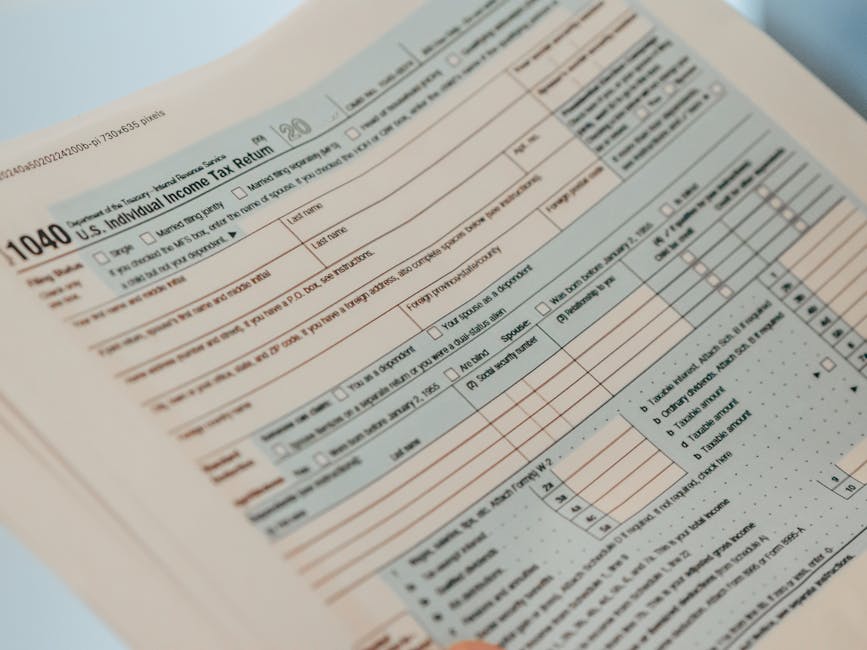
If you are staring at your screen right now, 1098-E form in hand, trying to figure out exactly where to claim the FreeTaxUSA student loan interest deduction for the 2026 tax year, you are in the right place. This is not a generic IRS explainer. This is a software-specific walkthrough built for someone actively filing their return, covering the exact menu path, the income limits that changed this year, and the real-world troubleshooting issues that trip people up: grayed-out menu options, multiple 1098-E forms, and the persistent myth about the $600 threshold. By the end, you will know exactly what to do, what to enter, and what to keep for your records.
Table of Contents
What Is the Student Loan Interest Deduction? (2026 Overview)
Common FreeTaxUSA Student Loan Interest Issues (Troubleshooting)
Final Checklist: Filing Your 2026 FreeTaxUSA Return with Student Loan Interest
What Is the Student Loan Interest Deduction? (2026 Overview)
The student loan interest deduction lets you reduce your taxable income by up to $2,500 for interest you paid during the tax year on qualified student loans. That $2,500 cap has not changed for 2026, and it is not indexed for inflation, so it stays put regardless of what the broader economy does.

This is an above-the-line deduction, which matters more than people realize. You do not need to itemize deductions on Schedule A to claim it. The deduction reduces your adjusted gross income directly on Schedule 1, which means it lowers your AGI before other calculations kick in. That can affect eligibility for other tax benefits tied to AGI thresholds.
A point of confusion that shows up repeatedly in tax forums: only the interest portion of your payments is deductible. Principal payments are not. If you paid $4,000 toward your loans in 2026 but only $1,800 of that was interest, your deduction is capped at $1,800, not the full $2,500 maximum. The deduction applies to loans taken out for qualified education expenses for yourself, your spouse, or your dependents, provided the loan is in your name.
FreeTaxUSA Student Loan Interest: Step-by-Step Entry Guide
Navigating to the Student Loan Interest Section
Log into your FreeTaxUSA account and open your 2026 return. The software uses a linear workflow, which means you cannot jump directly to the deduction section without completing the screens that come before it. This is by design, and it is the root cause of the most common complaint users have.
The exact menu path is: Deductions/Credits, then Common Deductions/Credits, then Student Loan Interest (1098-E). That path is consistent across both the free and paid versions of the software, and it has been confirmed repeatedly in FreeTaxUSA’s official help documentation and community forums.
If you reach the Common Deductions/Credits screen and the Student Loan Interest option appears grayed out or unclickable, do not panic. This almost always means you have not finished a required prior section. FreeTaxUSA enforces sequential completion. Go back and check your income entries, personal information, and any dependent screens. Once those are marked complete, the option will become active. Trying to force the issue by skipping around will only create frustration.
Entering Your 1098-E Information
You will need the 1098-E form or forms your loan servicer sent you. These forms report the total interest you paid during 2026. Most servicers mail these in January or make them available for download through your online account.
Here is the step that catches people off guard: FreeTaxUSA does not let you enter multiple 1098-E forms individually. If you have loans with two different servicers, say Nelnet and Aidvantage, and each sent you a separate 1098-E, you must add the interest amounts together and enter a single combined total. This is a FreeTaxUSA-specific limitation. Other tax software products sometimes allow form-by-form entry, but this one does not. Keep both original forms in your records even though you are entering only one number.
Enter the combined interest amount in the field provided. If the total exceeds $2,500, enter $2,500. The software may cap the entry automatically, but it is worth verifying. After you save and continue, the deduction will flow to Schedule 1 of your Form 1040 and reduce your AGI accordingly. You can review the impact on the summary screens before filing.
Eligibility Requirements for the 2026 Tax Year
Who Qualifies for the Deduction?
You must be legally obligated to pay interest on a qualified student loan. That means the loan is in your name, not your child’s, not your spouse’s separately. The loan proceeds must have been used for qualified education expenses, which include tuition, fees, room and board, books, supplies, and equipment required for enrollment. The student, whether you, your spouse, or your dependent, must have been enrolled at least half-time in a degree or certificate program at an eligible institution during the period the loan covered. The loan proceeds also need to have been used within a reasonable period before or after the expenses were incurred, which the IRS generally interprets as 90 days.
Who Does NOT Qualify? (Three Key Disqualifiers)
Three conditions disqualify you entirely, and they are non-negotiable. First, if you file as Married Filing Separately, you cannot claim the deduction. The IRS does not allow it under any circumstances for that filing status. Second, if someone else can claim you as a dependent on their tax return, you cannot claim the deduction, even if you made every loan payment from your own bank account. Third, your modified adjusted gross income must fall below the phase-out thresholds. If your MAGI exceeds the upper limit, the deduction is completely unavailable.
2026 Income Phase-Out Limits (Updated)
The phase-out ranges for 2026 are as follows. For single filers, heads of household, and qualifying widow(er)s, the phase-out begins at $85,000 MAGI and the deduction is fully eliminated at $100,000 MAGI. For married couples filing jointly, the phase-out starts at $175,000 MAGI and the deduction disappears at $205,000 MAGI. That joint upper limit of $205,000 is new for 2026, a $5,000 increase from the 2025 threshold of $200,000. The single-filer range did not change.
If your MAGI lands inside the phase-out range, you can claim a partial deduction. FreeTaxUSA calculates the reduced amount automatically based on your income entry, so you do not need to do the math yourself. MAGI is not simply your gross income. It includes adjustments like deductible IRA contributions, self-employment tax deductions, and a few other items. The software pulls this figure from your return data.
Common FreeTaxUSA Student Loan Interest Issues (Troubleshooting)
The “$600 Threshold” Confusion
A surprisingly persistent myth circulates every tax season: that you can only deduct student loan interest if your 1098-E shows $600 or more. This is wrong. The $600 figure is a reporting threshold that applies to lenders, not to taxpayers. Lenders are required to issue a 1098-E only if you paid $600 or more in interest during the year. If you paid less, they might not send you a form, but that does not mean the interest is nondeductible.
If you paid $400 in interest and received no 1098-E, you can still claim that $400. Log into your loan servicer’s website, pull your 2026 payment history or annual statement, and calculate the total interest paid. Enter that number in FreeTaxUSA. The IRS accepts the deduction as long as you have documentation to support it, such as loan statements or payment records. Keep those records with your tax file.
Why Is the Student Loan Interest Option Grayed Out?
This is the single most reported FreeTaxUSA-specific issue in community forums and on Reddit. A user navigates to the deductions screen, sees the Student Loan Interest line, but it is gray and unclickable. The cause, nearly every time, is an incomplete prior section. FreeTaxUSA is built on a sequential interview model. If you have not finished entering your income, or if you skipped a personal information screen, the software will not unlock later sections.
The fix is straightforward: go back through your return systematically. Look for any section marked incomplete or any screen you may have clicked past without finishing. Complete those entries, then return to the deductions menu. The option will be available. Do not attempt to bypass the flow by jumping to a different menu. The software simply will not allow it.
Handling Multiple 1098-E Forms
If you have loans serviced by multiple companies, you will receive a separate 1098-E from each one. The FreeTaxUSA workflow requires you to combine them. Add the interest amounts from all forms and enter the single total. Do not try to enter them one at a time or create separate entries. The software is not designed for that.
Keep every original 1098-E in your records. If the IRS ever questions the deduction, you will need to show documentation for the full amount claimed. If the combined interest exceeds $2,500, enter only $2,500. The deduction is capped, and entering more will not increase your benefit.
Student Loan Interest Deduction vs. Education Credits
A common area of confusion is how the student loan interest deduction interacts with education credits like the American Opportunity Tax Credit and the Lifetime Learning Credit. The short answer is that you can claim both in the same tax year, but you cannot double-dip on the same expenses. The loan interest you deduct must be tied to education costs that were not already used to claim a credit.
The two benefits work differently. The student loan interest deduction reduces your AGI, which indirectly lowers your tax bill based on your marginal rate. Education credits reduce your tax liability dollar for dollar, and the American Opportunity Credit is partially refundable. If you qualify for both, FreeTaxUSA will walk you through the options and help you compare outcomes. The software generally optimizes for the largest refund or lowest balance due.
One scenario worth flagging: parents who take out Parent PLUS loans. The deduction is available only if the loan is in the parent’s name and the parent is legally obligated to pay. If the loan is in the student’s name and the parent makes the payments, the parent cannot claim the deduction. The student could, provided they meet the eligibility rules and are not claimed as a dependent.
2026 Tax Year Updates and Changes to Know
The maximum $2,500 deduction holds steady for 2026. Congress has not adjusted the cap, and no legislative changes are expected to the deduction’s structure this year. The only notable shift is the phase-out range for joint filers, which moved from $170,000–$200,000 in 2025 to $175,000–$205,000 in 2026. That extra $5,000 on the upper end may keep some married couples eligible who would have phased out last year.
Forbearance and deferment have a specific impact that official help pages often overlook. If your loans were in forbearance or deferment for all of 2026 and you made no payments, you cannot claim the deduction, even if interest accrued during that time. The deduction requires actual payment of interest. Accrued interest that was capitalized, meaning added to your principal balance, does not count as paid.
Loan forgiveness is a separate issue but one that intersects here. If you received student loan forgiveness in 2026 under an income-driven repayment plan or Public Service Loan Forgiveness, the forgiven amount may be taxable income depending on the specific program and any temporary exclusions in effect. That forgiven debt is not part of the interest deduction and requires different handling in FreeTaxUSA. The software will prompt you if you indicate you received a 1099-C for canceled debt.
Frequently Asked Questions
Can I claim the deduction if I am still in school?
Yes, as long as you made interest payments on a qualified student loan and meet the other eligibility requirements. The loan must have been disbursed during a period when you were enrolled at least half-time. Being currently enrolled does not disqualify you.
What if my lender did not send me a 1098-E?
You can still claim the deduction. Calculate the interest you paid from your loan statements or online account, enter the amount in FreeTaxUSA, and keep your documentation. The absence of a 1098-E does not mean the interest is nondeductible.
Do I need to itemize to claim this deduction?
No. The student loan interest deduction is an above-the-line adjustment to income. You can claim it even if you take the standard deduction, which most taxpayers do.
Can parents claim the deduction for loans they took out for their child?
Only if the parent is the borrower and the loan is in the parent’s name. Parent PLUS loans in the parent’s name qualify. Loans in the student’s name do not qualify the parent, even if the parent makes every payment. If you are considering refinancing a parent loan, you might review options for a student loan consolidation that keeps the loan in your name.
What about refinanced or consolidated loans?
Refinanced loans qualify as long as the new loan was used exclusively to repay qualified education loans. If you refinanced and took out additional cash for non-education purposes, only the portion of interest attributable to the qualified education debt is deductible. Consolidation loans work the same way: interest paid on a federal Direct Consolidation Loan or a private consolidation loan is deductible if the underlying loans were qualified education loans.
Final Checklist: Filing Your 2026 FreeTaxUSA Return with Student Loan Interest
Before you file, run through this list. Confirm you are not filing as Married Filing Separately. Confirm no one else can claim you as a dependent. Calculate your 2026 MAGI and verify it falls below the phase-out threshold for your filing status. Gather all 1098-E forms, or your loan statements if no form was issued. Add interest amounts from multiple forms into a single total. Enter that total in FreeTaxUSA under Deductions/Credits, Common Deductions/Credits, Student Loan Interest. Do not enter more than $2,500. If the option was grayed out, confirm all prior sections are complete. Review the deduction on Schedule 1 before submitting. Keep all documentation for at least three years from the date you file, which is the standard IRS audit window.
If you are drowning in student loan payments and have stumbled across viral videos claiming a secret legal trick can wipe your balance clean, you are not alone. The term “chain of custody student loans” has exploded across Reddit, TikTok, and Instagram, promising a loophole that forces lenders to forgive debt if they lose the original paperwork. While there is a kernel of truth buried beneath the hype, the reality is far more nuanced than a thirty-second video suggests. This defense is a legitimate legal strategy, but it applies almost exclusively to private student loans, not federal debt, and it is a courtroom weapon, not a magic wand you can wave at a collections agent. This guide breaks down how chain of title works, when it can actually help you, and the steps to take if you think your lender cannot prove they own your loan.
Table of Contents
A Step-by-Step Guide to Requesting Chain of Title Documentation
Chain of Custody vs. Other Discharge Options (Which Is Right for You?)
Disclaimer: This article is for informational purposes only and does not constitute legal advice. Student loan laws are complex and vary by jurisdiction. Consult a qualified attorney before making decisions about litigation.
What Is a “Chain of Custody” for Student Loans?
In the world of debt collection, chain of custody, often called chain of title, refers to the documented history of every transfer of a loan from the original lender to the current owner or collector. Think of it as a paper trail that must remain unbroken. When a bank originates a private student loan, it may later sell that loan to an investment trust, which might bundle it with thousands of others and sell it again. Each time the loan changes hands, specific legal documents must record the transaction. If any link in that chain is missing, the entity trying to collect may lack the legal standing to sue you.

This matters because standing is a fundamental requirement in any lawsuit. A plaintiff cannot walk into court and demand payment on a debt unless it can prove it actually owns that debt. If the chain of title is broken, a judge may dismiss the case entirely. It is critical to distinguish this from debt validation, which is a consumer right under the Fair Debt Collection Practices Act allowing you to request basic information about a debt, and verification, which simply confirms the amount owed. Chain of custody is a litigation defense raised after you have been sued.
The most important caveat for borrowers in 2026 is that this defense applies almost exclusively to private student loans. Most federal Direct Loans are never sold; they are serviced or reassigned by the Department of Education, which retains ownership throughout the life of the loan. Even older FFELP loans, while technically federally guaranteed and sometimes held by private entities, rarely present the documentation gaps seen in the private market. If you hold federal loans, the chain of custody argument is largely irrelevant to your situation.
Why This Topic Is Trending in 2026: TikTok vs. Reality
Social media has latched onto chain of custody as the ultimate debt hack, and the search data confirms the obsession. Related queries like “Chain of custody student loans reddit” dominate the conversation, with borrowers swapping stories and strategies in informal forums. The appeal is obvious: the idea that a technical paperwork error could legally erase tens of thousands of dollars in debt feels like finding a cheat code for a rigged system. But the gap between what influencers claim and what courts actually do is wide.
The “Loophole” Myth

The viral narrative goes something like this: call your lender, demand the original promissory note, and if they cannot produce it within thirty days, your debt vanishes. This is dangerously misleading. A debt collector’s inability to immediately provide documentation does not automatically erase your student loan debt. The obligation still exists. What a broken chain of title does is create a significant legal hurdle for the collector if they decide to sue you. It is a defense you raise in court, not a button you press to make the balance disappear. Borrowers who ignore lawsuits hoping the paperwork problem will save them often end up with default judgments, wage garnishments, and ruined credit.
The Real Legal Precedent
The concept did not come from nowhere. As far back as 2017, reports emerged of judges dismissing lawsuits against former students because the plaintiffs could not prove they owned the loans. The most prominent example involves the National Collegiate Student Loan Trust, or NCSLT, an entity that holds billions of dollars in private student loans. NCSLT has repeatedly lost lawsuits when defendants challenged its ownership claims. In many cases, the trust could not produce the original promissory notes, the forward flow agreements governing bulk purchases, or witness testimony from someone with direct knowledge of the records. These victories, however, occurred during the litigation stage, after borrowers or their attorneys formally contested standing in court. They were not the result of a phone call or a template letter sent to a servicer.
How a “Forward Flow Agreement” Makes or Breaks Your Case
One of the most powerful but least understood concepts in chain of title litigation is the forward flow agreement. When a bank sells a portfolio of thousands of loans to a trust like NCSLT, the transaction is governed by a forward flow agreement, or FFA. This contract specifies exactly which loans are being transferred, the terms of the sale, and the warranties made by the seller. A generic bill of sale that simply states “Loans were transferred” is often legally insufficient. Courts increasingly demand to see the actual FFA, including the specific schedule of loans attached to it, to verify that the plaintiff truly owns the debt in question.
What Courts Require to Prove Ownership
To establish standing, a debt buyer must typically produce three things. First, a specific schedule of loans attached to the forward flow agreement that identifies the borrower’s account. Second, a complete chain of endorsements if the loan was structured as a promissory note, showing each transfer from origination to the current holder. Third, testimony from a witness with personal knowledge of the record-keeping process, not just someone reading from a screen. Without these elements, a plaintiff’s claim to ownership can crumble under scrutiny.
Why Collectors Often Fail
The private student loan market is messy. Loans are originated, bundled, sold, and re-sold multiple times over the course of years. Paperwork gets lost. Signatures are missing. Electronic records are incomplete or improperly transferred between servicing platforms. When a trust like NCSLT attempts to sue hundreds of borrowers at once, it often relies on robo-signed affidavits or generic documentation that does not hold up in court. This is the gap that a skilled consumer protection attorney can exploit. The debt may still exist in an economic sense, but if the plaintiff cannot prove it owns the debt, it cannot win a judgment.
A Step-by-Step Guide to Requesting Chain of Title Documentation
One of the biggest gaps in the information available online is a practical, step-by-step guide for borrowers who want to challenge ownership. Here is how to approach the process methodically.
Step 1: Determine Your Loan Type. Before you do anything else, confirm that your loan is actually private. Log into your Federal Student Aid account at studentaid.gov to see your federal loans. Check your credit report for the tradeline in question. If the lender is a bank like Wells Fargo, Discover, or Citizens, or if the loan is held by a trust like NCSLT, it is likely private. If your loan is a federal Direct Loan or FFELP loan, the chain of custody defense will not apply. In that case, your energy is better spent exploring Income-Driven Repayment plans or Borrower Defense.
Step 2: Send a Formal Debt Validation Letter. If a third-party debt collector contacts you, you have the right under federal law to request validation. Your letter should go beyond asking for the amount owed. Specifically request the full chain of assignment, including the identity of the original lender, every intermediate owner, and the current legal owner. You can use language such as: “I am requesting the complete chain of title for this account, including the forward flow agreement governing the transfer of this specific loan and all schedules identifying my account.” Send this letter via certified mail with return receipt requested.
Step 3: If Sued, Do Not Ignore the Summons. This is the most critical step. The chain of custody defense is most effective in court, and you can only raise it if you respond to the lawsuit. If you ignore the summons, the plaintiff will win a default judgment regardless of how weak its paperwork might be. File an answer within the deadline specified in the court documents, and assert lack of standing as an affirmative defense.
Step 4: Work with an Attorney. Chain of title litigation is complex. Pro se litigants, those representing themselves, rarely succeed against experienced debt collection firms. Look for a consumer protection attorney who specializes in FDCPA violations and student loan defense. Many offer free consultations and work on contingency if they identify violations. The cost of hiring a lawyer is often far less than the cost of a judgment against you.
Chain of Custody vs. Other Discharge Options (Which Is Right for You?)
No single strategy works for every borrower, and no top search result currently compares these options side by side. Understanding the alternatives helps you choose the right path.
Borrower Defense to Repayment (Federal Loans)
If your loans are federal, Borrower Defense is your primary legal pathway for discharge based on misconduct, not paperwork gaps. This program applies when a school engaged in fraud, misrepresentation, or deceptive recruitment. Unlike chain of custody, you do not need to prove ownership issues. You submit an application directly to the Department of Education, and if approved, your federal loans can be fully discharged. The process can take years, but it remains one of the most viable options for borrowers defrauded by for-profit colleges.
Statute of Limitations
The interplay between chain of title and state statutes of limitations is a critical gap in the online conversation. Every state sets a time limit on how long a creditor has to sue you. Even if the chain of title is broken, the underlying debt still exists. A collector may not be able to win in court, but depending on your state’s laws, it may still attempt to collect or report the debt to credit bureaus. If the statute of limitations has expired, you have an absolute defense to a lawsuit regardless of the paperwork. Always check your state’s laws before engaging with a collector.
Bankruptcy (New 2026 Attestation Process)
A separate development in 2026 is the continued evolution of the bankruptcy discharge process for student loans. The Department of Justice and Department of Education have implemented an attestation form that allows borrowers to demonstrate undue hardship more efficiently than in the past. This pathway has nothing to do with broken chain of title. It requires proving that repaying the loans would prevent you from maintaining a minimal standard of living. The new process is less adversarial, but it still demands thorough financial documentation and, ideally, legal representation.
What Happens to Your Credit Report If a Loan Is Dismissed?
A question almost no one addresses is what happens to your credit after a successful chain of custody challenge. The answer is not as clean as borrowers hope.
If a lawsuit is dismissed for lack of standing, the court is not ruling that the debt is invalid. It is ruling that this specific plaintiff cannot prove it owns the debt. The original creditor still technically holds the obligation. The account may be sold to another debt buyer who has better documentation, or the original lender may charge it off. A dismissal does not automatically remove the negative tradeline from your credit report. Late payments and charge-offs typically remain for seven years from the date of the first delinquency.
To clean up your credit, you may need to file a separate dispute with the credit bureaus. Argue that the entity reporting the debt cannot verify ownership, especially if the court already found their documentation lacking. This is a separate process from the lawsuit itself and requires persistence. Some borrowers succeed in getting the tradeline deleted; others find it remains even after a court victory.
Key Takeaways for Borrowers in 2026
The chain of custody defense is a powerful tool in the right circumstances, but it is a legal defense raised in court, not a quick fix for aggressive collections. It primarily works for private loans held by entities like NCSLT that have documented histories of sloppy record-keeping. Do not rely on TikTok hacks that promise instant debt elimination. If you are being sued, hire a lawyer who understands standing and forward flow agreements. If you hold federal loans, shift your focus to Income-Driven Repayment, Borrower Defense, or the new bankruptcy attestation process. Above all, never ignore a lawsuit. A default judgment is the worst possible outcome, even if you are certain the chain of title is broken.
Frequently Asked Questions (FAQ)
Q: Can I get my federal student loans discharged using a chain of custody argument?
A: No. Federal Direct Loans are owned by the Department of Education and are never sold. The chain of custody defense does not apply to them.
Q: What is a “Forward Flow Agreement”?
A: It is the contract governing the bulk sale of loans between a bank and a debt buyer. Courts often require this specific document, not just a generic bill of sale, to prove ownership.
Q: Does a broken chain of custody remove the debt from my credit report?
A: Not automatically. You may need to file a separate dispute with the credit bureaus, and even then, removal is not guaranteed.
Q: Is this the same as “debt validation”?
A: No. Debt validation is a pre-litigation right under the FDCPA to verify the debt amount and collector’s authority. Chain of custody is a litigation defense regarding who actually owns the debt.
If you are exploring ways to manage or eliminate your private loan burden, understanding your full range of options is essential. Many borrowers ultimately decide to refinance private student loans to secure a lower interest rate and simplify their payments, especially if a chain of title challenge is not viable for their situation.
Does Chase Bank Offer Student Loans?
If you landed here asking “does Chase bank offer student loans,” the answer is straightforward: No, Chase does not offer new student loans and has not done so since 2013. That might feel like a dead end, but knowing why Chase left the market and where to turn next changes everything. This article covers what happened to old Chase loans, why major banks exited student lending, the best alternatives available in 2026, and a few angles most guides miss, including whether you can use a Chase credit card to pay your loans.
Table of Contents
The Short Answer: Chase Exited the Student Loan Market in 2013
What Happened to Your Chase Student Loan? (Navient Guidance)
The Short Answer: Chase Exited the Student Loan Market in 2013
Chase stopped originating new student loans in 2013 and sold its entire existing portfolio to Navient, a major loan servicer. If you had a Chase student loan, your loan terms did not change, but your servicer did. You now make payments to Navient, not Chase.

For new applicants, Chase accepts no student loan applications. This policy covers undergraduate loans, graduate loans, and parent loans. The bank has shown no public interest in re-entering the market, and given the broader industry trends, that is unlikely to shift in 2026.
Chase is not alone here. Wells Fargo and Bank of America also exited student lending around the same period, leaving a landscape where most traditional big banks simply do not compete. That narrows the field, but it also clarifies where borrowers should focus their attention.
What Happened to Your Chase Student Loan? (Navient Guidance)
If you originally borrowed through Chase, your loan was transferred to Navient as part of the 2013 portfolio sale. The transfer did not alter your interest rate, principal balance, or repayment term. Those terms were locked in when you signed your original promissory note with Chase, and Navient is legally bound to honor them.
Finding and managing your loan now requires going through Navient’s systems. Start by visiting Navient’s website and creating an online account if you have not already. You will need your Social Security number and the loan account number, which should appear on any statements Navient has mailed. If you cannot locate your loan, call Navient’s customer service directly and provide your personal details to locate the account.

Once logged in, you can set up autopay, check your balance, download tax documents, and explore repayment options. Many legacy Chase borrowers report confusion about who holds their loan, so taking ten minutes to log in and confirm your status is worth the effort. If your loan was further transferred to another servicer, Navient will have a record of that transfer and can point you in the right direction.
One persistent point of confusion involves interest rates. Some borrowers assume their rate changed when the loan moved to Navient. It did not. The rate on your original Chase loan remains in effect unless you later refinanced with a different lender. Navient services the loan under the original terms.
Why Chase and Other Big Banks Left the Student Loan Market
The exit of Chase, Wells Fargo, and Bank of America from student lending was not a coincidence. After the 2008 financial crisis, new federal regulations increased capital requirements and compliance costs for banks. Student loans, with their long repayment timelines and relatively thin margins, became less attractive compared to credit cards, mortgages, and auto loans.
In 2013, Chase made the strategic decision to exit the market entirely and sold its portfolio to Navient, which specialized in servicing student debt. Other large banks followed a similar path, concluding that the operational burden of originating and servicing student loans did not justify the returns.
The void left by traditional banks was quickly filled by online lenders and fintech companies. SoFi, College Ave, Ascent, and Citizens Bank built digital-first platforms with faster applications, competitive rates, and features like unemployment protection and cash-back rewards. By 2026, the private student loan market is dominated by these online players, alongside the enduring foundation of federal student aid.
Best Alternatives to Chase Student Loans (2026)
Since Chase is not an option, the path forward depends on whether you are borrowing for the first time or looking to refinance old debt. The rule of thumb has not changed: exhaust federal loans first, then turn to private lenders if you still have a funding gap.
Federal Student Loans (Always Your First Step)
Federal student loans remain the best starting point for nearly every borrower. They require no credit check for Direct Subsidized and Unsubsidized Loans, carry fixed interest rates set by Congress, and offer protections that private lenders simply cannot match. Those protections include income-driven repayment plans, deferment and forbearance options, and access to Public Service Loan Forgiveness.
For undergraduates in 2026, Direct Subsidized Loans carry a fixed rate around 5.50 percent, though rates adjust annually based on the 10-year Treasury note auction each spring. Subsidized loans have a key advantage: the government covers your interest while you are in school at least half-time and during the six-month grace period after graduation.
Applying for federal loans starts with the Free Application for Federal Student Aid, or FAFSA. After submitting the FAFSA, you receive a FAFSA Submission Summary, and your chosen schools send financial aid award letters detailing your federal loan eligibility. Accept the federal loans offered before considering any private options.
Top Private Lenders for 2026
If federal loans and other aid do not cover your full cost of attendance, private student loans can bridge the gap. The lenders below consistently rank among the best for rates, terms, and borrower benefits in 2026.
SoFi stands out for borrowers with good credit, typically a score of 670 or higher. SoFi offers unemployment protection that pauses payments if you lose your job, plus member perks like career coaching and financial planning. Rates are competitive, and the online application is fast.
Citizens Bank offers multi-year approval, meaning you apply once and can secure funding for future academic years without a new hard credit pull each time. This is a strong option for existing Citizens customers who want to simplify the borrowing process.
College Ave provides flexible repayment terms ranging from five to fifteen years and charges no origination fees. The lender allows you to choose your repayment plan during the application, giving you control over how quickly you pay down the balance.
Ascent is a solid choice for students without a cosigner. Ascent evaluates factors beyond credit score, such as academic performance and earning potential, making it more accessible for undergraduates who have not yet built a credit history. Ascent also offers cash-back rewards on certain loans.
Credit Unions and Community Banks
Some local credit unions still offer student loans, often with lower APRs than national online lenders. The catch is that you typically need to be a member to apply, and membership may require living in a specific area or working for a particular employer. If you already belong to a credit union, check their education lending page. The rates might surprise you.
Federal vs. Private Student Loans: A Quick Comparison
Understanding the structural differences between federal and private loans helps you make a smarter borrowing decision. The table below summarizes the key points, but the narrative is simple: federal loans protect you; private loans fill gaps.
Federal student loans carry fixed interest rates, with undergraduate rates hovering near 5.50 percent in 2026. Private loan rates span a wide range, from roughly 2.50 percent on the low end for variable-rate loans with excellent credit to as high as 17.99 percent for fixed-rate loans with weaker credit profiles.
Federal loans require no credit check for most borrowers. Private lenders almost always require a credit score of at least 670, and many students need a cosigner to qualify.
Repayment flexibility is where federal loans pull far ahead. Income-driven repayment plans cap your monthly payment at a percentage of your discretionary income. Deferment and forbearance options protect you during financial hardship. Private lenders offer limited forbearance, typically capped at twelve to twenty-four months over the life of the loan, and income-driven options are rare.
Forgiveness programs, including Public Service Loan Forgiveness, apply only to federal loans. Private loans generally have no forgiveness pathway, which is a critical factor if you plan to work in public service, education, or nonprofit fields.
The strategy is consistent: max out federal loans first, then use private loans only for the remaining need.
Can You Use a Chase Credit Card to Pay Student Loans?
Here is an angle most articles miss. Even though Chase no longer offers student loans, you might still use a Chase credit card, like the Chase Sapphire Preferred, to make student loan payments. This is not a direct payment method through your loan servicer, but third-party services like Plastiq allow you to pay loans with a credit card for a processing fee, typically around 2.5 to 3 percent.
The math only works in specific situations. If you are chasing a sign-up bonus that requires a minimum spend, using a credit card to pay a chunk of your student loans can help you hit that threshold quickly. The bonus points or miles may outweigh the processing fee. Similarly, if you have a card that earns elevated rewards on certain spending categories and you have a specific redemption in mind, the fee might be worth it.
The warning is clear: never carry a balance on a credit card to pay student loans. Credit card APRs run much higher than student loan rates, and paying interest on both the loan and the card balance is a fast track to financial trouble. This strategy is only for disciplined cardholders who pay their balance in full each month.
Student Loan Refinancing Options (If You Have Old Loans)
Chase does not offer student loan refinancing, a fact confirmed by the bank’s own website and multiple industry sources. If you hold legacy Chase loans now serviced by Navient, or any other private or federal student debt, refinancing could lower your rate or monthly payment, but you must go elsewhere.
SoFi, Earnest, and Laurel Road are among the top refinance lenders in 2026. Each offers fixed and variable rates, and approval depends heavily on your credit score, income, and debt-to-income ratio. Refinancing federal loans with a private lender strips away federal protections, including income-driven repayment and forgiveness eligibility. Only refinance federal loans if you are certain you will not need those benefits.
Rate shopping is essential. Use a marketplace like Credible to compare offers from multiple lenders without a hard credit pull. A difference of half a percentage point can save thousands over the life of a loan. If you are exploring refinancing, you can compare student loan refinance rates across multiple lenders to see what you qualify for before committing.
Frequently Asked Questions
Does Chase offer student loans for international students?
No. Chase does not offer any student loans, including for international students. International students should explore lenders that specifically serve non-U.S. citizens, often requiring a creditworthy U.S. cosigner.
What banks still offer student loans in 2026?
SoFi, Citizens Bank, College Ave, and Ascent are the top private lenders. Federal student loans remain available through the Department of Education.
Does Chase offer student loan refinancing?
No. Chase exited the student loan market entirely and does not refinance existing student debt.
What was the Chase student loan interest rate?
Rates varied by borrower credit profile and the year the loan was originated. All legacy Chase loans are now serviced by Navient under their original terms.
Conclusion
If you were searching “does Chase bank offer student loans,” the answer is a definitive no, and it has been that way since 2013. Chase exited the market, sold its portfolio to Navient, and has no plans to return. The good news is that the alternatives are stronger than ever. Start with the FAFSA to secure federal loans, then compare private lenders like SoFi, Citizens Bank, and College Ave for any remaining need. If you hold old loans, check your Navient account and consider whether refinancing makes sense for your situation. The path forward is clear, even if it does not run through Chase.
Edly Student Loans Review 2026: No-Cosigner IBR Options
Getting approved for a private student loan without a cosigner or a solid credit history can feel like hitting a brick wall. Most traditional lenders will deny your application outright or offer rates that make the debt nearly impossible to manage. Edly student loans take a different approach. Instead of obsessing over your FICO score, Edly evaluates your future earning potential based on your school’s career placement rates and your chosen major’s salary outcomes. The repayment structure is built entirely around income-based repayment, or IBR, meaning your monthly obligation adjusts with what you actually earn after graduation. There is a significant operational update for 2026: as of January 20, Edly transferred all loan servicing to American Education Services, or AES. This review covers the four Edly loan products, the eligibility model, the real cost of borrowing, and the protections you get, so you can decide if this lender matches your specific major, graduation timeline, and financial situation.
Table of Contents
Edly Student Loans Eligibility: How the Career-Focused Model Works
Edly Interest Rates and Total Cost: What You’ll Actually Pay
Edly Repayment Protections: Deferment, Forbearance, and the $30K Threshold
Edly vs. Alternatives: Is It Better Than Funding U or Traditional Loans?
What Are Edly Student Loans? A Unique IBR Model
Edly is a private student loan platform. The actual loans are issued by Transportation Alliance Bank, Inc., which operates as TAB Bank. What separates Edly from nearly every other private lender is that it exclusively offers Income-Based Repayment loans. There are no traditional fixed-payment options here. After you graduate and start working, your monthly payment is calculated as a percentage of your income, and that figure gets recalculated every year. This structure sits somewhere between a conventional installment loan and an Income Share Agreement, giving you payment flexibility that mirrors federal income-driven plans but within a private loan contract.
Edly splits its offerings into two distinct product lines. One covers traditional degree programs at the undergraduate and graduate levels. The other covers career training and certificate programs, which is unusual in the private lending space. Both tracks operate under the same IBR framework.

A critical detail that many borrowers overlook is the graduation window requirement. If you are applying without a cosigner, you must be within one year of completing your program. With a cosigner, that window extends to two years. This positions Edly as a finishing loan, designed to cover your final year or two of school rather than funding an entire four-year degree from the start.
Edly Loan Products: No Cosigner vs. Cosigned Options
Edly offers four specific loan products. The No Cosigner IBR Student Loan and the Cosigned IBR Student Loan serve students in undergraduate and graduate degree programs. The No Cosigner IBR Career Training Loan and the Cosigned IBR Career Training Loan serve students in certificate and vocational training programs.
The loan amounts differ significantly between the no-cosigner and cosigned options. Without a cosigner, you can borrow between $2,000 and $100,000 per academic year, with a lifetime borrowing cap of $100,000. If you apply with a cosigner, the maximum drops to $50,000 per academic year. The in-school payment requirement also varies. No-cosigner borrowers can pay as little as $10 per month while enrolled. Cosigned loans require a minimum in-school payment of $25 per month.
Edly Student Loans Eligibility: How the Career-Focused Model Works
The headline features are real: no minimum credit score is required, and a cosigner is not mandatory. Those facts alone make Edly student loans worth investigating for borrowers who have been turned away elsewhere. But the actual eligibility engine runs on a different fuel. Edly’s underwriting model evaluates the career placement rates and historical salary outcomes associated with your specific school and major. The company is betting on your future earnings trajectory, not your past credit behavior.
To qualify, you must be a U.S. citizen or permanent resident. You must be enrolled at one of the more than 1,500 eligible schools and in one of the 100-plus eligible major subject areas that Edly has vetted. This is the gatekeeper step. If your school or major is not on the list, the application stops there, regardless of your credit score or income potential.

There is also a geographic restriction. Edly does not originate loans for borrowers in Colorado, Connecticut, Illinois, Maine, Nebraska, Vermont, West Virginia, or Puerto Rico. If your permanent address is in one of those states, you will need to look elsewhere.
The career-focused model produces a notable approval statistic. Historical data shows that more than 24 percent of applicants without a cosigner meet Edly’s eligibility requirements. The industry average for no-cosigner private loan approval sits around 8.84 percent. For students with thin credit files or no credit history at all, that nearly threefold difference matters.
Edly Interest Rates and Total Cost: What You’ll Actually Pay
The fixed APR range on Edly student loans runs from 9.4 percent to 23 percent. That is a wide spread, and the upper end is expensive by any measure. Borrowers with excellent credit and a cosigner can often find fixed rates in the 4 to 7 percent range from traditional private lenders. Edly’s pricing reflects the risk it takes by de-emphasizing credit scores and cosigner requirements.
Here is where transparency becomes an issue. Edly does not publish a clear breakdown of how specific APRs are assigned to different borrower profiles. There is no public matrix showing what rate a nursing student at a high-placement school receives versus an art history major at a lower-ranked program. The variable APR, if one exists, is not disclosed at all. This lack of detail makes it difficult to estimate your exact cost before applying.
The loan term is fixed at 120 months, or 10 years. Because payments are income-based, the total amount you repay over that decade depends heavily on your post-graduation earnings. A borrower who lands a high-paying job immediately will pay more each month and retire the debt faster, potentially paying less total interest. A borrower with lower earnings will have smaller monthly payments but may accrue more interest over the full term.
To put this in perspective, consider a hypothetical borrower who takes out a $30,000 Edly loan at a 12 percent fixed APR. If their income after graduation supports a monthly payment of roughly $430, they would repay around $51,600 over 10 years. If their income supports only a $300 payment, the loan term remains 10 years, and the total repayment would be closer to $36,000 in principal plus accrued interest, though the exact mechanics depend on Edly’s specific IBR formula, which is not publicly detailed. These numbers are estimates meant to illustrate the variability.
One more cost factor: refinancing is not available through Edly. Once you take out the loan, you are locked into the 10-year IBR structure unless you pay it off early. If your income rises substantially and you want to refinance to a lower fixed rate with a traditional lender, you would need to find a third-party refinancing company willing to pay off the Edly balance. That path is possible but not guaranteed, and it is worth understanding before you sign.
Edly Repayment Protections: Deferment, Forbearance, and the $30K Threshold
The repayment safety net is one of Edly’s strongest selling points. If your income falls below $30,000 per year, you can apply to have your payments deferred. The same option applies if you lose your job entirely. This built-in protection means you are not immediately facing default the moment your financial situation deteriorates, which is a common nightmare with traditional private student loans.
Forbearance is also available, though the terms are more limited. Cosigned loans come with a maximum forbearance period of six months. The documentation required to qualify for deferment or forbearance is not fully transparent on Edly’s public-facing materials, which is a gap worth noting. You should expect to provide proof of income or unemployment status, but the exact paperwork requirements are clarified during the application process.
It is essential to understand what these protections are not. Edly loans are private loans. They do not qualify for federal forgiveness programs like Public Service Loan Forgiveness. They are not eligible for federal income-driven repayment plans, even though Edly’s IBR model sounds similar. If you have federal student loan options available, you should exhaust those first, as the safety nets and forgiveness pathways are broader and more established.
A significant gap in Edly’s public disclosures involves discharge policies. The company’s policies for loan discharge in cases of death, disability, or school closure are not publicly available. For a borrower signing a 10-year financial obligation, this is a critical risk factor. Most traditional private lenders have at least some form of death and disability discharge, even if limited. The absence of clear information here means you should ask directly and get the answer in writing before accepting a loan offer.
Edly vs. Alternatives: Is It Better Than Funding U or Traditional Loans?
Edly occupies a specific niche, and whether it fits you depends on your profile. The most direct comparison is with Funding U, another lender that offers no-cosigner private student loans. Funding U bases its decisions heavily on academic performance, looking at GPA and graduation progress. Edly bases its decisions on career placement rates and salary outcomes for your major. If you have strong grades but are in a major with less certain job prospects, Funding U might be the better path. If you are in a high-placement field like nursing, engineering, or computer science but have average grades or no credit history, Edly’s model works in your favor.
Traditional private lenders like Sallie Mae or College Ave operate on a completely different axis. They reward high credit scores and cosigners with low fixed rates. If you have a creditworthy cosigner and a good FICO score, you will almost certainly get a lower APR from a traditional lender than Edly’s 9.4 to 23 percent range. The trade-off is that traditional loans come with rigid monthly payments that do not adjust if your income drops.
A simple decision framework looks like this.
Choose Edly if you are within one year of graduating from a career-focused program at an eligible school, you cannot get a cosigner or have poor credit, and you want payments that adjust with your income after graduation.
Choose a traditional private loan if you have good credit or a willing cosigner and your priority is securing the lowest possible fixed interest rate.
Choose federal loans first, always. Federal Direct Loans offer fixed rates, income-driven repayment plans, and forgiveness options that no private lender can match. Max out your federal eligibility before turning to any private option, including Edly.
On third-party ratings, Edly holds a 3.8 out of 5 overall score from U.S. News. The breakdown reveals a weak spot: affordability scores 3.6, eligibility scores a strong 4.0, and customer service lags at 2.9. That customer service figure is worth weighing if you anticipate needing support during repayment. The Better Business Bureau rates Edly at an A-minus, though that rating reflects business practices rather than customer satisfaction directly.
Edly Student Loans Review 2026: Pros and Cons
The advantages of Edly student loans are clear. No cosigner is required, and the approval rate for no-cosigner applicants sits at 24 percent, roughly triple the industry average. The income-based repayment structure adjusts annually with your financial reality. Deferment kicks in automatically if your income drops below $30,000. The platform covers both degree programs and career training, which broadens access for non-traditional students.
The downsides are equally real. The APR range of 9.4 to 23 percent is high, especially for borrowers who could qualify elsewhere. Edly is unavailable in eight states plus Puerto Rico, cutting off a significant portion of the U.S. market. There is no refinancing option within Edly’s ecosystem. The discharge policies for death and disability remain undisclosed. Customer service ratings are below average. And the graduation window requirement means this is not a solution for freshmen or sophomores; it only works for students nearing the finish line.
How to Apply for Edly Student Loans (2026 Update)
The application process starts with eligibility verification. Before you fill out any financial information, you need to confirm that your school and major are on Edly’s approved list. This step happens on the Edly platform and is non-negotiable. If your program does not qualify, the application does not proceed.
Once eligibility is confirmed, you submit the full application. There is no minimum credit score check at this stage, which keeps the process accessible. After review, Edly presents a loan offer that includes your fixed APR and an estimated IBR payment based on projected post-graduation income for your field.
The major operational change for 2026 affects what happens after you accept the loan. Effective January 20, 2026, all loan servicing transferred to American Education Services. If you are an existing borrower, you need to update your account information and direct all future payments and inquiries to AES. The contact number is (800) 233-0557, and the online portal is at aesSuccess.org. New borrowers should expect their accounts to be managed through AES from the start. For day-to-day account management, you can still access the Edly Loan Manager login portal, but the backend servicing is handled by AES.
Frequently Asked Questions (FAQ)
Does Edly require a cosigner?
No. Edly offers specific No Cosigner loan products across both student and career training lines. Cosigned options exist for borrowers who want access to higher annual loan amounts, up to $50,000 per year.
What credit score is needed for Edly?
There is no minimum credit score requirement. Edly evaluates eligibility based on your school’s career placement rates and your major’s historical salary outcomes rather than your FICO score.
Can I get an Edly loan if I have bad credit?
Yes. Borrowers with bad or limited credit are the primary audience for Edly’s no-cosigner products. The underwriting model is designed to de-emphasize credit history.
Does Edly report to credit bureaus?
Most private lenders report to the major credit bureaus, and borrowers should assume Edly does as well. Confirm this detail in your specific loan agreement before signing.
What happens if I can’t find a job after graduation?
You can apply for deferment if your income falls below $30,000 per year. Forbearance is also available, with a maximum of six months for cosigned loans. Documentation of your financial situation will be required.
Conclusion: Is Edly Right for You?
Edly student loans are built for a specific borrower: a student within one year of graduating from a career-focused program at an eligible school, who cannot get a cosigner or has a limited credit history. If you are in nursing, engineering, computer science, or a similarly high-placement field, the career-outcome model works in your favor. The trade-off is straightforward. You get access and payment flexibility that traditional lenders will not offer, but you pay a higher APR and accept less transparency on total cost calculations and discharge protections. Before committing, check your school’s eligibility on the Edly platform, compare the offer against your remaining federal loan options, and factor in the 2026 servicing transition to AES. The right loan is the one that matches your career trajectory, not just your credit report.
Paying Off Student Loans Reddit: The 7 Best Strategies Borrowers Actually Swear By (2026)
You have seen the Reddit threads. Someone paid off $50,000 in two years on a $55,000 salary. Someone else is locked in a 200-comment argument about whether the snowball method is a trap. Another user swears you should never pay off your last loan before applying for a mortgage. The raw information is there, buried inside threads with 500-plus comments, contradictory advice, and zero citations. This article pulls out the strategies that keep surfacing in those discussions, validates them against what the threads miss, and gives you a structured plan you can act on in 2026. No scrolling required.
Table of Contents
Why Reddit Is the Best (and Worst) Place for Student Loan Advice
The Number One Debate on Reddit: Avalanche vs. Snowball (Spoiler: Reddit Hates Snowball)
The “Should I Invest or Pay Off Debt?” Debate (Reddit’s Most Fought-Over Topic)
The Missing Pieces: What Reddit Doesn’t Tell You (But You Need to Know)
Why Reddit Is the Best (and Worst) Place for Student Loan Advice
The search results for “paying off student loans reddit” tell a clear story. All ten organic results on the first page are Reddit threads. Not a single bank, government site, or financial publication cracks the list. Users are voting with their clicks, and they want real stories from real people, not sanitized bullet points from a .gov FAQ page.

The good part is exactly that. You get real salary-to-debt ratios. You read about someone paying off $30,000 in student loans on a $3,000 monthly take-home pay, and suddenly your own numbers feel less abstract. You see the emotional toll discussed openly: the anxiety of carrying six figures of debt, the relief of making the final payment, the fights with partners about prioritizing loans over vacations. You also find niche tactics, like pausing payments on subsidized loans whose interest the government still covers, that rarely appear in official guides.
The bad part is what Reddit leaves out. Across all the threads pulled for this query, there is zero mention of Public Service Loan Forgiveness. Zero discussion of the tax bomb that hits when income-driven repayment plans forgive your remaining balance. Nothing about refinancing federal loans with private lenders to cut your rate. Reddit threads optimize for math and motivation, but they often ignore long-term tax strategy and federal program nuance. Use Reddit for the real-world timelines and the peer validation. Cross-reference everything else with official sources before you make a six-figure decision.
The Number One Debate on Reddit: Avalanche vs. Snowball (Spoiler: Reddit Hates Snowball)
If you spend ten minutes on any student loan subreddit, you will find a thread where someone asks whether to pay off the smallest loan first or the one with the highest interest rate. The Reddit consensus is brutal and consistent: the snowball method, where you target the smallest balance first for a psychological win, is a trap.
The avalanche method, where you list every loan by interest rate and attack the highest rate first, is the mathematically optimal path. One thread in the data explicitly advises against paying the smallest balances first, framing it as an emotional crutch that costs you real money in extra interest. Another user describes paying off $30,000 in two years using pure avalanche logic on a roughly $50,000 to $60,000 annual salary. The math works when you direct every spare dollar at the loan charging 6.8 percent while making minimum payments on the one at 3.4 percent.

The rare defense of snowball on Reddit comes with a caveat. If you have severe ADHD, clinical depression, or a history of abandoning financial plans, the quick win of killing a small loan might be the only thing that keeps you in the game. Outside that narrow exception, Reddit treats snowball like a bad habit.
A practical layer Reddit adds to the avalanche framework is the federal-versus-private distinction. If you hold a mix of federal subsidized loans, federal unsubsidized loans, and private loans, attack the private loans first. Private lenders rarely offer forbearance, income-driven adjustments, or any meaningful safety net. Federal loans, even unsubsidized ones, come with protections that buy you time if you lose your job. Reddit threads confirm this hierarchy repeatedly: private debt is the real emergency.
The “Should I Invest or Pay Off Debt?” Debate (Reddit’s Most Fought-Over Topic)
No topic splits Reddit threads faster than the question of whether to invest spare cash or throw it at student loans. The arguments get personal, but a rough consensus emerges when you filter out the noise.
The 401(k) match rule is non-negotiable across nearly every thread. If your employer matches contributions up to a certain percentage of your salary, you take that match before you pay a single extra dollar toward loans. The logic is airtight. A 50 percent or 100 percent immediate return on your contribution beats any interest rate a student loan charges. Skipping the match to pay down a 6 percent loan is leaving free money on the table.
The house-versus-loans debate is messier. One unique Reddit thread in the data advises against paying off every loan before buying a home. The reasoning is specific to credit scoring. Mortgage underwriters look at your credit mix, and a student loan with a long history of on-time payments can actually boost your score compared to having no installment debt at all. Paying off the loan right before applying for a mortgage removes that positive data point and can cause a temporary score dip. The thread’s advice: keep a small, low-interest loan active if you plan to buy within twelve months, and focus your cash on the down payment instead.
Then there is the math-versus-mental-peace argument. Some Reddit users acknowledge that investing in a broad market index fund might return 7 to 10 percent annually over the long term, outpacing a 5 percent student loan rate. They still choose to pay off the debt. They describe the feeling of being debt-free as worth more than the spread between investment returns and loan interest. Reddit does not call this a mistake. It calls it a personal choice, and in 2026, with interest rates still elevated, the calculus tilts further toward paying down any loan charging 7 percent or more before aggressive investing beyond the employer match.
3 Niche Reddit Strategies You Won’t Find on .gov Sites
The Subsidized Loan Pause Trick
One Reddit thread in the data gives advice that sounds counterintuitive but holds up under scrutiny: do not pay a single extra dollar toward subsidized federal loans while their interest is paused. The government covers interest on subsidized loans during deferment, certain periods of income-driven repayment, and other qualifying statuses. If your subsidized loan sits at zero percent effective interest, every dollar you send to it is a dollar that could have gone to an unsubsidized loan accruing 6 percent or a private loan accruing 9 percent. Let the subsidized loan sit at zero and redirect your payments to the debt that is actually growing.
The Auto Loan Priority Framework
Another thread presents a scenario most debt-payoff guides ignore. A user asks whether to pay off a car loan or student loans first. The Reddit response is straightforward: compare the interest rates. If the auto loan charges 8 percent and the student loans average 5 percent, the car loan gets attacked first. This is not a student-loan-specific insight, but it matters because borrowers often treat student debt as a special moral category that must be eliminated before any other obligation. Reddit treats it like any other liability in a spreadsheet, ranked strictly by cost.
Income-Dependent Zero Percent Interest
A less common but important edge case appears in a thread mentioning that interest on some income-driven repayment plans can effectively drop to zero percent. If your adjusted gross income is low enough relative to your family size and loan balance, the government may subsidize all or part of your accruing interest. In that situation, making extra payments is pointless. You are paying down principal that is not growing, and if you are on a path toward eventual forgiveness, you are literally reducing the amount the government will wipe away. The Reddit advice here is blunt: stop paying extra, build your emergency fund, and invest the difference.
The Missing Pieces: What Reddit Doesn’t Tell You (But You Need to Know)
The Reddit threads analyzed for this query contain zero mentions of Public Service Loan Forgiveness. That is a staggering gap given how many borrowers qualify. If you work for a government agency, a public school, or a registered nonprofit, PSLF can forgive your entire remaining federal loan balance tax-free after 120 qualifying payments. For a borrower with $80,000 in federal loans and a modest nonprofit salary, aggressive payoff is the wrong strategy. Every extra dollar you pay reduces the amount forgiven, effectively setting that dollar on fire. Before you commit to any payoff plan, check whether your employer qualifies. The official PSLF Help Tool on studentaid.gov takes five minutes to use.
Tax implications are another blind spot. No thread discusses the student loan interest deduction, which lets you deduct up to $2,500 in interest paid each year, reducing your taxable income. No thread mentions the tax bomb on forgiven debt under income-driven repayment plans. If you pay the minimum on an IDR plan for 20 or 25 years and the remaining balance is forgiven, the IRS treats that forgiven amount as taxable income unless you qualify as insolvent. A borrower who lets a $50,000 balance grow and then has it forgiven could face a five-figure tax bill in the year of forgiveness. Reddit’s “pay it off fast” advice ignores this entirely.
Refinancing is also absent from the data. Borrowers with strong credit and stable income can often refinance private student loans from 7 or 8 percent down to 4 or 5 percent. Federal loans can also be refinanced, though doing so strips away income-driven repayment options and forgiveness eligibility. A borrower with a high-rate private loan and no PSLF eligibility should at least compare refinancing offers before committing to an aggressive payoff plan. The savings on interest can shorten the payoff timeline by years. You can explore current options through a student loan refinance comparison to see whether a lower rate changes your math.
Default, forbearance, and deferment strategies are missing as well. Reddit threads assume the borrower has cash flow and is choosing how to allocate it. For someone who cannot make payments at all, the advice hierarchy is different: apply for an income-driven plan to get the monthly payment as low as possible, use deferment or forbearance only as a short-term bridge, and never let federal loans enter default if you can avoid it. Default triggers collection fees, wage garnishment, and tax refund seizure. Reddit’s aggressive-payoff culture does not address the borrower who is just trying to survive.
How to Build a “Reddit-Approved” Payoff Plan for 2026
The threads give you fragments. Here is how to assemble them into a sequence that respects both the Reddit consensus and the gaps Reddit misses.
Step one: list every loan by interest rate, not by balance. Ignore the emotional urge to kill the smallest loan first. The spreadsheet does not care how you feel.
Step two: max out your employer’s 401(k) match before paying anything extra on loans. This is the one rule Reddit threads enforce without exception. Free money beats any interest rate.
Step three: attack private loans and unsubsidized federal loans first. Let subsidized federal loans sit at zero percent if the government is covering their interest. If you have a car loan or credit card debt with a higher rate than your student loans, those get priority too.
Step four: consider a side hustle. Reddit users frequently mention gig work, freelancing, or overtime as the engine behind their two-year payoff stories. No thread provides a detailed budget, but the pattern is consistent: one extra shift per week, one freelance project per month, or a weekend side gig generates the cash flow that turns a ten-year plan into a three-year plan.
Step five: check your PSLF eligibility before you send a single extra dollar to federal loans. If you qualify, paying extra is counterproductive. Run your employer through the PSLF Help Tool and calculate whether forgiveness is the better path. For borrowers considering this route, understanding the difference between consolidation and refinancing matters, since the wrong move can reset your PSLF payment count.
Step six: if you plan to buy a house within twelve months, do not pay off every loan. Maintain a small, low-interest balance with a history of on-time payments. The credit score boost from an active installment loan can improve your mortgage rate, and the cash you preserve for the down payment reduces your loan-to-value ratio. Both factors matter more to a lender than a zero student loan balance.
Frequently Asked Questions (Reddit Edition)
Should I pay off student loans or save for a house?
Reddit says: save for the house, but keep a small loan active to boost your credit mix. Pay off high-interest private loans first. The down payment takes priority over low-interest federal debt.
Is the snowball method ever worth it?
Rarely. Only if you have a documented history of abandoning financial plans and need a quick psychological win to stay motivated. Mathematically, avalanche wins every time.
What if my interest rate is zero percent on an income-driven plan?
Stop paying extra. Redirect that money to high-interest debt, an emergency fund, or your 401(k). Paying a zero-interest loan early is giving away liquidity for no benefit.
Can I negotiate student loan debt?
Not with federal loans. The Department of Education does not settle. Private lenders may negotiate a lump-sum settlement on defaulted debt, but it damages your credit and triggers a tax bill on the forgiven amount. Reddit rarely discusses this because it is a last resort.
Bottom Line: Reddit Is the Gym Buddy, Not the Trainer
Reddit gives you motivation, real-world timelines, and niche hacks like the subsidized loan pause and the auto loan priority framework. It shows you that someone with your salary and your debt load actually pulled it off. That matters.
But Reddit misses the big picture. It does not tell you about PSLF, the tax bomb on forgiven debt, or when refinancing makes more sense than aggressive payoff. Use the Reddit strategies for the how. Use official sources and a qualified professional for the when and why. The best plan borrows the community’s intensity and pairs it with the details the threads leave out.
SoFi Student Loans Reddit: Real Reviews, Rates, and Refinancing Tips for 2026
If you have been searching “sofi student loans reddit” to figure out whether the lender lives up to its marketing, you have probably encountered a chaotic mix of glowing success stories and furious warnings. One thread praises SoFi for slashing a borrower’s interest rate in half. The very next post calls it the worst financial company the user has ever dealt with. This article cuts through the noise. We cross-reference real Reddit experiences with current 2026 lending data, compare SoFi to competitors like Sallie Mae and Earnest, and fill in the critical gaps that Reddit threads almost always miss, including federal loan risks, actual APR ranges, and credit score requirements.
Table of Contents
Why Reddit Is the Go-To Source for SoFi Student Loan Reviews
What Reddit Users Say About SoFi Student Loans (The Good, the Bad, and the MOHELA Factor)
Step-by-Step: How to Apply for a SoFi Student Loan (Based on Reddit Experiences)
Why Reddit Is the Go-To Source for SoFi Student Loan Reviews
Reddit has become the default destination for borrowers who want unfiltered opinions on student loan companies. Unlike the polished reviews on financial comparison sites, Reddit threads capture raw, real-time sentiment from people who just finished an application, fought with customer service, or celebrated a lower monthly payment. The search results for this topic prove the point: nearly every organic listing is a Reddit thread, not a bank review page or a news article. Users clearly trust peer experiences over official marketing.

That trust, however, comes with a catch. Reddit data is entirely anecdotal. A user raving about a 4.6 percent fixed rate rarely mentions their credit score, income, or whether they used a cosigner. A complaint about poor service might leave out that the borrower missed two payments first. This article bridges that gap by pairing Reddit’s real-world sentiment with verified lending terms, regulatory context, and the hard numbers that anonymous posters rarely provide.
What Reddit Users Say About SoFi Student Loans (The Good, the Bad, and the MOHELA Factor)
The Positive: Low Rates, Easy Process, and Rewards
Reddit contains plenty of success stories from borrowers who used SoFi to refinance high-interest private loans. Several users report consolidating multiple variable-rate loans with rates between 10 and 13 percent into a single fixed-rate SoFi loan around 4.6 percent. One borrower detailed refinancing $85,000 in private debt, simplifying a mess of different servicers and due dates into one predictable monthly payment. Another user described receiving a $20,000 loan with what they called “really low interest” and minimal documentation, suggesting that the application process can be surprisingly smooth for well-qualified applicants.
A unique perk that appears repeatedly in positive threads is SoFi’s rewards program. Users mention earning cash rewards that can be applied directly to loan repayment, a benefit that few competitors offer in the same way. The loan dashboard and refinancing breakdown tools also receive consistent praise for making it easy to see exactly how much interest a borrower will save over the life of the loan.

The Negative: Customer Service Complaints and Servicer Confusion
The negative posts on Reddit are just as vocal, and they tend to cluster around two themes. First, customer service quality appears wildly inconsistent. Some users describe the experience as “awesome” and “straightforward,” while others label SoFi “hands down the worst financial services company” they have ever dealt with. Threads titled “Beware of SoFi” and “Don’t use SoFi” cite slow response times, unhelpful representatives, and difficulty resolving payment disputes.
The second major complaint involves a detail that catches many borrowers off guard: SoFi does not actually service its own loans. Instead, MOHELA, a well-known federal loan servicer, handles the backend administration. This creates confusion about who to call when a problem arises. Borrowers who expect to deal directly with SoFi’s sleek app and support team are often frustrated to find themselves navigating MOHELA’s phone tree instead.
The MOHELA Backend: What Reddit Gets Right (and Wrong)
Reddit correctly identifies MOHELA as the servicer behind SoFi student loans, and this is a valuable piece of information that most formal reviews omit. Knowing who will actually manage your payments, process your autopay, and handle your forbearance requests sets realistic expectations from the start. Where Reddit sometimes goes wrong is in interpreting the MOHELA relationship as a red flag. MOHELA is a legitimate, federally contracted servicer that manages millions of accounts. The arrangement is not a sign that SoFi is unstable or deceptive. It is simply an operational choice that many private lenders make. Understanding this upfront can prevent the kind of surprise and frustration that fuels those angry Reddit posts.
SoFi vs. Competitors: What Reddit Comparisons Reveal
Reddit users rarely evaluate SoFi in isolation. The most useful threads are comparison posts where borrowers weigh SoFi against Sallie Mae, Earnest, College Ave, and PenFed. These discussions reveal a few consistent patterns. SoFi is generally seen as the stronger option for refinancing existing private loans, while Sallie Mae is more commonly chosen for new private student loans, especially when a cosigner is involved.
One graduate student thread from a nurse anesthetist forum mentioned a 3 percent rate from College Ave, which sounds unbeatable until you read the fine print: that rate required a $25 monthly fee to maintain. SoFi does not charge maintenance fees, making its slightly higher advertised rate potentially cheaper over time. Earnest receives praise on Reddit for offering more flexible payment schedules, but SoFi tends to win on rewards, referral bonuses, and the overall user experience of its app and dashboard.
What Reddit comparisons almost never include are the hard numbers on origination fees, late payment penalties, and deferment policies. SoFi charges no origination fees, no prepayment penalties, and no late fees, a combination that not all competitors match. Sallie Mae, for example, may charge late fees depending on the loan type. These details matter when calculating the true cost of a loan, and they are exactly the kind of information that gets lost in anecdotal Reddit threads.
Critical Information Reddit Threads Don’t Cover (The Gaps)
Current APR Ranges and Fees (2026 Data)
Reddit users toss around interest rates from 3 percent to 13 percent, but these numbers are tied to individual credit profiles and loan types, not a universal menu. In 2026, SoFi’s fixed-rate student loan refinance APRs typically range from about 4.99 percent to 12.99 percent, with the lowest rates reserved for borrowers who enroll in autopay. The 0.25 percent autopay discount is applied as long as automatic payments remain active, but it can be removed if payments fail or autopay is canceled. Variable-rate loans may start lower but carry the risk of rising over time. SoFi charges no origination fees, no application fees, and no prepayment penalties, which means the rate you see is a fairly clean representation of your borrowing cost.
Credit Score and Income Requirements
Reddit threads almost never specify the credit score a poster had when they were approved or denied. Based on industry data and borrower reports, SoFi generally looks for a credit score of at least 650 for refinancing and closer to 680 or above for new private student loans. Higher scores in the 700s unlock the best advertised rates. Income requirements are similarly unspoken on Reddit. SoFi evaluates employment history, income stability, and debt-to-income ratio, typically preferring a ratio below 50 percent. Borrowers with scores below 640 are unlikely to qualify without a creditworthy cosigner, a reality that explains many of the denial stories on Reddit.
Federal Loan Implications (The Biggest Reddit Blind Spot)
The most dangerous gap in Reddit discussions about SoFi is the near-total absence of warnings about refinancing federal student loans. When you refinance a federal loan with a private lender like SoFi, you permanently lose access to federal protections. That includes income-driven repayment plans that cap your monthly bill at a percentage of your income, Public Service Loan Forgiveness for qualifying government and nonprofit workers, and the generous deferment and forbearance options that federal loans provide during economic hardship.
Reddit threads rarely mention this trade-off because most posters are refinancing private loans that never had these protections in the first place. But if you hold federal loans and are considering SoFi based on a Reddit success story, understand that the decision is irreversible. Once your federal debt becomes a private SoFi loan, there is no switching back. Only refinance federal loans if you have stable income, strong credit, and a high degree of confidence that you will not need federal safety nets. For a deeper look at this decision, our guide on refinancing federal student loans to private covers the risks in detail.
Step-by-Step: How to Apply for a SoFi Student Loan (Based on Reddit Experiences)
Reddit users consistently describe SoFi’s application process as fast and digital-first. The first step is a pre-approval check that uses a soft credit pull, meaning you can see your potential rates without any impact on your credit score. This aligns with what multiple Reddit posters confirm: you can shop your rate in minutes without commitment.
Once you decide to proceed, gather your documentation. Most borrowers will need recent pay stubs, tax returns or W-2s, and proof of enrollment or graduation if you are refinancing existing student debt. The “no docs” approval that one Reddit user mentioned is an outlier, not the norm. Expect to upload at least some income verification. After submitting a full application, SoFi performs a hard credit inquiry, and approval decisions often come within a day. Funded loans are typically disbursed within three to five business days, a timeline that Reddit users generally confirm as accurate.
After approval, your loan will be assigned to MOHELA for servicing. Set up autopay immediately through the MOHELA portal to lock in the 0.25 percent rate discount. Reddit users who missed this step or had autopay fail later reported losing the discount, sometimes without immediate notice. Monitoring your first few payments closely can prevent the kind of servicing headaches that fuel negative Reddit threads.
SoFi Student Loans Reddit FAQ (Based on Related Searches)
Is SoFi really the best way to refinance student loans?
It depends entirely on your credit profile and what kind of loans you hold. Reddit users with good credit and high-interest private loans tend to report excellent results. Those with federal loans or marginal credit often have a worse experience, not because SoFi is bad, but because they gave up protections or failed to qualify for the best rates.
SoFi vs. Sallie Mae: Which is better?
SoFi is generally better for refinancing existing loans and for borrowers who want rewards and a modern app experience. Sallie Mae is often the better choice for new undergraduate loans, especially when a cosigner is involved. Reddit comparisons favor SoFi for consolidation and Sallie Mae for origination.
Does SoFi have a referral bonus?
Yes. Reddit is full of users sharing referral links. As of 2026, the bonus is typically between $200 and $300 after your loan is funded, though terms can change. The person who referred you also receives a bonus, which is why referral codes are so common in Reddit threads.
What credit score do you need for SoFi?
A minimum score of around 650 is typical for refinancing, with 680 or higher needed for new loans. The best rates go to borrowers with scores above 700 and low debt-to-income ratios. Reddit denials often come from users who did not meet these thresholds.
Can you get a SoFi student loan with bad credit?
It is unlikely without a cosigner. Reddit threads show that applicants with scores below 640 are frequently denied or offered rates high enough to negate the benefit of refinancing. Adding a creditworthy cosigner is the most reliable path to approval for borrowers with damaged credit.
Final Verdict: Should You Trust the SoFi Reddit Hype?
Reddit is an excellent starting point for understanding how real borrowers experience SoFi, but it is not a substitute for hard data and personal due diligence. The platform’s strength, unfiltered honesty, is also its weakness: you rarely get the full financial picture behind a single post. SoFi is a strong choice for borrowers with good credit who want to refinance private loans, simplify their payments, and earn rewards along the way. It is a poor choice for anyone with federal loans who might need income-driven repayment or loan forgiveness, and it is unlikely to help borrowers with weak credit who cannot qualify for competitive rates. Reddit can tell you what might happen. The numbers will tell you what makes sense for your situation.
Private Student Loans Reddit: The Good, the Bad, and the $120K Reality (2026 Guide)
If you typed “private student loans reddit” into Google, you are not looking for a lender’s polished landing page or a bank’s smiling stock photo. You want the raw, unfiltered truth from people who have signed the promissory notes, made the monthly payments, and in some cases, lived to regret it. This guide pulls together the most upvoted warnings, the reluctant lender recommendations, and the hard-won repayment strategies from Reddit’s r/StudentLoans community. It also fills the gaps that Reddit threads often miss: credit score requirements, cosigner release fine print, state-based loan programs, and the real numbers behind federal versus private interest rates in 2026. The goal is to give you the full picture before you make a decision that could shape your finances for a decade or more.
Table of Contents
Why Reddit Is the Go-To Source for Private Student Loan Truth
The Dominant Reddit Narrative: “Avoid Private Loans If You Can”
The Predatory Loan Debate: Is It Fair to Call Private Loans “Predatory”?
Why Reddit Is the Go-To Source for Private Student Loan Truth
Search for “private student loans reddit” and the results tell a story of their own. All ten organic listings on page one come from Reddit threads, mostly from r/StudentLoans and a handful from r/privatestudentloans. Google is effectively saying that the most relevant, trustworthy content on this topic lives inside user-generated forums, not on bank websites or financial advice blogs.
Reddit earns that trust because it amplifies unfiltered experience. You will find the $120,000 debt horror story sitting right next to the $25,000 payoff success post, each with thousands of upvotes and hundreds of comments dissecting what went right or wrong. The platform functions as a collective risk-assessment engine. Prospective borrowers read the worst-case scenarios before they sign anything. Current borrowers find commiseration and practical advice. What Reddit does not provide, however, is hard data on origination fees, minimum credit score thresholds, or the specific mechanics of cosigner release policies. That is where this guide steps in, synthesizing the emotional truth of Reddit with the factual detail those threads leave out.
The Dominant Reddit Narrative: “Avoid Private Loans If You Can”
Why the Warning Is So Loud
Scroll through any thread tagged with “private loans” on r/StudentLoans and the chorus is unmistakable: exhaust every federal option first. The reasoning is not abstract. It is grounded in three structural disadvantages that private loans carry and federal loans do not.
First, private student loans are nearly impossible to discharge in bankruptcy. Chapter 7 and Chapter 13 offer little relief unless you can meet the Brunner test’s “undue hardship” standard, a legal bar so high that most bankruptcy attorneys advise clients not to try. Reddit users cite this as the number one reason to avoid private borrowing. If your life falls apart, the debt stays glued to you.

Second, interest rates on private loans can be punishing. Threads reference starting rates as low as 3.79% through Ascent or 3.99% through College Ave and local credit unions, but those numbers apply only to prime borrowers with strong cosigners. Subprime borrowers report rates in the double digits. Variable rates, which often look cheaper at origination, are described as a ticking time bomb, especially in the 2026 rate environment where Federal Reserve policy has kept borrowing costs elevated.
Third, private loans lack the federal safety net. There are no income-driven repayment plans, no Public Service Loan Forgiveness, and only limited, lender-specific deferment or forbearance options. Lose your job on a federal loan and you can adjust your payment to zero. Lose your job on a private loan and the servicer still expects a check.
The $120K Cautionary Tale
One of the most-referenced posts across the subreddit comes from a borrower who took out $120,000 in private student loans and now describes their life as “ruined.” The post is not long or dramatic. It is a flat, exhausted accounting of monthly payments that consume nearly all disposable income, a degree that never delivered the expected salary, and the slow realization that there is no escape hatch.
This story gets linked in thread after thread as a warning against attending expensive private universities without a clear return-on-investment calculation. The lesson the community draws is blunt: max out your federal Direct Loans first. For dependent undergraduate students in 2026, the aggregate federal limit is $31,000, with subsidized loans capped lower based on financial need. That may not cover every school’s tuition bill, but it sets a hard boundary. If you need more than that, Reddit’s consensus is to seriously reconsider the school you are choosing, not just the loan you are signing.
The “Least Evil” Lender Debate: Reddit’s Top Picks
Lenders That Get the Most (Reluctant) Praise
When Reddit users concede that private loans are unavoidable, the conversation shifts to a pragmatic question: which lender is the least bad? The word “best” rarely appears without scare quotes. Instead, threads ask for the “least evil” option, a framing that captures the resigned skepticism of the community.
SoFi surfaces repeatedly as a lender with a “good reputation,” particularly for refinancing existing private loans. Users cite a smooth application process and competitive rates for borrowers with strong credit profiles. The criticism, however, centers on strict eligibility requirements. If your credit score is below 700 or your debt-to-income ratio is high, SoFi may not be an option.
College Ave appears in top threads with a quoted APR of 3.99%. Users appreciate the transparency of its rate disclosures and the flexibility of its repayment terms. The caution, as with most lenders, is to avoid variable rates even if the initial number looks attractive.
Ascent earns mentions for its competitive starting rates, reported at 3.79%, and for offering no-cosigner options to creditworthy undergraduate and graduate students. For borrowers who cannot secure a cosigner, this is a meaningful differentiator.
Local credit unions are the recurring underdog recommendation. Users report rates as low as 3.99% and consistently describe better customer service experiences compared to national banks. The trade-off is that credit union membership requirements can be restrictive, and not every local institution offers private student loans.
Lenders That Draw the Most Skepticism
Sallie Mae is the most polarizing name in the threads. One user explicitly states they have “never had an issue” with the lender, a rare defense in a sea of criticism. The dominant sentiment, however, is negative. Users warn about high interest rates, aggressive collections practices, and difficulty reaching helpful customer service when problems arise.
Citizens Bank appears in related searches and Reddit discussions, with users flagging slow customer service response times and limited deferment options compared to competitors. The criticism is less intense than the Sallie Mae discourse, but the lender rarely earns enthusiastic recommendations.
Chase is mentioned primarily in the past tense. The bank exited the private student loan origination market several years ago, leaving existing borrowers with loans that cannot be refinanced internally and servicer relationships that some users describe as confusing. For new borrowers in 2026, Chase is not an option, but the threads serve as a reminder that lenders can and do leave the market.
Fixed vs. Variable Rates: The Reddit Consensus
If there is one piece of advice that appears in nearly every thread, it is this: choose a fixed interest rate. The reasoning is consistent across posts. Variable rates may start lower, but they are tied to an index that can rise, and in 2026, many borrowers who took variable-rate loans in prior years are reporting payment amounts that have become unmanageable. A $10,000 loan request thread from the subreddit explicitly recommends fixed rates and advises shopping at least three lenders before committing. The math is simple: a fixed rate lets you plan. A variable rate lets you hope, and hope is not a repayment strategy.
Success Stories and Repayment Strategies from Reddit
The $25K Payoff Strategy
Not every Reddit story is a tragedy. One of the most-upvoted success posts details how a graduate paid off $25,000 in private student loans by moving back home with their parents immediately after school. The strategy was aggressive: more than 50% of take-home pay went to the loan each month, lifestyle inflation was zero, and the entire balance was eliminated within 18 months.
The original poster is careful to acknowledge that this approach is “1000% not doable for many people.” Not everyone has a family home to return to, and not every starting salary leaves enough margin to throw half of it at debt. Still, the thread provides a concrete template for those who can replicate it. The key elements, high income relative to debt, minimal living expenses, and a short timeline with a fixed end date, are adaptable to different circumstances.
Refinancing as a Lifeline
For borrowers already trapped in high-rate private loans, Reddit’s most frequent prescription is refinancing. The strategy is straightforward: build your credit score, typically to 700 or above, secure stable employment, and then shop for a lower rate. SoFi and Earnest are the most-cited refinancing lenders, with users reporting rate reductions of three to six percentage points, enough to cut monthly payments by hundreds of dollars.
One warning appears in every refinancing thread: never refinance federal loans into a private loan. Doing so permanently strips away income-driven repayment plans, forgiveness programs, and the more flexible deferment options that federal loans provide. The Reddit community is unanimous on this point. If you are considering refinancing your student loans, it is worth understanding the full landscape of options and their long-term implications.
What Reddit Doesn’t Tell You
Reddit threads are rich with experience but thin on technical detail. Credit score requirements are rarely discussed, yet they are the single most important factor in determining your eligibility and interest rate. Most private lenders require a minimum FICO score of 660 for the borrower or a cosigner. Below that threshold, options narrow sharply and rates climb.
Cosigner release policies are another blind spot. Some lenders, including College Ave, allow cosigners to be removed after 24 to 36 consecutive on-time payments. Others, including Sallie Mae, are notoriously reluctant to grant releases even when the stated criteria are met. If your parents or relatives are putting their credit on the line, this fine print matters enormously.
State-specific and nonprofit loan programs are almost entirely absent from Reddit discussions. The Rhode Island Student Loan Authority, or RISLA, and Maine’s FAME program both offer fixed-rate loans with borrower protections that exceed typical private lender terms. These programs are not available to everyone, but for residents of those states, they can represent a middle ground between federal loans and the for-profit private market.
The Predatory Loan Debate: Is It Fair to Call Private Loans “Predatory”?
A specific Reddit thread asks whether private student loans are truly predatory, and the resulting discussion is more nuanced than the subreddit’s usual warnings. The case for “predatory” rests on three pillars: the near-impossibility of bankruptcy discharge, interest rates that can reach into the teens for borrowers with no credit history, and aggressive collection tactics that include wage garnishment and lawsuits. Critics argue that lending large sums to eighteen-year-olds with no income and no collateral, while offering none of the consumer protections that apply to credit cards or mortgages, is a business model built on exploitation.
The counterargument, voiced by a minority of Reddit users, is that lenders disclose their terms clearly and borrowers sign contracts willingly. In this view, the real failure is a lack of financial literacy education. Students are not taught to calculate compound interest, evaluate return on investment for a degree, or understand the legal consequences of a promissory note.
Reddit’s consensus lands somewhere in the middle. Private loans are not inherently predatory in the legal sense, but the system exploits predictable gaps in young borrowers’ knowledge. The community’s advice follows from this analysis: treat private loans as a last resort, not a first option, and never borrow more than you can reasonably expect to earn in your first year out of school.
What Reddit Misses: Gaps in the Conversation
Fine Print You Won’t Find in Threads
Reddit users rarely discuss origination fees, yet some private lenders charge 1% to 5% of the loan amount upfront. A $10,000 loan with a 4% origination fee means you receive $9,600 but owe interest on the full $10,000. That is a meaningful difference that no thread in the top SERP results addresses.
Repayment term lengths are another missing variable. Private loans typically offer 5-, 10-, or 15-year terms, and the total interest paid varies dramatically across those options. A $30,000 loan at 7% fixed interest costs roughly $5,800 in total interest on a 5-year plan, $11,600 on a 10-year plan, and $18,200 on a 15-year plan. Reddit’s focus on monthly payment affordability obscures the long-term cost of stretching out the term.
Death and disability discharge policies also go unmentioned. Federal loans are discharged automatically if the borrower dies or becomes totally and permanently disabled. Private lenders vary widely. Some offer discharge; others pursue the borrower’s estate or hold cosigners liable. Before signing, you need to know which category your lender falls into.
Federal vs. Private Rate Comparison
Reddit threads consistently advise choosing federal loans first, but they rarely provide the numbers to back up that advice. In 2026, federal Direct Unsubsidized loans for undergraduate students carry a fixed interest rate of approximately 5.50%. Private loan rates range from 3.79% for the most creditworthy borrowers to 14% or higher for subprime applicants. On paper, a prime private loan looks cheaper than a federal loan. The trade-off is that the federal loan comes with income-driven repayment, deferment, forbearance, and forgiveness options that the private loan does not. For most borrowers, that safety net is worth the slightly higher rate.
For International Students and Study Abroad
The Reddit SERP results contain no data on international student loans or study abroad financing, a significant gap given the number of students who come to the United States for higher education. International students without a U.S. cosigner have a narrow set of options. Lenders like MPOWER Financing and Prodigy Finance specialize in this market, offering loans based on future earning potential rather than U.S. credit history. These lenders rarely appear in r/StudentLoans discussions, but for the students who need them, they are essential to know about.
Final Reddit-Inspired Checklist for Borrowers (2026)
Max out federal Direct Loans first, both subsidized and unsubsidized, before considering any private lender.
If private loans are unavoidable, get quotes from at least three lenders, including SoFi, College Ave, and a local credit union.
Always choose fixed interest rates over variable, even if the variable rate looks lower on day one.
Check the lender’s cosigner release policy before signing. Ask how many on-time payments are required and whether the release is automatic or subject to lender discretion.
Read the fine print on deferment, forbearance, and death or disability discharge. Do not assume your private lender matches federal protections.
Have a repayment plan before you borrow. Calculate your expected monthly payment based on your anticipated starting salary and make sure it fits within a realistic budget.
Avoid borrowing more than your expected first-year salary. This Reddit rule of thumb is imprecise but useful: if you expect to earn $50,000, keep total student debt below that number.
The Reddit community has spent years documenting what works and what does not in the private student loan market. Their collective wisdom, combined with the factual details that forum threads tend to skip, should give you a clearer path through a decision that deserves every bit of scrutiny you can give it.
Navy Federal Student Loan Refinance 2026: Rates, Requirements & Review
If you are carrying student loan debt and you belong to the military community, the navy federal student loan refinance program is one of the most exclusive refinancing options available in 2026. Navy Federal Credit Union has built a refinance product specifically for active duty service members, veterans, retirees, Department of Defense civilians, and their immediate families. The catch, of course, is that membership gate. If you are not part of the military ecosystem, this product is simply not available to you. But if you are on the inside, the combination of competitive rates, zero fees, and unusual perks like free career assistance tools makes this a refinance offer worth examining closely. This guide breaks down the actual rates, the eligibility hurdles, the application process, and how Navy Federal stacks up against competitors like USAA, SoFi, and Earnest. By the end, you will know exactly whether this loan fits your financial situation and how to apply.
Table of Contents
What Is Navy Federal Student Loan Refinancing?
Navy Federal does not originate federal student loans. The credit union offers private student loan refinancing through a partnership with LendKey, a third-party lending platform that handles application processing and loan servicing. When you refinance with Navy Federal, you are taking out a new private loan that pays off your existing student debt, whether those original loans were federal, private, or a mix of both.
The product is gated behind Navy Federal membership, which is restricted to active duty military, veterans, retirees, Department of Defense civilian employees, and their immediate family members. If you do not already have an account, you will need to join the credit union before your refinance application can move forward. The core value proposition is straightforward: competitive interest rates, a complete absence of fees, and flexible repayment terms designed for a niche audience that other lenders often treat as an afterthought.

Navy Federal vs. Federal Direct Consolidation (Key Difference)
This is the trade-off that every borrower must understand before submitting an application. Refinancing with Navy Federal means converting your federal loans into a private loan. A federal Direct Consolidation Loan, by contrast, keeps your debt inside the federal system and preserves access to government programs. When you refinance with Navy Federal, you permanently lose eligibility for Public Service Loan Forgiveness, income-driven repayment plans, and federal deferment and forbearance options. For some borrowers, especially those pursuing careers in public service, that loss is a dealbreaker. For others with stable private-sector income and no need for federal safety nets, the interest savings can justify the switch.
Navy Federal Student Loan Refinance Rates for 2026
As of 2026, Navy Federal advertises variable APRs starting as low as 4.56 percent and fixed APRs starting as low as 4.20 percent, with both rate types ranging up to 11.36 percent APR depending on your credit profile and the loan term you select. Those headline rates include a 0.25 percent interest rate reduction for enrolling in automatic payments. Without autopay, the floor ticks up by a quarter point.
Rate offers are tied directly to your creditworthiness and the length of your repayment term. Navy Federal offers 5-year, 10-year, and 15-year terms for both fixed and variable rate loans. Shorter terms generally carry lower rates. To put these numbers in context, the federal graduate PLUS loan rate for the 2025-2026 academic year sits at 9.08 percent, which means a well-qualified Navy Federal borrower could cut their interest rate by more than half. Compared to other private lenders, Navy Federal often edges out competitors like SoFi for military-affiliated borrowers, though USAA members may find comparable or slightly better rates depending on their credit profile. Rates change frequently, so always check Navy Federal’s website for the most current pricing before making a decision.
Fixed vs. Variable Rates: Which Should You Choose?
Fixed rates give you predictable monthly payments for the life of the loan. Variable rates start lower but can climb if market conditions shift. If you plan to pay off your loan over a decade or more, a fixed rate removes uncertainty from your budget. If you expect to pay off the balance aggressively within five years, a variable rate could save you money in the short term, provided you can tolerate the risk of rate increases along the way.
Eligibility Requirements for Navy Federal Student Loan Refinance
The first and most important requirement is membership. You must be a Navy Federal Credit Union member or eligible to join. Membership is open to active duty and retired service members from all branches, veterans, Department of Defense civilian employees, and immediate family members of existing members. Joining requires a minimum five-dollar deposit into a savings account, which establishes your membership share.
On the financial side, Navy Federal requires a gross monthly income of at least two thousand dollars. If your income falls short, you can still qualify with a creditworthy co-signer who earns at least two thousand dollars per month, and in that scenario your own income requirement drops to just one hundred dollars per month. Navy Federal does not publish a minimum credit score, but industry patterns suggest you will need at least a 660 FICO score for approval and something closer to 720 or above to access the best advertised rates. You must also be a U.S. citizen or permanent resident and have graduated from an eligible degree-granting institution.
Co-Signer Rules and Release
A co-signer can strengthen your application and unlock lower rates, especially if your own credit history is thin or your income is modest. Navy Federal offers co-signer release after just twelve consecutive, on-time principal and interest payments. That is a relatively short waiting period compared to many competitors, some of whom require twenty-four or even thirty-six months of on-time payments before considering release. Navy Federal also provides a dedicated co-signer application portal, which lets the co-signer access and complete their portion of the application directly, streamlining what can otherwise be a cumbersome back-and-forth process.
How to Apply for a Navy Federal Student Loan Refinance
The application process is designed to be fast. Navy Federal claims the online form takes under five minutes to complete, and while gathering your documents beforehand will add some time, the overall experience is streamlined.
Start by collecting your driver’s license or other government-issued ID, recent pay stubs or tax returns to verify income, and your most recent loan statements showing the balances and account numbers for every loan you want to refinance. Next, complete the online application through Navy Federal’s website. You will enter personal information, employment details, and the specifics of your existing loans.
If you are applying with a co-signer, they will receive a link to the dedicated co-signer portal where they can submit their own financial information. After the initial application, Navy Federal or LendKey may request additional documentation to verify your identity, income, or loan details. Once approved, the funds are sent directly to your current lender to pay off your existing loans. This funding process can take up to thirty days, so continue making payments on your old loans until you receive confirmation that the payoff is complete. A practical tip: even if you believe you qualify on your own, applying with a creditworthy co-signer can sometimes push your rate offer lower, and you can always pursue co-signer release after twelve months of on-time payments.
Loan Terms, Limits, and Fees
Navy Federal allows borrowers to refinance up to two hundred fifty thousand dollars in undergraduate or graduate student loan debt. That ceiling is high enough to accommodate most borrowers, including those with expensive graduate or professional degrees. Repayment terms are available in three tiers: five years, ten years, and fifteen years. Shorter terms come with lower interest rates but higher monthly payments, while longer terms reduce the monthly burden at the cost of more interest paid over the life of the loan.
The fee structure is one of this product’s strongest selling points. There is no application fee, no origination fee, and no prepayment penalty. If you decide to pay off your loan early, you can do so without incurring any extra charges. One unusual perk that sets Navy Federal apart is the inclusion of free career assistance tools. Borrowers gain access to job search training, a resume builder, a job-tracking dashboard, and resources for finding unlisted job openings. It is a small but meaningful value-add that most refinance lenders do not offer.
Navy Federal Student Loan Refinance Review: Pros and Cons
On the positive side of the ledger, Navy Federal offers genuinely competitive interest rates, particularly for borrowers with strong credit who qualify for the lowest advertised APRs. The complete absence of fees means you will not pay a dime to apply, originate, or prepay the loan. The twelve-month co-signer release window is faster than what many competitors offer. Parents carrying Parent PLUS loans can refinance those debts even before the student has graduated, which is a flexibility not universally available in the refinance market. And the free career tools, while not a reason to choose a lender on their own, add practical value that most borrowers will appreciate.
The downsides are real and worth weighing carefully. The membership requirement excludes the vast majority of American borrowers. If you are not military-affiliated, this product simply does not exist for you. Refinancing federal loans means losing access to Public Service Loan Forgiveness, income-driven repayment plans, and federal hardship programs like deferment and forbearance. The LendKey partnership means your loan will be serviced by a third party rather than directly by Navy Federal, which some borrowers find less convenient than an all-in-one banking relationship. And the lack of a published minimum credit score makes underwriting feel opaque; you will not know your odds of approval until you apply.
Navy Federal vs. Top Competitors (2026 Comparison)
When placed alongside USAA, the most natural comparison point for military borrowers, Navy Federal holds its own. Both institutions serve the military community exclusively, and both offer competitive rates with no origination fees. USAA often requires a co-signer to access its best rates, whereas Navy Federal’s co-signer release timeline is notably shorter. The choice between the two often comes down to which institution you already bank with and which offers the lower rate on the day you apply.
Against SoFi, the differences are starker. SoFi is open to the general public and bundles its loans with member benefits like career coaching, networking events, and unemployment protection that pauses payments if you lose your job. Navy Federal’s rates are frequently lower for military borrowers, but SoFi’s broader eligibility and softer perks give it an edge for borrowers who value those extras or who do not qualify for Navy Federal membership.
Earnest competes on flexibility. It allows borrowers to skip one payment per year, change their due date, and choose a payment amount that fits their budget. Navy Federal counters with a cleaner fee structure: Earnest charges late fees, while Navy Federal does not. If payment flexibility is your top priority, Earnest may appeal more. If you want the lowest possible cost with no surprise charges, Navy Federal is the stronger pick.
Should You Refinance Your Student Loans with Navy Federal?
Refinancing makes sense if you are a military member or family member with good credit, a stable income, and no intention of using federal forgiveness or income-driven repayment programs. The rate savings alone can amount to thousands of dollars over the life of the loan, and the absence of fees means every extra dollar you pay goes directly toward principal reduction.
You should not refinance if you are pursuing Public Service Loan Forgiveness, if you rely on an income-driven repayment plan to keep your monthly payments manageable, or if your income is unstable and you might need federal deferment or forbearance in the future. Once those federal protections are gone, they are gone for good. For the military community, Navy Federal offers one of the strongest refinance packages on the market in 2026, but it is only the right move if you are certain you will not need the federal safety nets you are giving up. Before committing, borrowers should carefully review their current loan terms and consider whether refinancing student loans aligns with their long-term financial goals.
Frequently Asked Questions (FAQ)
Can I refinance if I am still in school?
No. Navy Federal requires that you have already graduated from an eligible degree-granting institution before you can apply for refinancing.
Can I refinance Parent PLUS loans?
Yes. Navy Federal allows parents to refinance Parent PLUS loans, and you can do so even before the student has graduated, which is a flexibility not all lenders offer.
How long does the refinance process take?
The online application takes under five minutes to complete. After approval, it can take up to thirty days for the funds to be sent to your current lender and for the payoff to be finalized.
Does Navy Federal report to credit bureaus?
Yes. On-time payments are reported to the major credit bureaus and can help build your credit history over time.
Can I refinance more than once?
Yes, but you will need to submit a new application and re-qualify based on your current credit profile and financial situation.
Summary and Next Steps
Navy Federal’s student loan refinance product combines competitive rates, zero fees, and a fast co-signer release timeline with the exclusivity of military-affiliated membership. The free career assistance tools are a welcome bonus. If you are eligible and comfortable leaving federal loan protections behind, this is one of the strongest refinance offers available to the military community in 2026. Check your rate on Navy Federal’s site, where a preliminary quote will not impact your credit score, and compare it directly to your current loan terms before making a final decision.
Student Loan Interest Reddit: What Borrowers Are Really Saying (And What It Means for Your Wallet in 2026)
If you have spent any time on student loan interest Reddit threads lately, you have probably seen the post that stopped thousands of borrowers mid-scroll. One user reported making $6,500 in payments during 2024 on a $46,000 balance at roughly 5 percent interest. When the dust settled, $6,150 of that money, nearly 95 percent, had gone straight to interest. Only $350 touched the principal. That single data point captures the collective frustration boiling across Reddit’s student loan communities, and it raises a question every borrower deserves an answer to: why does interest eat so much of each payment, and what can you actually do about it in 2026? This article pulls apart the most revealing Reddit conversations, explains the mechanics behind the outrage, and gives you a clear set of moves to make this year.
Table of Contents
The Reddit Reality Check: Why Borrowers Are Shocked by Interest
Why Your Payments Aren’t Reducing Principal (The Amortization Trap)
Reddit’s Best Repayment Strategies (Curated from the Threads)
The Forgiveness Angle: How Interest Affects PSLF and IDR Forgiveness
The Reddit Reality Check: Why Borrowers Are Shocked by Interest
The viral post about $6,150 in interest on $6,500 in payments is not an anomaly. It is a textbook illustration of how amortization punishes borrowers in the early years of repayment. On a $46,000 balance at 5 percent interest, the first several years of a standard 10-year plan send the vast majority of each payment to interest. That is not a servicer error or a government scam. It is the same math that governs mortgages, compressed into a shorter term that makes the interest dominance feel even more suffocating.
The emotional tone on Reddit runs from confusion to outright betrayal. Borrowers describe logging into their accounts after months of payments and seeing balances that barely moved. Some use words like “rigged” and “predatory.” The frustration is real, and it deserves validation. What makes 2024 through 2026 particularly acute is the hangover from the COVID payment pause. Between 2020 and 2023, millions of borrowers made no payments and watched their balances sit frozen. When repayment resumed, many confronted the interest machine for the first time as financially aware adults. The shock was immediate, and Reddit became the support group.
Breaking Down the Numbers: What Reddit Users Are Reporting
Federal Loan Rate Ranges (Historical vs. Current)
Reddit threads are filled with borrowers comparing rates across different eras. Some locked in undergraduate federal loans at 2.75 percent during the historic lows of the early 2020s. Others, taking out loans for the 2025 to 2026 academic year, face rates closer to 4 to 5.5 percent for undergraduate borrowing. Graduate and PLUS loans climb higher still, with some federal rates reaching above 9 percent. One user detailed a portfolio of eight separate loans totaling $36,015.79, with rates scattered between 3.76 percent and 5.05 percent. That fragmentation is common. Most borrowers do not have one loan. They have a patchwork of disbursements, each with its own rate, and that makes repayment strategy more complicated than a single monthly payment suggests.
The critical takeaway is that even rates that sound low by credit card standards produce staggering interest totals when applied to five-figure balances over 10 to 25 years. A 4 percent rate on $40,000 still generates roughly $1,600 in interest in year one alone.
The Private Loan Danger Zone
If federal loan rates feel high, private loans are where Reddit’s horror stories truly live. One post referenced an 18 percent interest rate on a student loan, a figure commenters immediately labeled predatory. That rate is almost certainly from a private lender, not the federal government. Private loan rates commonly range from 8 percent to over 18 percent depending on the borrower’s credit profile, and variable-rate products add a layer of unpredictability that can push payments higher with little warning.
Reddit’s consensus is unambiguous: private loans are the primary source of true interest nightmares, but federal loans at 5 to 7 percent on large balances still create enough pain to fuel thousands of angry posts. The distinction matters because the solutions for each are different.
The 1098-E Tax Form Reality Check
Every January, servicers send Form 1098-E to borrowers who paid at least $600 in interest the prior year. The form shows total interest paid, and for many Reddit users, that number is a gut punch. The viral poster’s 1098-E confirmed $6,150 in interest, but the IRS only allows a deduction of up to $2,500. That cap has not changed in years, and it is a recurring pain point in discussions.
Some borrowers misinterpret the 1098-E as proof they made no progress. In reality, the form reflects interest only, not principal reduction. If you are near the $2,500 deduction cap in 2026, consider whether accelerating principal payments changes your tax strategy. Paying extra principal reduces future interest but does not increase your deduction above the statutory limit.
Why Your Payments Aren’t Reducing Principal (The Amortization Trap)
Most student loans accrue interest daily. Every day you carry a balance, the interest meter runs. When you make a payment, the servicer applies it first to accrued interest, then to fees if any exist, and finally to principal. In the early years of a standard 10-year plan, the daily interest accrual is high enough that most of each payment covers interest by design. This is not a glitch. It is the mathematical structure of amortization.
The situation gets worse for borrowers on income-driven repayment plans. When your monthly IDR payment is set below the amount of interest accruing each month, the unpaid interest piles up. In some cases, it capitalizes, meaning it gets added to your principal balance, and you start paying interest on interest. Reddit users describe making six years of payments, excluding the COVID pause, and still watching nearly every dollar go to interest. That paradox happens because IDR plans stretch repayment to 20 or 25 years, flattening the amortization curve and extending the interest-heavy phase far beyond what a standard plan would produce.
A mortgage spreads principal repayment over 30 years, so the early interest dominance feels gradual. Student loans on a 10-year standard plan compress that same dynamic into a shorter window, making the first three to five years feel especially brutal.
Reddit’s Best Repayment Strategies (Curated from the Threads)
The Avalanche vs. Snowball Debate on Reddit
Reddit’s personal finance communities overwhelmingly favor the avalanche method for student loans: target extra payments at the loan with the highest interest rate first, regardless of balance size. The math supports it. In the user portfolio with eight loans ranging from 3.76 percent to 5.05 percent, every extra dollar sent to the 5.05 percent loan saves more in future interest than the same dollar sent to the 3.76 percent loan.
A vocal minority defends the snowball method, paying the smallest balance first, for psychological reasons. Knocking out a small loan creates momentum. For borrowers who struggle with motivation, that quick win can be the difference between sticking with a plan and giving up. Both approaches work. The best one is the one you will actually follow.
Refinancing: When Reddit Says Yes (and No)
The loudest piece of advice across student loan interest Reddit threads is this: never refinance federal loans into private loans. Doing so permanently strips away access to income-driven repayment plans, Public Service Loan Forgiveness, forbearance options, and other federal safety nets. Even if a private lender offers a lower rate, the loss of protections is rarely worth it.
For private loans, the calculus flips. Refinancing a private loan from 12 percent down to 7 percent is a clear win, assuming you can qualify. In the current 2026 rate environment, federal undergraduate loans sit around 4 to 5.5 percent, while private refinance offers may range from 6 to 9 percent depending on credit. That spread makes refinancing federal loans unattractive for most borrowers right now. Reddit also carries warnings about variable-rate refinance loans. One user reported a rate that jumped from 6 percent to 11 percent between 2023 and 2024, a reminder that variable rates cut both ways.
Extra Payments and the “Principal-Only” Trick
The most actionable tip repeated across Reddit threads involves how servicers apply extra payments. Many servicers default to “paid ahead” status when you pay more than the minimum. That pushes your next due date into the future but does not accelerate principal reduction. To actually reduce your balance faster, you must explicitly instruct your servicer to apply the extra amount to principal. Some servicers let you select this option online. Others require a phone call or written instruction.
After making an extra payment, check your next statement. The principal balance should drop by the full extra amount. If it does not, the payment was likely applied to future interest instead. Catch this early, because months of misapplied payments can cost hundreds in unnecessary interest.
The Forgiveness Angle: How Interest Affects PSLF and IDR Forgiveness
Reddit borrowers pursuing Public Service Loan Forgiveness face a strange psychological trap. Under PSLF, after 120 qualifying payments, the remaining balance is forgiven tax-free. Mathematically, interest accumulation during those 10 years does not matter. The balance could double, and the outcome is the same. But watching a loan balance grow while making monthly payments feels terrible, and Reddit is full of posts from borrowers struggling with that disconnect.
For IDR forgiveness, which typically requires 20 or 25 years of payments, the tax treatment is less favorable. Forgiven amounts may be treated as taxable income, though current law temporarily exempts certain discharges through 2025. The 2026 landscape is uncertain. Many borrowers enrolled in the SAVE plan remain in forbearance while courts determine the plan’s legality, and interest continues to accrue for most during that pause.
One recurring policy argument on Reddit suggests that targeting interest rates, rather than principal forgiveness, would be fairer and generate less political resistance. The idea resonates because it addresses the root cause of balance growth without the moral hazard debates that surround forgiveness programs.
Red Flags and Servicer Issues Reddit Wants You to Know
Reddit users frequently report servicers misapplying payments across multiple loans, especially after a consolidation or a transfer between servicers. A payment intended for a high-interest loan gets spread proportionally across all loans, blunting its impact. Interest capitalization events are another trap. When unpaid interest gets added to principal, often after a grace period, deferment, or forbearance ends, the total cost of the loan jumps because you start paying interest on a larger balance.
If you suspect an error, request a detailed payment history and loan audit from your servicer. When the servicer’s response is unsatisfactory, the Consumer Financial Protection Bureau accepts complaints and has a track record of getting servicer attention. Reddit’s collective wisdom also stresses one procedural rule: never rely on a phone representative’s verbal promise. Get every payment arrangement, settlement, or adjustment in writing.
Frequently Asked Questions from Reddit (Answered)
Is it normal for 95 percent of my payment to go to interest? Yes, during the first few years of a standard 10-year plan, especially at interest rates above 5 percent. The ratio shifts gradually toward principal over time.
Can I deduct all my student loan interest? No. The maximum deduction for 2026 tax filings is $2,500, and the benefit phases out at higher income levels. If you paid $6,000 in interest, you can only deduct $2,500.
Should I pay extra on my loans or invest? Reddit’s general rule: if your loan rate exceeds 4 to 5 percent, prioritize extra payments. If your rate is lower, investing may produce better long-term returns, assuming average market performance of 7 to 10 percent.
Will interest rates go down in 2026? Federal student loan rates are set annually based on the 10-year Treasury note yield. Private loan rates respond to Federal Reserve policy decisions. Predicting either is speculative, but current signals suggest rates may hold near 2025 levels.
Bottom Line: What to Do With This Reddit Intel in 2026
The student loan interest Reddit conversations reveal a borrower population that feels blindsided by amortization math but is collectively building a knowledge base to fight back. Three actions matter most this year. First, pull your loan details and understand exactly where you sit on the amortization curve. Second, direct every extra dollar to the principal of your highest-rate loan, and verify your servicer applies it correctly. Third, if you hold federal loans, think twice before refinancing them into a private product, no matter how tempting the advertised rate looks. Reddit is an excellent place to find community and raw data, but always cross-check financial advice against official sources. The 95-percent-to-interest shock is real, but borrowers who understand the mechanics can make decisions that save thousands over the life of their loans.
Refinance Federal Student Loans Reddit: The 2026 Guide to Saving Thousands (Without Losing Your Safety Net)
If you have spent any time scrolling through r/StudentLoans or r/personalfinance this year, you have seen the threads. Borrowers are refinancing federal student loans, posting their new rates, and arguing about whether the savings are worth the risk. The fear is real: lose your federal safety net, and one job loss could turn a smart move into a disaster. But the numbers are also real. We analyzed the top Reddit threads on refinancing federal loans to extract the real strategies, the hidden risks, and the exact math you need to decide if 2026 is your year to refinance. This is not generic advice from a bank’s FAQ page. This is the community-vetted playbook, with the gaps filled in and the hype stripped out.
Table of Contents
Why Reddit Is Obsessed With Refinancing Federal Student Loans (And Why You Should Listen)
The Great Trade-Off: Lower Rates vs. Federal Protections (The 2026 Reality Check)
The “Refinance Every Time” Strategy: How Reddit Users Optimize Rates in 2026
How to Refinance Federal Student Loans (The Reddit Step-by-Step Playbook)
The Verdict: Should You Refinance Federal Student Loans in 2026?
Why Reddit Is Obsessed With Refinancing Federal Student Loans (And Why You Should Listen)
Reddit’s student loan communities have developed a near-obsessive focus on interest rates in 2026. The reason is simple: many borrowers are still carrying federal loans with rates locked in years ago, and the private market is offering significantly better deals. When one user refinanced from 6.7 percent federal loans down to 4.5 percent and saved over two thousand dollars per year in interest, the thread exploded. That is the hook. Concrete, verifiable savings that beat the generic “consider your options” advice found everywhere else.

The obsession runs deeper because of a structural quirk the Reddit community identified early. Refinancing typically has no origination fees and no application fees. This means you can refinance repeatedly, chasing lower rates as they appear, without penalty. Several users report refinancing the same loans three, four, or even five times over as many years. This “churn” strategy is not something most lenders advertise, but it is one of the most powerful tools available to disciplined borrowers.
Then there is the counterintuitive argument that surfaces in nearly every major thread. Federal student loans have a default rate of 20 to 25 percent. Private student loans, by contrast, have a dramatically lower default rate. One user noted that borrowers are “15-times less likely to end up in default” with private loans. The implication is provocative: if you are financially stable, the federal safety net may be protecting against a risk that is statistically less relevant for you than the interest premium you pay to keep it. This tension, between the mathematical reality and the emotional security of federal protections, is the central debate of every refinance discussion on Reddit.
The Great Trade-Off: Lower Rates vs. Federal Protections (The 2026 Reality Check)
The decision to refinance federal student loans is not a simple interest rate comparison. It is a trade-off, and understanding exactly what you are trading is the first step to making a decision you will not regret.
What You Actually Lose (The “Safety Net” List)
Reddit threads frequently mention “federal protections” without listing them. Here is what you actually give up when you refinance federal loans into a private loan. First, Income-Driven Repayment plans: SAVE, PAYE, IBR, and ICR all disappear. These plans cap your monthly payment at a percentage of your discretionary income and offer forgiveness after 20 or 25 years. Second, Public Service Loan Forgiveness. If you work for a government agency or a qualifying nonprofit, PSLF can wipe your remaining balance after 120 qualifying payments. Refinancing kills this path permanently. Third, general deferment and forbearance options. Federal loans offer economic hardship deferment, unemployment deferment, and discretionary forbearance that private lenders may not match. Fourth, death and disability discharge. Federal loans are discharged if the borrower dies or becomes totally and permanently disabled. Some private lenders offer this, but it is not guaranteed.
The PSLF Trap deserves special emphasis. If you are pursuing Public Service Loan Forgiveness, you should never refinance federal loans into private ones. The program’s value, especially for borrowers with high balances relative to income, can far exceed any interest savings. A single refinance erases years of qualifying payments and closes the door on tax-free forgiveness.
The emergency scenario is where Reddit users often underestimate the risk. Losing your job with federal loans means you can switch to an income-driven plan with a payment as low as zero dollars. With private loans, you are at the mercy of the lender’s hardship policies. Some offer forbearance for a few months. Others do not. The safety net is not theoretical. It is the difference between weathering a layoff and defaulting.
When Reddit Says “Go For It” (The Ideal Borrower Profile)
The consensus across hundreds of threads is remarkably consistent. Refinancing makes sense when three conditions align. You have a high, stable income that makes income-driven repayment irrelevant. You are not pursuing PSLF and have no plans to enter public service. And you have enough savings to cover several months of loan payments if you lose your job.
The “15-times less likely to default” argument resurfaces here. The statistical reality is that private loans have a much lower default rate than federal loans. This is partly because private lenders underwrite borrowers, approving only those with strong credit and income. If you qualify for a competitive refinance rate, you are already in the low-risk pool. The federal safety net, in this framing, is an expensive insurance policy against a risk you are statistically unlikely to face. The counterpoint, which Reddit also acknowledges, is that statistics do not matter when you are the one who loses a job. The decision hinges on your personal risk tolerance and financial buffer.
The Cumulative Interest Cost Framing (The Reddit Math Hack)
One of the most effective ways Reddit users frame this decision is by calculating the cumulative interest cost of keeping federal loans. One user highlighted a cumulative interest rate difference of 4.78 percent between their federal loan rate and their refinance offers. On a fifty thousand dollar balance, that gap represents nearly twenty-four hundred dollars per year in extra interest, paid solely to maintain federal protections.
Here is a simple break-even analysis. If refinancing saves you two hundred dollars per month, you save twenty-four hundred dollars per year and twelve thousand dollars over five years. Now ask yourself: how often do you realistically expect to need federal hardship protections? If the answer is once every five years, and that hardship would last six months, the cost of keeping federal protections is twelve thousand dollars for a benefit you might use for six months of reduced payments. The math does not work for everyone, but running the numbers makes the decision concrete rather than emotional. Multiply your interest rate gap by your loan balance. That is the annual price of your federal safety net.
The “Refinance Every Time” Strategy: How Reddit Users Optimize Rates in 2026
The most aggressive strategy discussed on Reddit is not refinancing once. It is refinancing every time a lower rate becomes available. One user reported refinancing over one hundred thousand dollars in student loans for the fifth time in five years. This is not a hypothetical. It is a documented strategy that works because of one simple fact: refinancing has no fees.
With no origination fees and no prepayment penalties, you can treat refinancing like shopping for a better phone plan. Every time the Federal Reserve signals a rate cut, you can check current offers. If a lender is offering a rate even 0.25 percent lower than your current one, you can switch and pocket the savings. The process takes a few weeks and costs nothing. Over the life of a large loan, the cumulative savings from multiple refinances can reach five figures.
The fixed versus variable rate debate splits the Reddit community into two camps. The “lock it” crowd argues for fixed rates exclusively. They value the certainty of knowing their payment will never increase, and they sleep better at night. The “gambler” crowd takes variable rates, betting that rates will stay low or drop further. Their plan is to refinance into a fixed rate if rates start climbing. In the 2026 rate environment, with potential cuts on the horizon, a variable rate could be a smart short-term play. But the safer long-term move is a fixed rate. You can always refinance again if fixed rates drop further.
One counterintuitive trick that surfaced in the research is the term extension play. A user refinanced from a 10-year federal loan to an 11-year private loan, dropping their rate from 6.7 percent to 4.5 percent. The extra year lowered their monthly payment, and the rate drop meant they still saved over two thousand dollars per year in interest despite the longer term. Extending the term is usually framed as a cost, but when paired with a significant rate reduction, it can improve monthly cash flow while still reducing total interest paid.
How to Refinance Federal Student Loans (The Reddit Step-by-Step Playbook)
The process of refinancing is straightforward, but Reddit has surfaced specific pitfalls and optimizations that most guides miss.
Step 1: Kill the “FAFSA Refinance” Myth
One of the most common misconceptions, visible in related searches like “FAFSA refinance federal student loans reddit,” is that the government offers refinancing. It does not. The federal government offers consolidation through the Direct Loan program, which combines your federal loans into one loan with a weighted-average interest rate. Consolidation keeps your loans federal and preserves all protections. Refinancing is a private market transaction. A private lender pays off your federal loans in full and issues you a new private loan. You cannot refinance federal student loans with the government. Understanding this distinction is critical before you proceed.
Step 2: Check Your Credit Score (The Unspoken Gatekeeper)
The research noted a significant gap in Reddit discussions: credit score requirements. Most top lenders require a minimum credit score of 650 to qualify for refinancing at all. For the competitive rates in the 4 to 5 percent range that Reddit users celebrate, you typically need a score of 720 or higher. Income requirements are similarly unspoken. Lenders want to see a debt-to-income ratio that suggests you can comfortably repay. If your credit score is below the threshold, Reddit users frequently recommend the co-signer hack. Apply with a creditworthy co-signer to secure the low rate, make on-time payments for twelve months, then refinance again solo once your credit profile has improved. Many lenders offer co-signer release after a set number of payments.
Step 3: Shop the “Big Three” (SoFi, Earnest, Laurel Road)
Reddit discussions consistently cluster around three lenders, each with a distinct advantage. SoFi is the best for perks, offering unemployment protection that temporarily pauses payments if you lose your job, plus career coaching and networking events. Earnest is the best for precision, allowing you to choose your exact payment date and adjust your payment amount within a range, which appeals to borrowers who want granular control. Laurel Road is the best for medical professionals and high-earners, with specialized underwriting that can produce exceptionally low rates for doctors, dentists, and physician assistants.
Always check rates with a soft credit pull first. Every major lender offers a pre-qualification process that shows your potential rate without affecting your credit score. Only when you are ready to accept an offer should you submit a full application, which triggers a hard inquiry. Checking rates across three or four lenders takes thirty minutes and can reveal a spread of half a percentage point or more.
Step 4: Do the Math (The 10-Second Decision)
Once you have your offers, the decision reduces to a simple checklist. If your new rate is at least two percentage points lower than your weighted federal rate, you do not need PSLF, and your job is stable, refinance today. If the gap is smaller than two percent, run the cumulative interest calculation from earlier and weigh it against the value you place on federal protections. If you are unsure, wait. The offers will still be there next month, and rates may improve.
Frequently Asked Questions (From Reddit and Google)
Can I refinance only part of my federal student loans? Yes. A hybrid strategy is common on Reddit. You can refinance only your highest-rate federal loans, leaving lower-rate federal loans untouched. This preserves access to federal protections on the remaining balance while capturing savings on the expensive portion of your debt.
Does refinancing affect my student loan interest tax deduction? Yes, and this is a detail most Reddit threads overlook. The federal student loan interest deduction allows you to deduct up to twenty-five hundred dollars in interest paid on qualified federal loans. When you refinance with a private lender, your loan is no longer a qualified education loan under IRS rules, and you lose this deduction. Factor the lost tax benefit into your savings calculation. For a borrower in the 22 percent tax bracket, losing a twenty-five-hundred-dollar deduction costs about five hundred fifty dollars per year in higher taxes.
Is it better to refinance now or wait for rates to drop further in 2026? The Reddit consensus is clear: refinance now with a fixed rate. Every month you wait costs you the difference between your current rate and the available rate. If rates drop further, you can refinance again for free. Waiting is a bet that rates will fall faster than the interest you are overpaying, and that is a bet most borrowers lose.
What happens to my remaining federal loan balance if I refinance? The private lender pays off your federal loan in full. Your federal loan is closed permanently. You now owe the private lender under the terms of your new loan agreement. There is no going back, which is why the decision deserves careful consideration.
The Verdict: Should You Refinance Federal Student Loans in 2026?
The “yes” scenario is clear. You have a stable job, a high income, no PSLF plans, and your current federal rate is above six percent. The savings are real, the process is free, and you can always refinance again if rates improve. The “no” scenario is equally clear. Your income is unstable, you are pursuing PSLF, your credit score needs work, or you rely on income-driven repayment to keep your payments manageable. The final Reddit wisdom is worth remembering: refinancing is a tool, not a trap. Use it when the math works and your life is stable. If you are unsure, wait. The offer will still be there next month.
Check your current rates with a soft pull today. See if you can beat the Reddit average of a two percent rate drop. The process takes minutes, costs nothing, and could save you thousands. For a deeper look at how to evaluate your specific situation, our guide on whether you should refinance student loans in 2026 walks through the decision framework in detail. If you are ready to compare actual offers, our breakdown of the top student loan refinance companies in 2026 covers rates, terms, and borrower experiences across every major lender.
Does Navy Federal Do Student Loans?
If you are wondering whether Navy Federal does student loans, the short answer is yes. Navy Federal Credit Union offers private student loans for undergraduate and graduate students, as well as refinancing options for borrowers who want to consolidate existing education debt. The credit union has booked over $1 billion in private student loans for more than 44,000 members, making it a significant player in the military-affiliated lending space. But knowing that Navy Federal offers student loans is only the starting point. This guide walks through what loans are available, who qualifies, what rates and terms to expect, how the application and funding timeline works, and where Navy Federal fits compared to federal loans and other private lenders. By the end, you will have a clear picture of whether Navy Federal is the right choice to bridge your college funding gap.
Table of Contents
Navy Federal Student Loans: What’s Available and Who Qualifies
Navy Federal Credit Union provides private student loans in three main categories: undergraduate loans, graduate loans, and student loan refinancing. The credit union does not offer federal student loans. No lender does. Federal loans come directly from the U.S. Department of Education. What Navy Federal provides is a private lending option designed to cover education costs that federal aid, scholarships, and grants do not fully cover.
The loan portfolio is substantial. With over $1 billion in loans extended to a membership base that skews heavily military, Navy Federal has built a lending program tailored to a community it knows well. Undergraduate loans cover bachelor’s degree programs at eligible schools. Graduate loans cover master’s and doctoral programs, including specialized tracks like MBA, nursing, and law. Refinance loans allow borrowers to consolidate existing federal and private student loans into a single new loan with a potentially lower rate.
Qualifying for a Navy Federal student loan requires meeting several criteria. Borrowers must be U.S. citizens or legal residents, must have reached the age of legal adulthood in their state, and must be enrolled at an eligible degree-granting institution. Income requirements apply as well. In-school borrowers need a minimum monthly income of $1,250, while refinance borrowers must show at least $2,000 per month. Loans are not available for certificate programs, trade schools, for-profit colleges, foreign institutions, or K-12 education.
Membership Requirements for Borrowers

Navy Federal is a credit union, not a bank. That means you cannot simply walk in and apply. You must be a member, and membership is tied to military affiliation. Direct eligibility covers active duty service members, veterans, retirees, and Department of Defense civilian employees. Family members of eligible individuals can also join, including spouses, parents, children, siblings, and household members.
If you are a student whose parent or grandparent served in the military, you may qualify for membership through that connection even if you have never served yourself. The borrower on the loan must be a Navy Federal member, but the military affiliation can come through a family relationship. This opens the door for many students who would not otherwise have access to a credit union’s lending products.
Eligible Schools and Programs
Navy Federal restricts its student loans to accredited degree-granting institutions. Public universities and private non-profit colleges qualify. For-profit schools, trade schools, and certificate programs do not. The credit union also does not lend for study at foreign institutions or K-12 private schools.
Before any loan funds are disbursed, the school must certify the borrower’s enrollment status, anticipated graduation date, and the loan amount. This school certification process is a safeguard that ensures the loan does not exceed the total cost of attendance minus other financial aid received. It also confirms that the student is actively enrolled in a qualifying program.
Federal vs. Private: Where Navy Federal Fills the Gap
Federal student loans should always be your first stop. They come with fixed interest rates, income-driven repayment plans, deferment and forbearance protections, and eligibility for forgiveness programs like Public Service Loan Forgiveness. No private lender, Navy Federal included, can match that suite of borrower protections.
The problem is that federal loans have borrowing caps. For the 2021 academic year, dependent students at in-state public colleges faced a total four-year cost of roughly $109,320. Federal Direct loan limits for dependent undergraduates capped total borrowing at $31,000 over four years. That leaves a funding gap of $78,320. Multiply that across the full cost of attendance, which includes tuition, housing, books, supplies, and transportation, and the shortfall becomes clear. Private student loans exist to fill that gap.
Navy Federal loans can cover any education expense included in the school’s certified cost of attendance. That means tuition and fees, yes, but also off-campus rent, groceries, a laptop, and travel between home and school. The key limitation is that the total aid package, including the Navy Federal loan, cannot exceed the school’s official cost of attendance figure.
When a Private Loan Makes Sense
A private student loan becomes the right move in specific situations. The most common is when you have maxed out your federal Direct Subsidized and Unsubsidized loan eligibility for the academic year and still owe a balance to the school. Graduate students who have exhausted their federal borrowing capacity, including Grad PLUS loans, may also turn to private lenders. Parents who do not want to take out a federal Parent PLUS loan in their own name sometimes prefer to co-sign a private loan for their student instead. Refinancing existing loans is another use case, especially when interest rates have dropped or your credit profile has improved since you first borrowed.
Navy Federal Student Loan Rates, Terms, and Fees
Navy Federal publishes its lowest available rates, which include a 0.25% autopay discount for borrowers who enroll in automatic monthly payments. For undergraduate loans, the variable APR starts as low as 6.36% and the fixed APR as low as 3.40% with autopay. Refinance loans carry variable rates as low as 4.56% and fixed rates as low as 4.20% with autopay. These figures reflect 2026 pricing and are subject to change with market conditions.
Loan terms are straightforward. Undergraduate and graduate loans come with 5-year or 10-year repayment options. Refinance loans add a 15-year term to the mix. Shorter terms typically carry lower interest rates, while longer terms reduce the monthly payment at the cost of more total interest paid over the life of the loan.
Navy Federal charges no origination fees, no application fees, and no prepayment penalties. If you decide to pay off the loan early, you can do so without incurring any extra charges. The autopay discount of 0.25% is a standard feature across the private student loan industry, but it still represents real savings over the life of the loan.
What Determines Your Actual Rate
The rates advertised are the best available, not the rate every borrower receives. Several factors determine where your actual offer lands. Your credit score and credit history carry the most weight. If you apply with a co-signer, the co-signer’s credit profile becomes the primary factor in rate determination. A strong co-signer can mean the difference between the lowest advertised rate and a significantly higher one.
The loan type also matters. Undergraduate loans tend to have lower rates than graduate loans, which in turn may differ from refinance loans. Loan term length affects pricing, with shorter terms generally receiving lower rates. The school you attend and the total loan amount can also influence the final rate, though Navy Federal does not publish a detailed rate sheet showing how these variables interact.
How Navy Federal Rates Compare to Competitors
Navy Federal’s rates are competitive within the credit union segment but are not the lowest in the broader private student loan market. Third-party reviews have noted that Navy Federal’s rates are higher than average when compared to online-only lenders that operate with lower overhead. The trade-off is access to member services, career assistance tools, and a lending experience built around the military community. If your primary goal is the absolute lowest interest rate, you may find better offers elsewhere. If you value the credit union relationship and the ancillary benefits, Navy Federal remains a strong contender.
The Application Process: From Click to Funding
Applying for a Navy Federal student loan starts online. The credit union states that conditional approval can come in five minutes or less after submitting the application. That speed applies to the initial underwriting decision, not to the full funding timeline, which takes considerably longer.
The application requires personal information, financial details including income and employment, and information about the school you plan to attend. You will need documentation to verify what you submit: pay stubs or tax returns for income, a government-issued ID for identity, and an acceptance or enrollment letter from the school. If you are applying with a co-signer, that person must provide the same documentation and meet the same eligibility standards.
After conditional approval, the process shifts to the school. Navy Federal contacts the financial aid office to certify your enrollment, confirm your anticipated graduation date, and verify the loan amount against your cost of attendance minus other aid. This certification step is where the timeline stretches. From application to funds reaching the school, the process typically takes four to six weeks.
Step-by-Step Application Walkthrough
The application moves through five distinct stages. First, you complete the online form with your personal, financial, and school information. Second, you receive a conditional decision, often within minutes, pending verification. Third, you submit the required supporting documents. Fourth, Navy Federal initiates the school certification process by contacting the financial aid office. Fifth, once certification is complete, funds are disbursed directly to the school. The borrower never receives the money directly. The school applies the funds to your account and releases any excess to you for living expenses according to its own refund schedule.
Timeline Planning for Borrowers
Because the full process takes four to six weeks, you should apply at least six to eight weeks before your tuition payment is due. The conditional approval is fast, but school certification is the bottleneck. Financial aid offices handle certification requests from multiple lenders and may take days or weeks to respond, especially during peak enrollment periods. If you need faster funding, Navy Federal advises contacting them directly. Alternative arrangements may be possible, but they are not guaranteed and should not be relied upon as a last-minute solution.
Co-Signers: Who Needs One and How to Get Released
Co-signers are the norm for Navy Federal student loans, not the exception. Nine out of ten Navy Federal student borrowers have a co-signer on their loan. The reason is straightforward: most students have thin credit files or limited income, and a co-signer with established credit improves the odds of approval and can unlock a lower interest rate.
The co-signer must meet the same eligibility requirements as the primary borrower. They need Navy Federal membership, U.S. citizenship or legal residency, and sufficient income to demonstrate repayment ability. The co-signer is equally responsible for the debt. If the primary borrower misses payments, the co-signer’s credit takes the hit.
Navy Federal does offer a co-signer release option. For in-school loans, borrowers can request co-signer removal after making 24 consecutive on-time payments. For refinance loans, the threshold is 12 consecutive on-time payments. At that point, the borrower must demonstrate the ability to repay the loan independently. If approved, the co-signer is released from all future obligations on the loan.
What Happens If You Have Bad Credit
Navy Federal does not publish a minimum credit score requirement for its student loans. That lack of transparency can be frustrating for borrowers with poor credit who are trying to assess their options. What is clear from the co-signer statistics is that borrowers with weak credit profiles will almost certainly need a qualified co-signer to gain approval.
Without a co-signer, options narrow. Federal PLUS loans may be available to parents or graduate students regardless of credit score, though adverse credit history can still be a barrier. Some private lenders specialize in student loans for borrowers with bad credit, but they typically charge much higher interest rates. Building credit before applying is another path. Secured credit cards, credit builder loans, and consistent on-time payments on existing obligations can improve a credit profile over 12 to 24 months, potentially opening the door to standalone approval or better co-signed terms.
Refinancing Existing Loans with Navy Federal
Navy Federal offers refinance loans for both federal and private student loans. Borrowers can consolidate multiple loans into a single new loan with a fixed or variable rate and a term of 5, 10, or 15 years. The minimum monthly income for refinance applicants is $2,000, higher than the $1,250 threshold for in-school loans.
Refinancing federal loans with a private lender is a one-way street with serious consequences. Once you refinance federal loans, you permanently lose access to income-driven repayment plans, federal deferment and forbearance options, and eligibility for loan forgiveness programs. For borrowers with stable income, strong credit, and no expectation of needing those federal protections, refinancing can lower the interest rate and simplify monthly payments. For anyone whose income is uncertain or who works in public service, keeping federal loans in the federal system is almost always the wiser choice.
When Refinancing Makes Sense
Refinancing makes the most sense when you have high-interest private loans and a credit profile strong enough to qualify for a significantly lower rate. It also works well if you want to consolidate multiple loan payments into one. The co-signer release timeline is shorter for refinance loans, 12 months versus 24, which can be appealing if a parent or relative wants to be removed from the obligation quickly. If you are confident you will not need federal repayment protections and the rate reduction is meaningful, refinancing with Navy Federal is worth considering.
Unique Benefits You Won’t Find Elsewhere
Navy Federal offers several features that set it apart from other private student lenders. The most unusual is career assistance. Borrowers gain access to job search tools, interviewing tips, a resume builder, and a job tracking dashboard. These services are not typical add-ons for a student loan product and represent real value for students preparing to enter the workforce.
The credit union is also unusually transparent about its servicing partnership. Navy Federal works with LendKey to service its student loans, leveraging LendKey’s expertise in managing relationships with schools. This disclosure is rare among lenders, many of whom obscure the fact that a third party handles loan servicing.
The Navy Federal application page includes an interactive true/false quiz that tests knowledge about FAFSA and the loan application process. It is a small touch, but it reflects an educational approach that helps borrowers understand what they are signing up for. The school certification process is explained in more detail than most lenders provide, giving borrowers a realistic picture of the funding timeline. And the military-specific membership requirement, while a barrier for some, creates a community-focused lending experience that generic online lenders cannot replicate.
Frequently Asked Questions
Does Navy Federal do student loans for bad credit?
Navy Federal does not disclose a minimum credit score requirement, so there is no published threshold that defines what counts as bad credit in their underwriting. What is known is that nine out of ten borrowers use a co-signer, which strongly suggests that applicants with weak credit rarely qualify on their own. Without a co-signer, borrowers with poor credit should explore federal loan options first, then consider private lenders that explicitly serve borrowers with lower credit scores.
How long does it take to get a student loan from Navy Federal?
Conditional approval can arrive in five minutes or less after submitting the online application. The full process, from application to funds reaching the school, typically takes four to six weeks. The school certification step accounts for most of that time. Apply at least six to eight weeks before your tuition due date to avoid a cash crunch.
Can I use a Navy Federal student loan for living expenses?
Yes. Navy Federal loans cover the full cost of attendance as certified by your school, which includes housing, food, transportation, books, and supplies in addition to tuition and fees. The loan amount cannot exceed the school’s official cost of attendance minus other financial aid received.
Does Navy Federal offer parent loans?
Navy Federal does not offer a dedicated parent student loan comparable to the federal Parent PLUS program. Parents can co-sign a student loan for their child, which makes them equally responsible for the debt. Parents can also refinance existing Parent PLUS loans through Navy Federal’s refinance program, potentially lowering the interest rate but losing federal protections in the process.
What happens if I default on a Navy Federal student loan?
Defaulting on a private student loan has serious consequences. Your credit score will drop significantly, making it harder to borrow in the future. The lender may pursue wage garnishment through a court order, and collection fees can be added to the balance owed. Navy Federal does not offer the same forbearance and deferment flexibility that federal loans provide. If you are struggling to make payments, contact the servicer immediately to discuss any hardship options that may be available.
Bottom Line: Is Navy Federal Right for Your Student Loan?
Navy Federal is a solid private student loan option for military-affiliated families who have exhausted their federal aid and still face a funding gap. The co-signer requirement is heavy, plan accordingly. Rates are competitive within the credit union space but are not the lowest on the market. The member benefits, career services, and transparent process add value that a bare-bones low-rate lender may not provide. Apply early to account for the four-to-six-week school certification timeline, and always prioritize federal loans before turning to any private lender. If you have already decided that a private student loan is your next step and you qualify for membership, Navy Federal deserves a spot on your shortlist.
GradFin Student Loan Review 2026: Is This KeyBank Benefit Worth Your Time?
If you are searching for a GradFin student loan review to see if this service can actually save you $40,000, you need to understand the recent changes first. GradFin is no longer the independent startup it once was. KeyBank acquired the company and folded it under the Laurel Road brand, a move that raised immediate questions about whether the service would change, improve, or quietly shift its priorities toward selling refinance loans. This review cuts through the marketing noise and explains exactly what GradFin offers in 2026, who qualifies for the free consultation, what the PSLF membership actually costs, and where the service falls short. The short version: the free consultation is genuinely useful, the membership is a black box, and the refinancing path is solid but not unique.
Table of Contents
GradFin vs. Competitors: Where It Fits (and Where It Falls Short)
Final Verdict: Is the GradFin Student Loan Service Worth It?
What Is GradFin? (The 2026 Reality Check)
GradFin is a student loan advisory service now owned and operated by KeyBank through its Laurel Road division. The acquisition answered the persistent “What happened to GradFin?” question that borrowers have been asking since the deal closed. The company did not disappear. It still operates under the GradFin name, still offers free consultations with student loan specialists, and still markets itself as a solution for borrowers drowning in complex repayment decisions.

The core offering remains a free 30-minute one-on-one session with a student loan specialist. That part has not changed. What has changed is the distribution model. GradFin is primarily offered as an employer or professional association benefit. If you are an optometrist through the AOA, a health plan member through AmeriHealth New Jersey, or an insurance member through Regence, you likely have access to GradFin at no upfront cost. This workplace-benefit positioning is what separates GradFin from direct-to-consumer competitors. You do not stumble onto GradFin through a Google ad. You get it through your employer’s benefits portal.
The service now sits fully inside the KeyBank ecosystem. Your consultation may lead to a refinance offer from Laurel Road or a new student loan from KeyBank itself. The company mentions “smart technology” in its marketing materials, but the language is vague. No source describes how the platform works, what data it uses, or how it matches borrowers to lenders. The real value is not the technology. It is the human audit of your loan history, and that is where GradFin earns its keep.
How Does GradFin Work? (The 3-Step Process)
The process is straightforward and entirely human-driven, despite the tech-forward branding. KeyBank’s own page outlines three steps, and every employer PDF echoes the same structure.
Step one is scheduling. Borrowers book a free 30-minute session online. Over 100 time slots are available daily, which suggests a reasonably large team of specialists and minimal wait times. You do not need to be a KeyBank customer to schedule. You simply need access through your employer or association, or you can sign up directly through the GradFin website.
Step two is the audit. A specialist reviews your full loan history. This is not a quick glance at your current balance. The specialist examines deferments, late payments, forbearance periods, and the repayment plans you have been enrolled in over the life of your loans. The goal is to identify errors and missed opportunities. Many borrowers have been placed in the wrong repayment plan at some point, and those months may not count toward forgiveness unless corrected.

Step three is the action plan. After the audit, the specialist delivers specific recommendations. You might learn that you qualify for Public Service Loan Forgiveness and need to switch income-driven repayment plans. You might discover that refinancing your private loans through Laurel Road would save you tens of thousands in interest. Or you might find out that your federal loans are already on the optimal path and no changes are needed. The consultation ends with a clear set of next steps.
Post-consultation, you may be offered the PSLF Membership, which is a paid ongoing service, or a Laurel Road refinancing offer. Neither is required. The free session stands on its own.
The “Wrong Repayment Plan” Audit (Why This Matters)
This is GradFin’s hidden differentiator and the reason the free consultation is worth your time even if you never spend a dollar. Many borrowers are on the wrong income-driven repayment plan. They may have been enrolled in a plan that does not maximize their progress toward forgiveness, or they may have spent years in forbearance when an IDR plan would have kept them on track. The specialist identifies these past errors and helps you correct them to maximize qualifying payments. This audit is free during the initial consultation. For borrowers with six-figure loan balances and years of messy repayment history, that 30-minute session could be worth thousands in future forgiveness.
GradFin Student Loan Services: What You Actually Get
The free consultation is the entry point, but GradFin offers a broader suite of services that borrowers should understand before booking.
The free consultation is a one-time 30-minute session with no commitment required. You walk away with a personalized action plan and no obligation to buy anything. This is the service most employer and association pages promote.
The PSLF Membership is the paid offering. It includes a personalized compliance plan tailored to your specific employer and loan situation, annual reviews to ensure you stay on track, eligibility checks for Temporary Waiver programs, and appeals support with the Department of Education. That last piece is significant. If your forgiveness application is denied or your payment count is disputed, GradFin will administer the appeals process on your behalf. Few competitors offer this level of hands-on advocacy. The membership also includes ongoing support through newsletters and webinars.
Refinancing is the third pillar. Through the KeyBank and Laurel Road integration, GradFin can connect you with fixed and variable rate loans with terms between five and twenty years. The average savings figure cited across multiple employer PDFs is $40,000 over the life of the loan, though that number deserves scrutiny. Refinancing federal loans means losing access to IDR plans and PSLF, a tradeoff the specialist should explain clearly.
New student loans are also available through the GradFin portal for current students. This is a relatively new addition since the KeyBank acquisition and rounds out the product lineup from borrowing to repayment to forgiveness.
The $40,000 Average Savings Claim: Fact or Fiction?
The $40,000 figure appears in multiple official sources, including PDFs from MyCCP and Regence Group Administrators. It is not fabricated, but it is also not a guarantee. The number almost certainly refers to total interest savings over the full term of a refinanced loan, not immediate cash savings or forgiveness amounts. A borrower who refinances a $200,000 loan from 7% to 4% over 20 years could easily save $40,000 in interest. That math is real, but it applies only to borrowers who refinance and who qualify for the lowest advertised rates.
For PSLF borrowers, the savings mechanism is entirely different. Forgiveness is the goal, not interest rate reduction. The value comes from maximizing the amount forgiven at the end of the repayment term. No independent audit of the $40,000 claim exists. Treat it as a marketing benchmark, not a personal projection.
GradFin vs. Competitors: Where It Fits (and Where It Falls Short)
GradFin occupies a specific niche, but it is not the only option for borrowers seeking student loan help. Understanding the competitive landscape clarifies where GradFin excels and where it disappoints.
Compared to Student Loan Planner, GradFin takes a different approach. Student Loan Planner offers deep, one-time consulting sessions for complex cases, often costing several hundred dollars. GradFin’s free consultation is lighter by comparison, but the paid PSLF membership provides ongoing support and appeals assistance that Student Loan Planner does not match. If you need a single comprehensive plan, Student Loan Planner may be better. If you want annual check-ins and someone to fight the Department of Education on your behalf, GradFin has the edge.
Compared to TISLA, the Institute of Student Loan Advisors, the contrast is stark. TISLA is a nonprofit that provides free student loan advice with no upsell and no bank affiliation. GradFin is a for-profit service tied to KeyBank. TISLA will never steer you toward a refinance product. GradFin might, and the incentive structure is worth acknowledging. If you want purely unbiased advice, TISLA is the safer choice.
Compared to Savi, the difference is technology versus human touch. Savi is a tech platform that integrates with employer benefits and automates much of the IDR enrollment and recertification process. GradFin relies on human specialists who audit your history and build a plan manually. Savi scales better. GradFin goes deeper on individual cases.
GradFin’s edge lies in the appeals process and the wrong repayment plan audit. These are not standard features in most competitor offerings. Its weakness is the lack of transparent pricing for the PSLF membership and the complete absence of independent user reviews. No Trustpilot page, no BBB profile, no third-party rating site exists for GradFin. A Reddit thread asking “Has anyone used GradFin?” generated curiosity but no detailed experiences. For a service that handles six-figure financial decisions, that silence is notable.
The Missing Information: What GradFin Won’t Tell You
Several gaps in GradFin’s public information deserve attention before you commit to anything beyond the free consultation.
Pricing for the PSLF membership is undisclosed. The AOA page mentions a 20 percent discount for members, but the base price is nowhere to be found. You cannot find a fee schedule on the GradFin website, the KeyBank page, or any employer PDF. You have to sit through the consultation and ask. That opacity is frustrating and unnecessary. A service that asks for your trust with your student loans should be upfront about what it charges.
User reviews are essentially nonexistent. The search results are dominated by employer benefit pages and KeyBank’s own content. No independent rating aggregator has collected GradFin reviews. The Reddit thread is the closest thing to user-generated content, and it offers no substantive experiences. This makes it difficult to assess the quality of the specialists or the success rate of the appeals process.
Loan types not covered are also a mystery. There is no public information on how GradFin handles Parent PLUS loans, consolidation loans, or defaulted loans. If you fall into one of these categories, you may not know whether the service applies to you until you book the consultation.
Post-acquisition changes are another open question. The branding is unified under KeyBank and Laurel Road, but the incentives may have shifted. A bank that sells refinance loans has a financial interest in recommending refinancing, even when staying in the federal system might be the better long-term move. The specialists are supposed to advise objectively, but the structure creates a tension that borrowers should watch for.
Who Should Use GradFin in 2026?
GradFin is not for everyone, but it is an excellent fit for specific borrower profiles.
The service is best for professionals who have access through an employer or association benefit. If you are an optometrist through AOA, a Regence insurance member, or an AmeriHealth plan participant, the free consultation costs you nothing and carries no risk. You might uncover a repayment error that saves you years of wasted payments.
GradFin is also good for borrowers who suspect they are on the wrong repayment plan and need a human to untangle their loan history. The automated tools from the Department of Education can tell you your balance and your current plan, but they cannot audit your past enrollment history and identify months that should count toward forgiveness but currently do not.
The service is not ideal for borrowers who want a purely DIY tool or who need help with defaulted or Parent PLUS loans. There is no indication that GradFin handles these cases, and the lack of public information is a warning sign.
Consider GradFin if you are already a KeyBank customer or plan to refinance with Laurel Road. The integration makes the process seamless, and you may qualify for relationship rate discounts that improve the refinancing math. If you are going to refinance anyway, GradFin is a convenient on-ramp.
Frequently Asked Questions
Is GradFin legit? Yes. GradFin is a division of KeyBank, operating under the Laurel Road brand. It is a legitimate service with real specialists and a track record of employer partnerships. The free consultation is genuinely free. The paid membership is real but opaque on pricing.
How much does GradFin cost? The initial consultation is free. The PSLF membership fee is not publicly listed. Some employer and association pages mention discounts, but you will need to ask for the exact cost during or after your consultation.
What happened to GradFin? KeyBank acquired GradFin and integrated it with Laurel Road. The service still operates under the GradFin name, the free consultations continue, and the PSLF membership is still offered. The main change is the addition of refinancing and new loan products through KeyBank.
Can GradFin help with PSLF? Yes. The PSLF membership includes compliance plans, annual reviews, Temporary Waiver eligibility checks, and appeals support with the Department of Education. This is one of the service’s strongest features.
Does GradFin refinance federal loans? Yes, through Laurel Road. Be cautious. Refinancing federal loans with a private lender means losing access to income-driven repayment plans and Public Service Loan Forgiveness. The specialist should explain this tradeoff clearly. If you are pursuing PSLF, refinancing is almost certainly the wrong move.
Final Verdict: Is the GradFin Student Loan Service Worth It?
The free consultation is a no-brainer for anyone with complex federal loans. The audit alone can surface repayment errors that cost you months or years of progress toward forgiveness. You have nothing to lose except 30 minutes, and the potential upside is significant. If your employer or association offers GradFin as a benefit, book the session.
The PSLF membership is harder to evaluate. The appeals support and annual reviews are valuable, especially for borrowers with high loan balances who cannot afford a forgiveness denial. But the lack of transparent pricing is a red flag. Do not sign up for the membership without asking for the exact cost first, and compare that cost to what a one-time consultation with a competitor like Student Loan Planner would provide. If the membership fee is reasonable and you have a complex PSLF situation, it is likely worth it. If the fee is high and your loans are straightforward, you may be better off with free resources or a single paid consult.
The refinancing path is solid. Laurel Road is a reputable lender with competitive rates, and the integration makes the process easy. But you should still shop around. Multiple lenders compete for refinance business, and a single offer is rarely the best you can get. Use GradFin’s recommendation as one data point among several.
Be skeptical of the $40,000 savings claim. It is a marketing number based on idealized scenarios. Your actual savings will depend on your loan balance, your interest rate, your repayment term, and whether refinancing even makes sense for your situation. The free consultation is the real value here. Take it, ask hard questions, and do not let the membership pitch or the refinance offer pressure you into a decision you have not fully evaluated.
How to Refinance Your Sallie Mae Student Loan in 2026 (Step-by-Step Guide)
If you typed “sallie mae refinance student loan” into a search bar, you probably want one thing: a lower monthly payment. That is a reasonable goal, especially if your current interest rate sits in the double digits. But you have almost certainly hit a wall, because Sallie Mae will not refinance your loan. The company stopped offering refinancing in 2008, and it has not looked back.
Table of Contents
Sallie Mae Refinance vs. Consolidation: What’s the Real Difference?
When Should You Refinance Your Sallie Mae Loan? (And When Should You Not?)
What If You Can’t Refinance? Alternatives for Sallie Mae Borrowers
This guide explains why that door is closed, what your actual options are, and exactly how to refinance your Sallie Mae loan through a third-party lender in 2026. By the end, you will know which lenders to approach, what credit score you need, and when refinancing is a bad idea.
Why Can’t I Refinance My Sallie Mae Loan With Sallie Mae?
Sallie Mae exited the student loan refinancing business in 2008. Today, the company originates new private student loans for undergraduates, graduate students, and career training programs. It does not offer consolidation or rate reduction for existing borrowers. Sallie Mae’s own website confirms this with a blunt statement: “We don’t offer consolidation or refinancing at this time.”
The situation gets more complicated if your loan is older. In 2014, Sallie Mae split into two separate companies. The entity still called Sallie Mae kept the new-loan origination business. A second company, Navient, took over servicing the existing portfolio of loans. If you borrowed before 2014, your loan may now be serviced by Navient, not Sallie Mae. This matters because you might be looking at the wrong login screen when you try to check your balance.

One more dead end: federal consolidation. The Department of Education offers Direct Consolidation Loans, but these are only available for federal loans like Stafford, PLUS, and Perkins. Private Sallie Mae loans do not qualify. You cannot fold them into a federal consolidation program.
The only path forward is a private refinance. You find a new lender, that lender pays off your Sallie Mae balance, and you start making payments to the new company under new terms.
Sallie Mae Refinance vs. Consolidation: What’s the Real Difference?
The terms get thrown around as if they mean the same thing. They do not.
Consolidation combines multiple loans into one new loan. The interest rate is a weighted average of your existing rates, rounded up to the nearest one-eighth of a percent. You simplify your bills, but you do not save money on interest. Federal consolidation is free and only works for federal loans.
Refinancing replaces your existing loan with a brand-new loan from a private lender. The new loan has its own interest rate, repayment term, and conditions. If your credit has improved since you first borrowed, the new rate can be significantly lower. That is where the savings come from.
For Sallie Mae borrowers, the word “consolidation” is often a misnomer. When a private lender advertises consolidation, they are really offering a refinance. You are taking out a new loan to pay off the old one. The goal is a lower rate, a lower monthly payment, or a shorter repayment timeline. Consolidation alone achieves none of those things.
The 4-Step Process to Refinance Your Sallie Mae Loan
Step 1: Check Your Current Loan Terms and Credit Score
Before you apply anywhere, pull your credit report. You can get a free copy from each of the three major bureaus once per year through AnnualCreditReport.com. Look for your FICO score. Most refinance lenders want to see at least 650. A score of 700 or higher will unlock the best advertised rates.
Next, log into your Sallie Mae or Navient account and note your current interest rate, remaining balance, and monthly payment. Many Sallie Mae borrowers originally took out loans at 10 to 14 percent APR because they had thin credit histories or relied on a cosigner. Knowing that number gives you a baseline for comparison.
Finally, decide whether cosigner release matters to you. If a parent or relative co-signed your original loan, refinancing in your own name can remove their obligation. Just know that Sallie Mae offers cosigner release after 12 or 24 consecutive on-time payments, depending on your loan terms. If you are close to that threshold, finishing the process with Sallie Mae may be faster than refinancing.
Step 2: Prequalify With Multiple Lenders (Soft Credit Pull)
Do not submit a full application yet. Most major lenders let you prequalify with a soft credit inquiry, which does not affect your credit score. You provide basic information about your income, education, and loan balance, and the lender shows you estimated rates.
Use a marketplace like Credible to see offers from several lenders at once. You can also check directly with SoFi, Earnest, and ELFI. Compare fixed rates against variable rates. In 2026, SoFi advertises fixed rates starting as low as 3.99 percent APR with autopay. Variable rates may start lower but can rise over time.
The first offer is rarely the best one. Rates vary by lender, and each company weighs your credit profile differently. Collect at least three prequalified offers before you move forward.
Step 3: Submit a Formal Application
Choose the lender with the strongest combination of rate, term, and borrower protections. Then submit a full application. This step triggers a hard credit inquiry, which may temporarily drop your score by five to ten points.
You will need to verify your identity and income. Have recent pay stubs, W-2 forms, or tax returns ready. If you are using a cosigner, they will need to provide the same documentation. The lender reviews everything and issues a final approval with a binding rate.
Step 4: The New Lender Pays Off Sallie Mae
Once you accept the final offer, your new lender handles the payoff. They send the full balance directly to Sallie Mae or Navient. You do not touch the money.
Your first payment to the new lender is typically due within 30 to 45 days. Log into your old Sallie Mae or Navient account and confirm the balance shows zero. Check your credit report within 30 days to make sure the old loan is marked “paid in full.” If it is not, contact the lender immediately to correct the record.
Best Lenders to Refinance Your Sallie Mae Loan in 2026
SoFi is the most recognizable name in student loan refinancing, and it earns that reputation. The company targets borrowers with strong credit, typically 700 or above. Fixed rates start at 3.99 percent APR with autopay. SoFi includes perks like unemployment protection, which pauses your payments if you lose your job, and free career coaching. For high earners with good credit, SoFi is often the cheapest option.
Earnest stands out for flexibility. The company lets you choose your own monthly payment by adjusting the loan term in increments of one month. You can also skip one payment per year without penalty. Earnest requires a minimum credit score of 650, making it accessible to borrowers who might not qualify for SoFi’s best rates.
ELFI works well for borrowers who need a cosigner. The company assigns a dedicated loan advisor to walk you through the process. The minimum credit score is 680. ELFI’s rates tend to be slightly higher than SoFi’s, but the personalized support can be valuable if your application is not straightforward.
Credible is not a lender. It is a marketplace that lets you compare prequalified rates from multiple lenders with a single soft credit pull. If you want to shop around without filling out five different forms, Credible is the most efficient starting point. You can also review detailed breakdowns of what each lender offers by visiting a resource like student loan refinance reviews.
As a rough benchmark, fixed rates in 2026 range from about 3.99 percent to 11.00 percent APR, depending on the lender and your credit profile. SoFi occupies the low end, Earnest sits in the middle, and ELFI starts slightly higher. These numbers shift with the broader interest rate environment, so always check current offers.
When Should You Refinance Your Sallie Mae Loan? (And When Should You Not?)
Good Reasons to Refinance
Your credit score has improved substantially since you took out the loan. If you borrowed at 12 percent APR with a 620 credit score and now have a 720, you stand to save thousands. Even a two-point rate drop on a $40,000 loan can mean over $5,000 in interest savings over ten years.
You want to release a cosigner. Most refinance lenders allow cosigner release after 12 to 24 on-time payments. If your cosigner needs to reduce their debt-to-income ratio for a mortgage or other loan, refinancing in your own name solves that problem.
You have a variable-rate loan and want certainty. Variable rates can climb. Locking in a fixed rate protects you from future increases.
Your current rate is above 8 percent APR. At that level, refinancing is almost certainly worth exploring, assuming you qualify for a lower rate.
Bad Reasons to Refinance
Your credit score is below 650. Without a cosigner, you are unlikely to qualify for a better rate than what you already have. A hard inquiry will ding your credit for no benefit.
You are close to Sallie Mae’s cosigner release threshold. If you have made 10 or 11 consecutive on-time payments toward Sallie Mae’s 12-payment requirement, refinancing resets the clock. Finish the release process first, then refinance if you still want to.
You are struggling to make payments. Refinancing changes your interest rate and term, but it does not fix a cash flow crisis. If you cannot afford your current payment, a lower rate might help at the margins, but you should explore hardship options before taking on new debt.
You have federal loans mixed in with your private Sallie Mae loans. Refinancing federal loans with a private lender strips away income-driven repayment plans, Public Service Loan Forgiveness, and other federal protections. If you are considering this, read the breakdown at should I refinance my student loans before making a decision.
What If You Can’t Refinance? Alternatives for Sallie Mae Borrowers
Not everyone qualifies for refinancing. If your credit score is too low, your income is unsteady, or your debt-to-income ratio is too high, lenders will deny your application. That does not mean you are out of options.
Sallie Mae offers limited hardship programs. You can request a temporary interest rate reduction, forbearance, or an extended repayment term. None of these reduce your principal balance, and interest continues to accrue during forbearance. But they can buy you time if you are between jobs or facing a medical emergency.
If you have already defaulted, settlement becomes a possibility. Some lenders will accept a lump-sum payment for less than the full balance to close out the debt. Settlement damages your credit and may trigger a tax liability on the forgiven amount, but it resolves the obligation.
Bankruptcy is a last resort for private student loans. You must prove “undue hardship” under the Brunner test, which requires showing that you cannot maintain a minimal standard of living, your financial situation is unlikely to improve, and you have made a good-faith effort to repay. This is difficult but not impossible. A student loan attorney can evaluate whether your case meets the standard.
There is also the statute of limitations. After a certain number of years of non-payment, the lender can no longer sue you to collect. The exact timeline varies by state, but a common benchmark is seven years. The debt remains on your credit report, and the lender can still contact you, but they lose the power of a court judgment. This is not a strategy to pursue lightly, but it is a reality some borrowers face.
Frequently Asked Questions About Sallie Mae Refinancing
Can I refinance Sallie Mae loans with bad credit? Yes, but you will almost certainly need a cosigner. Lenders like ELFI and SoFi allow cosigners on refinance applications. Without one, a credit score below 650 makes approval unlikely.
Does Sallie Mae offer consolidation? No. Sallie Mae states clearly on its website that it does not offer consolidation or refinancing.
What credit score do I need to refinance Sallie Mae loans? The general minimum is 650. A score of 700 or higher unlocks the most competitive rates.
Will refinancing affect my credit score? Yes, temporarily. The hard inquiry and new account may drop your score by five to ten points. Consistent on-time payments on the new loan will improve your score over time.
Conclusion
You cannot refinance your student loan with Sallie Mae, but you can refinance away from Sallie Mae. The process is straightforward: check your credit, shop multiple lenders through prequalification, and submit a formal application with the best offer. Even a two percent rate reduction can save you thousands over the life of the loan.
Start by comparing prequalified rates through a marketplace or directly with SoFi and Earnest. Collect at least three offers. Your credit score and income are the two biggest levers you have for securing a lower rate in 2026. Use them wisely, and do not accept the first number you see.
Student Loan Hero Review 2026: Is It Still the Best Free Tool for Managing Your Debt?
If you have spent any time searching for student loan help online, you have probably encountered Student Loan Hero. It rose to prominence on the back of a compelling origin story: a founder with over $100,000 in student debt who built a platform to help others escape the same trap. Then came the 2018 acquisition by LendingTree for $60 million, a deal that signaled both validation and a shift in direction. Now, in 2026, the question is whether Student Loan Hero still delivers on its original promise or if it has become just another lead-generation funnel dressed up as free advice. This review breaks down what the platform offers today, what changed after the acquisition, and how it stacks up against the alternatives.
Table of Contents
What Is Student Loan Hero? A Quick Overview
Student Loan Hero was founded in 2012 by Andrew Josuweit, who turned his personal struggle with over $100,000 in student loans into a mission-driven platform. The idea was simple: give borrowers free tools and clear, unbiased information to help them manage and eliminate their debt faster. The concept resonated. By 2016, the platform was already helping more than 80,000 borrowers navigate their repayment options.

The big inflection point came in July 2018, when LendingTree acquired Student Loan Hero for $60 million in cash. That acquisition brought the platform under the umbrella of a publicly traded financial services company, adding resources and reach but also raising questions about independence. Since its launch, Student Loan Hero has helped over 200,000 borrowers manage more than $3.5 billion in student loan debt. Its annual reach now exceeds 3.5 million people, a figure that reflects both organic growth and LendingTree’s distribution muscle.
How Does Student Loan Hero Work? (Tools & Features)
The platform is built around a straightforward proposition: give borrowers a clear picture of their debt and a roadmap for paying it off. Everything starts with the free tools, and the execution is better than what most bank websites offer.
The Free Tools That Actually Help
The centerpiece is the student loan calculator. You enter your loan balances, interest rates, and current monthly payments, and the tool models your payoff timeline under different scenarios. It shows how extra payments shorten the term, how much interest you save by refinancing at a lower rate, and what happens if you switch to an income-driven repayment plan. The output is clean and easy to act on, which is not something you can say about the federal government’s own loan simulator.

Beyond the calculator, the platform offers a repayment strategy tool that walks you through your options. It asks a few questions about your income, family size, and loan types, then recommends whether you should pursue an IDR plan, consolidation, or an aggressive payoff strategy. The recommendations are rule-based and transparent, not a black box.
There is also an account aggregation dashboard that lets you link your federal and private loans to see everything in one place. The functionality is functional but basic compared to dedicated budgeting apps like Mint or YNAB. It covers the essentials: balances, interest rates, servicer details, and estimated payoff dates. If you want granular spending tracking or net worth calculations, you will need a separate tool.
The Scholarship Program (A Unique Perk)
One feature that sets Student Loan Hero apart from most competitors is its scholarship program. The platform awards two $5,000 main prizes and four $2,000 prizes each cycle. The 2025 deadline was March 22, and the program is expected to continue on a similar schedule in 2026. For current students or recent graduates, this is a genuine value-add that costs nothing to enter. Competitors like SoFi and CommonBond occasionally run their own scholarship contests, but Student Loan Hero has made it a consistent, well-publicized part of its offering.
Is Student Loan Hero Legitimate? (Trust & Credibility)
Short answer: yes, Student Loan Hero is legitimate. It is not a scam, it does not charge hidden fees, and it has a documented track record spanning more than a decade. The longer answer requires unpacking why it is trustworthy and where the gaps remain.
The founder’s story carries weight. Andrew Josuweit built the platform after living through the exact problem his users face. That personal stake is rare in financial services and lends the brand an authenticity that a generic corporate tool cannot replicate. The LendingTree acquisition adds another layer of credibility. A $60 million all-cash deal by a publicly traded company is not something that happens without extensive due diligence. LendingTree saw enough value in the platform’s user base, tools, and brand to write a large check.
The platform’s core tools remain free to use. There is no subscription fee, no paywall, and no requirement to enter a credit card. Monetization comes through partner referrals. When a user decides to refinance through Earnest, for example, Student Loan Hero earns a commission. That model is standard across the personal finance industry and does not inherently compromise the quality of the free tools.
The one credibility gap worth noting is the near-total absence of independent user reviews. A search for Student Loan Hero on Reddit, Trustpilot, or the Better Business Bureau yields surprisingly little. There are no widespread complaints, but there are also no glowing testimonials from borrowers who credit the platform with transforming their finances. That silence is unusual for a service that claims to reach 3.5 million people annually. It may reflect the fact that most users treat the calculators as a one-and-done utility rather than an ongoing service they feel compelled to review.
Student Loan Hero vs. The Competition (2026 Comparison)
Understanding where Student Loan Hero fits requires comparing it to the alternatives borrowers are likely to consider. The landscape has shifted since 2012, and several competitors now offer overlapping features.
Student Loan Hero vs. SoFi
SoFi is a full-service financial platform that offers student loan refinancing, personal loans, banking, and investing. Student Loan Hero is purely an educational tool and calculator platform. If you want to refinance your loans directly through the same app where you manage your money, SoFi is the better fit. If you want an unbiased tool to model your options before you talk to any lender, Student Loan Hero is the stronger starting point. SoFi’s refinancing rates are competitive, but Student Loan Hero’s partner Earnest offers fixed rates starting at 4.45% APR and variable rates starting at 5.88% APR with auto-pay, which are worth comparing independently.
Student Loan Hero vs. CommonBond
CommonBond built its brand on a social promise: for every loan it funds, it finances the education of a child in need. That mission resonates with a certain type of borrower. On the product side, CommonBond is a direct lender focused on refinancing, much like SoFi. Student Loan Hero does not lend money. It educates and then refers. For pure educational value and repayment modeling, Student Loan Hero is stronger. For borrowers who want to refinance and feel good about the social impact, CommonBond may have more appeal.
Student Loan Hero vs. LendingTree (Post-Acquisition)
This is the comparison that matters most in 2026, because the line between the two brands has blurred. LendingTree is a loan marketplace that generates revenue when users submit applications to its partner lenders. Student Loan Hero is now a top-of-funnel tool that feeds into that marketplace. The calculators and guides are genuinely useful, but the path from “I want to understand my loans” to “I am applying for refinancing” is shorter and more commercial than it was before the acquisition. The question for users is whether the advice still feels unbiased or whether it nudges too aggressively toward LendingTree’s partners.
What Changed After the LendingTree Acquisition? (Post-2018 Analysis)
The 2018 acquisition was a watershed moment, and the platform today is not the same as the scrappy startup Josuweit founded. The most visible change is the integration into LendingTree’s ecosystem. The Student Loan Hero tools now live on a LendingTree domain, and the user experience routes borrowers toward partner offers more directly than before.
Dedicated landing pages like “Welcome Student Loan Hero Customer” for Earnest illustrate the cross-selling strategy. These pages are designed to convert tool users into refinancing applicants, and they are effective at doing so. The calculators remain free and functional, but the surrounding experience includes more prominent calls to action for partner products.
Some long-time users have noted a shift in tone. The early Student Loan Hero felt like a mission-driven advocacy platform. The current version feels more like a well-designed financial product funnel. That is not necessarily a bad thing. The tools still work, and the education is still accurate. But the framing has changed. Where the old platform might have said “here are your options, and here is how to think about them,” the new one is more likely to say “here are your options, and here is a partner who can help you act on them.”
Data privacy is another consideration. LendingTree is a large financial data company, and the information you enter into the Student Loan Hero tools may be used to pre-fill applications or target offers. The privacy policy has been updated since the acquisition, and users who are cautious about how their financial data is shared should read it carefully. This is an area where independent coverage is thin, and it is worth doing your own due diligence.
Pros and Cons of Using Student Loan Hero in 2026
Before you decide whether to invest your time, a clear-eyed look at the strengths and weaknesses helps.
Pros:
The platform is completely free to use. There is no subscription, no trial that converts to a paid plan, and no hidden fee structure. The calculators are among the best available for modeling student loan repayment scenarios, and the personalized repayment recommendations are practical and easy to follow. The scholarship program adds real monetary value for students and recent graduates. And the backing of LendingTree means the platform is financially stable and unlikely to disappear overnight.
Cons:
The post-acquisition experience feels more commercial, with partner referrals woven throughout the user journey. Student Loan Hero does not offer direct lending or refinancing, so you will ultimately need to go elsewhere if you decide to act on the platform’s recommendations. The lack of independent user reviews makes it difficult to assess customer support quality or long-term user satisfaction. And the account aggregation tools, while functional, are basic compared to dedicated personal finance apps.
How to Get Started with Student Loan Hero (Step-by-Step)
If you want to test the platform for yourself, the process is straightforward.
First, visit the official Student Loan Hero website, which now operates as part of LendingTree’s domain. Create a free account using your email address. If you already have a LendingTree profile, you can link it to streamline the setup.
Once inside, start with the student loan calculator. Enter each of your loans individually, including the balance, interest rate, and minimum monthly payment. The tool will generate a payoff projection and show how different strategies affect your total cost and timeline.
Next, explore the repayment strategy tool. Answer the prompts about your income, employment, and loan types. The platform will suggest whether an income-driven repayment plan, consolidation, or refinancing makes sense for your situation. If you are a current student or recent graduate, check the scholarship page for the 2026 application window and submit your entry before the deadline.
If refinancing emerges as a logical next step, review the Earnest partnership offer. Fixed rates start at 4.45% APR with auto-pay, but you should compare that against other lenders before committing. The platform makes it easy to start the process, but the smart move is to shop around.
Frequently Asked Questions (FAQ)
Is Student Loan Hero free?
Yes, all tools and calculators are free to use. The platform earns revenue through partner referrals when users choose to apply for refinancing or other financial products.
Is Student Loan Hero legitimate?
Yes. It was founded in 2012 and acquired by LendingTree, a publicly traded company, for $60 million in 2018. The platform has helped over 200,000 borrowers manage more than $3.5 billion in student loan debt.
What happened to Student Loan Hero after LendingTree acquired it?
The platform became part of LendingTree’s student loan marketplace. The core tools remain free, but the user experience now includes more partner referrals and a tighter integration with LendingTree’s ecosystem.
Does Student Loan Hero offer refinancing?
No, Student Loan Hero does not lend money directly. It partners with Earnest to offer refinancing, with fixed rates starting at 4.45% APR and variable rates starting at 5.88% APR with auto-pay.
How does Student Loan Hero compare to SoFi?
SoFi is a full-service lender and financial app that offers refinancing, banking, and investing. Student Loan Hero is a free educational platform focused on calculators and repayment guidance. It is best used as a research tool before you approach any lender.
Final Verdict: Should You Use Student Loan Hero in 2026?
Student Loan Hero remains a solid, free resource for understanding your student debt and modeling your repayment options. The calculators are excellent, the strategy recommendations are practical, and the scholarship program is a genuine perk. If you are early in your research and want a clear, numbers-driven picture of your loans without talking to a lender, it is one of the best starting points available.
The platform is less ideal for borrowers who want an all-in-one solution that includes lending, banking, and ongoing financial management. For that, SoFi or CommonBond may be a better fit. The post-acquisition commercial tilt is real, and you should go in with your eyes open: the tools are free because the platform wants to introduce you to its partners. Use Student Loan Hero for the calculators and the education, but compare refinancing offers independently before you sign anything. When you are ready to explore refinancing options, you can compare rates across multiple lenders to ensure you are getting the best deal.
Will Student Loans Pay for Rent? Yes, But Here’s What You Need to Know in 2026
If you are wondering, “will student loans pay for rent,” the answer is a definitive yes. Both federal and private student loans can legally cover housing costs, whether you live in a dorm or an off-campus apartment. But the real question is not whether you can use loan money for rent. The real question is how much you should borrow and what that decision will cost you over the next decade or more. This article walks you through the rules, the disbursement process, the hidden costs of different housing options, and the long-term financial consequences most students never consider until it is too late.
Table of Contents
The Short Answer: Yes, Student Loans Cover Rent (Here’s the Rule)
How the Money Gets to Your Landlord (The Disbursement Process)
Federal Loans vs. Private Loans for Rent: Which Should You Use?
How to Budget Your Loan Refund for Rent (Without Going Broke)
Will Using Student Loans for Rent Affect Your Future Mortgage?
Final Verdict: Should You Use Student Loans to Pay for Rent in 2026?
The Short Answer: Yes, Student Loans Cover Rent (Here’s the Rule)
Federal Direct Loans, including both Subsidized and Unsubsidized options, and private student loans from lenders can all be used to pay for housing. Rent, utilities, groceries, and renter’s insurance all fall under the umbrella of room and board, which is a standard component of your school’s official Cost of Attendance, or COA.

The COA is the ceiling. Your school calculates a total budget that includes tuition, fees, books, transportation, and an allowance for living expenses. When you apply for loans, the total amount you receive cannot exceed that COA figure. If you are asking, “will student loans pay for rent,” the answer is yes, but only up to your school’s certified cost of attendance. You cannot borrow an extra ten thousand dollars just because the apartment you want is more expensive than the school’s estimate. The financial aid office certifies your loan amount based on that budget, and that is the hard limit. If your actual rent exceeds the housing allowance in the COA, you must cover the difference with savings, a part-time job, or family support.
How the Money Gets to Your Landlord (The Disbursement Process)
Understanding the mechanics of how loan money reaches your bank account is critical, especially if you are signing a lease before the semester begins. The process follows a specific sequence that catches many first-time renters off guard.

First, the loan funds go directly to your school. The lender does not send the money to you. The college or university receives the disbursement and applies it to your student account. Second, the school deducts what it is owed. Tuition, mandatory fees, and on-campus housing charges if you live in a dorm are taken out immediately. Whatever remains after those deductions is called a credit balance, and that is the money you receive as a refund.
The refund is issued to you via check, direct deposit, or a campus card, and this is where the timing becomes a problem. Refunds are rarely available on the first day of classes. Most schools process credit balances two to four weeks after the semester starts. If you are moving into an off-campus apartment, your landlord will expect a security deposit and the first month’s rent before you ever see a dime of loan money. This cash flow gap means you need savings, a co-signer with cash on hand, or a short-term plan to bridge the difference. Call your financial aid office and ask for the exact refund disbursement date for the Fall 2026 semester before you sign a lease. Knowing that date lets you plan realistically.
On-Campus vs. Off-Campus Housing: Which Is Cheaper in 2026?
The choice between a dorm and an apartment shapes how much of your loan money goes toward housing. The sticker price comparison is misleading because the two options bundle costs differently.
The True Cost of Dorm Living
Dorm life bundles several expenses into a single bill. Furnishings, utilities like electric, water, and internet, and a meal plan are typically included. You do not pay separate rent, a separate electric bill, and a separate grocery tab. The national average for room and board at public four-year colleges was roughly $12,600 to $14,400 in 2022 and 2023, and those numbers have climbed steadily. For 2026, expect a three to five percent increase, pushing the annual cost closer to $13,200 to $15,100 depending on the school.
What the bundled price hides are the smaller mandatory costs. Laundry fees, parking permits if you bring a car, and dorm activity fees add up. These are not optional at many schools, and they eat into the loan refund you might otherwise use for personal expenses. Dorm living offers simplicity and predictability, but that convenience comes at a premium.
The Hidden Costs of Off-Campus Apartments
Off-campus housing looks cheaper on a monthly basis, but the upfront costs are steeper. Before you move in, you will need a security deposit, usually equal to one month’s rent, plus the first month’s rent itself. Application fees, credit check fees, and utility setup deposits for electricity and internet add several hundred dollars more before you have spent a single night in the unit.
Once you are in, the monthly variables multiply. The median U.S. rent was $1,634 per month in 2024, and in many college towns and coastal cities, that figure is significantly higher in 2026. On top of rent, you pay for groceries, electricity, internet, renter’s insurance, and commuting costs if you drive or take public transit to campus. The roommate factor changes the math considerably. Splitting a two-bedroom apartment can cut your individual housing loan burden by forty to fifty percent compared to a single dorm room. The key takeaway is that off-campus living is often cheaper per month but requires more cash upfront and far more budgeting discipline to avoid running out of money before the next refund arrives.
The $180,000 Rent Warning (A Real-World Caution)
A Reddit user once laid out a scenario that should stop every student from treating loan money like free rent. The warning was simple: borrowing $2,500 per month for rent over four years results in roughly $180,000 in housing debt before you even account for interest accrual during school.
The math is sobering. Take $2,500 multiplied by twelve months, then multiplied by four years, and you reach $120,000 in principal. That is just the amount you borrowed for rent, not tuition, not books, not food. With interest rates on Unsubsidized federal loans and private loans running between six and eight percent, and with interest accruing while you are in school, the total repayment amount balloons. The debt is non-dischargeable in bankruptcy, meaning you cannot walk away from it the way you might surrender a house in a foreclosure. There is no asset to sell. There is only the obligation to repay, month after month, for years.
This section directly addresses the question many students ask themselves: should I use student loans to pay for rent? The answer is not an automatic no, but it is a firm warning that just because you can borrow up to the COA limit does not mean you should max out your housing budget on a luxury apartment. The cheapest safe housing option is almost always the smarter financial move.
Federal Loans vs. Private Loans for Rent: Which Should You Use?
The type of loan you use to cover rent matters enormously for your future repayment flexibility. The order of operations is clear, and skipping a step costs you real money.
Why Federal Loans Come First
Subsidized Direct Loans are the best option for covering housing costs. The government pays the interest while you are enrolled at least half-time, which means your rent money does not grow while you are in school. Unsubsidized Direct Loans come next. Interest accrues immediately, so a $10,000 housing loan can become $12,000 or more by the time you graduate, but the repayment protections are still valuable.
Income-Driven Repayment plans, such as SAVE or IBR, cap your monthly payments based on your income after graduation. If you borrow heavily for rent and your first job pays modestly, these plans keep your payments manageable. Federal loans also require no credit check and no co-signer, which removes a barrier for students with thin credit histories. Exhaust your federal options before you look anywhere else.
When Private Loans Make Sense
Private loans fill the gap when federal aid does not cover your full COA, a common situation at expensive private colleges or in high-cost cities. Some private lenders offer features designed for renters, such as a nine-month grace period after graduation, no prepayment penalties, and no late fees. These features provide breathing room if your post-graduation job search takes longer than expected.
The trade-off is significant. Private loans lack Income-Driven Repayment options and forgiveness programs. If you lose your job or your income drops, you have far fewer tools to reduce your monthly burden. Borrow only what you need for essential rent, not for a nicer unit, not for furniture, and not for lifestyle upgrades that feel important now but will feel like anchors around your neck when repayment begins.
How to Budget Your Loan Refund for Rent (Without Going Broke)
Receiving a large refund check at the start of the semester feels like a windfall, but treating it that way leads directly to the $180,000 trap. A disciplined budget turns that refund into a tool rather than a liability.
Apply a modified 50/30/20 rule to your loan refund. Allocate fifty percent to essential housing costs, meaning rent and utilities. Allocate thirty percent to groceries and transportation. Reserve twenty percent for an emergency fund that covers gaps between disbursements or unexpected expenses like a broken laptop. Before you sign a lease, create a monthly income versus expense spreadsheet that maps your refund against your projected costs for the entire semester. Factor in the exact disbursement dates so you know how many months you must cover between refunds.
Limit entertainment borrowing to zero. Every dollar you take from your loan refund for furniture, electronics, or a spring break trip costs roughly $1.50 to $2.00 by the time you repay it with interest. If your rent exceeds thirty percent of your monthly loan refund, get a roommate or choose a cheaper unit. The math is unforgiving, but it is also simple.
Will Using Student Loans for Rent Affect Your Future Mortgage?
The housing debt you take on in college follows you long after graduation, and it directly affects your ability to qualify for a mortgage. Lenders calculate your debt-to-income ratio, or DTI, by comparing your total monthly debt payments to your gross monthly income. Student loans are part of that calculation, and high balances reduce your borrowing power.
Lenders typically use one percent of your total student loan balance as your estimated monthly payment for DTI purposes, unless you are on an Income-Driven Repayment plan with a documented lower payment. A $40,000 student loan balance adds roughly $400 per month to your DTI calculation. That $400 monthly obligation can reduce your mortgage borrowing power by $80,000 to $100,000. In practical terms, borrowing an extra $10,000 for a nicer apartment during college could mean the difference between qualifying for the home you want and settling for something smaller years later. Borrow only the minimum needed for rent, and remember that every dollar you take now is a dollar subtracted from your future home-buying budget.
Frequently Asked Questions About Student Loans and Rent
Can you use student loans for a security deposit? Yes, as long as the total of the deposit plus your monthly rent stays within your COA allowance. The school does not distinguish between a deposit and ongoing rent when certifying your loan amount.
What happens if your refund is delayed and you miss rent? Contact your landlord immediately and explain the situation. Many landlords near college campuses understand the disbursement cycle and may offer a short extension. Some schools offer emergency short-term loans for exactly this scenario. Avoid credit cards and payday loans, which carry interest rates that make student loan interest look trivial.
Do you need to prove to the school that you paid rent? No. The school does not audit how you spend your refund. However, you are legally required under the terms of your loan agreement to use the funds for education-related expenses, and housing qualifies.
Can international students use loans for off-campus rent? Generally, no. International students typically cannot access federal loans, and most private lenders require a U.S. co-signer or permanent residency. Housing for international students usually must be funded through personal savings, family resources, or institutional aid.
Final Verdict: Should You Use Student Loans to Pay for Rent in 2026?
Yes, you can use student loans to pay for rent. The smarter move is to borrow only what you need for the cheapest safe housing option available. Treat your loan refund like a salary, not a windfall. Every dollar you borrow for rent today is a dollar plus interest you must repay tomorrow, and that repayment period can stretch across ten, fifteen, or even twenty-five years depending on your repayment plan.
Before you sign a lease or commit to a dorm, run the numbers on what your rent will actually cost over a full repayment term. A student loan calculator can show you the true long-term price of your housing choice, and that number is often far larger than the monthly rent figure suggests. If you are weighing your options for covering housing costs this year, understanding how your loans fit into the bigger picture of repayment and future financial goals is the difference between a smart decision and an expensive mistake.
Suncoast Student Loans Review 2026: Rates, Eligibility, and How They Work
If you are researching suncoast student loans, you are likely a Florida resident, a parent planning for college costs, or a graduate student comparing private lending options. Suncoast Credit Union has become a recognizable name in education financing, but the details of how their program works are not always obvious at first glance. This article explains exactly what Suncoast student loans are, how the partnership with College Ave functions, who qualifies, what rates to expect, and how these loans compare to federal borrowing. By the end, you will know whether a Suncoast private student loan fits your situation.
Table of Contents
What Are Suncoast Student Loans? (The College Ave Partnership)
Suncoast Credit Union does not originate or service student loans on its own books. Instead, the credit union delivers its student lending program through a partnership with College Ave, a private lender that specializes exclusively in education loans. This arrangement is common among credit unions that want to offer student financing without building an in-house underwriting and servicing operation from scratch. For borrowers, the experience is seamless: you apply through a Suncoast-branded portal, but the loan itself is funded and managed by College Ave.
The partnership received a significant upgrade with program enhancements announced in late 2025 and early 2026. Those updates added a new refinance option, a new parent loan option, and streamlined the application process. The headline feature is a three-minute online application that delivers an instant credit decision. There are zero application fees, and the entire pre-qualification step uses a soft credit pull, so checking your rate does not ding your credit score.

Suncoast is not just any credit union. It is the largest credit union in Florida, the eighth largest in the United States by membership, and the tenth largest by assets, holding roughly $19.2 billion. It serves more than 1.3 million members across 78 full-service branches. Because Suncoast is a not-for-profit cooperative, its structure allows it to pass certain advantages to members. One of those advantages is a 0.25 percent rate discount on all in-school student loans, a perk available exclusively to Suncoast members. When combined with the standard 0.25 percent autopay discount that College Ave offers, a qualifying borrower can trim half a percentage point off the loan rate before making the first payment.
The credit union traces its roots to 1934, when it was chartered as Hillsborough County Teachers Credit Union. Since 1990, the Suncoast Credit Union Foundation has directed more than $55 million toward children’s health, education, and emotional well-being initiatives across Florida. That community focus extends to 24 student-run branches operating inside schools, including one at Sallie Jones Elementary School, a detail that underscores how deeply the organization is embedded in Florida education.
Types of Suncoast Student Loans Available
The Suncoast student loan lineup covers a broad range of borrowers, from incoming freshmen to working professionals managing existing debt. Each loan type carries its own terms, borrowing limits, and repayment structures.
Undergraduate Loans
Undergraduate loans through Suncoast are designed for students pursuing an associate or bachelor’s degree at an accredited institution. Borrowers can choose from multiple repayment options while in school: full deferment, interest-only payments, or immediate full repayment. The interest-only path is popular because it keeps the balance from growing during school without requiring a large monthly outlay. A cosigner release option is typically available after a set number of consecutive on-time payments, though College Ave’s specific release criteria apply. For most undergraduates, a creditworthy cosigner, often a parent, is the key to unlocking the lowest advertised rates.
Graduate Loans (Niche Programs)

Suncoast and College Ave break out graduate lending into specific professional tracks, which is a differentiator worth noting. Rather than offering a single graduate loan product, they provide tailored options for dental school, medical school, health professions, law school, and MBA programs. Law students can also access a dedicated Bar Study Loan to cover living expenses while preparing for the bar exam. These niche loans typically come with higher borrowing limits than undergraduate loans, reflecting the elevated cost of professional degree programs. Repayment terms are often structured around the expected career trajectory, with options that account for residency periods in medicine or the ramp-up time in legal careers.
Parent Loans
The parent loan option, added in the 2026 program expansion, lets parents borrow on behalf of a dependent undergraduate student. This product competes directly with the federal Parent PLUS Loan. The key difference is that Suncoast’s parent loan is credit-based and offers variable or fixed rates, whereas Parent PLUS loans carry a uniform federal rate regardless of credit profile (though adverse credit history can block a PLUS loan entirely). Parents who have strong credit may find the Suncoast option cheaper than the federal alternative, especially after factoring in the member rate discount.
Student Loan Refinancing
The refinance option, also new in 2026, allows borrowers to consolidate existing federal and private student loans into a single new private loan. The goal is typically a lower interest rate or a more manageable monthly payment. This product is available to both Suncoast members and non-members who meet credit requirements. However, refinancing federal loans with any private lender carries a permanent trade-off: you lose access to federal protections, including income-driven repayment plans, Public Service Loan Forgiveness, and the generous deferment and forbearance options built into the federal system. That decision should not be taken lightly, especially for borrowers in public-sector careers.
Suncoast Student Loan Rates, Fees, and Loan Limits
One of the most common frustrations when researching suncoast student loans is the lack of specific rate information on the main product page. Unlike Suncoast’s personal loan offerings, which display exact APRs, the student loan page references competitive variable and fixed rates without publishing numbers. Third-party data from studentloanplanner.com indicates a rate range spanning roughly 1.25 percent to 13 percent APR, though the lowest variable rates are reserved for borrowers with excellent credit who enroll in autopay and qualify for every available discount.
Fixed rates provide payment stability, while variable rates often start lower but can rise over the life of the loan. The rate you receive depends on your credit history, the loan type, the repayment term you select, and whether you apply with a cosigner. Suncoast members receive an automatic 0.25 percent rate reduction on in-school loans, and the standard 0.25 percent autopay discount applies across the board.
On the fee side, the news is straightforward. There are no application fees, no origination fees, and no prepayment penalties. Borrowers can pay off the loan early without incurring extra charges, which is consistent with the credit union ethos but not universal among private lenders.
Loan limits are another area where the published information is thin. Suncoast’s personal loan products, such as Signature Loans and Personal Lines of Credit, carry explicit caps of $20,000 at stated APRs. The student loan page does not list a minimum or maximum borrowing amount. In practice, College Ave typically allows borrowers to finance up to the full cost of attendance minus other financial aid received, as certified by the school. That means an undergraduate could borrow significantly more than $20,000 if the school’s cost of attendance supports it. Graduate and professional students often have access to even higher aggregate limits, sometimes exceeding $100,000 for medical or dental programs. If you need a precise figure, the pre-qualification tool will show your eligible amount without affecting your credit score.
Suncoast Student Loans vs. Federal Student Loans
A direct comparison between Suncoast private loans and federal student loans is essential because the choice has long-term consequences. The federal loan system operates on a fundamentally different model, one built around borrower protections rather than credit-based pricing.
Federal Direct Subsidized and Unsubsidized Loans carry fixed interest rates set by Congress each year. For the 2025-2026 academic year, undergraduate Direct Loan rates sit in the mid-single digits. These loans require no credit check for most undergraduate borrowers, and subsidized loans do not accrue interest while the student is enrolled at least half-time. Federal loans come with income-driven repayment plans that cap monthly payments at a percentage of discretionary income, and any remaining balance after 20 or 25 years is forgiven. Public Service Loan Forgiveness can wipe out the balance after 10 years of qualifying payments for borrowers in government or nonprofit jobs. Deferment and forbearance options are broad and clearly defined.
Suncoast private loans, by contrast, are credit-based. The rate you receive reflects your credit score, income, and debt-to-income ratio. Variable rates can change over time, and fixed rates, while stable, are not capped by law in the same way federal rates are. Hardship options exist but are more limited and are offered at the lender’s discretion rather than as a statutory right. There is no loan forgiveness tied to public service or income-driven plans.
When does a Suncoast loan make sense? The strongest case is when a borrower has exhausted federal loan limits and still has a funding gap. Graduate and professional students frequently hit federal borrowing caps, and parent borrowers may prefer a private loan if their credit profile qualifies them for a rate below the Parent PLUS rate. A borrower with excellent credit and a stable income who does not anticipate needing income-based repayment or forgiveness might also choose Suncoast for the lower rate.
When should you stick with federal loans? If you plan to work in public service, if your income is likely to be modest or unpredictable after graduation, or if you have a thin credit file and no qualified cosigner, federal loans are the safer choice. The protections are worth the potentially higher rate.
Eligibility and Membership Requirements
Suncoast Credit Union membership is open to anyone who lives, works, attends school, or worships in its Florida service area. The credit union also extends eligibility to Florida educators, a nod to its origins as a teachers’ credit union. Membership requires opening a share savings account with a small deposit, typically $5 to $25, which establishes your ownership stake in the cooperative.
For the student loan itself, Suncoast does not publish a minimum credit score threshold. Private student lenders generally look for good to excellent credit, often meaning a FICO score of 670 or above for the best rates. Students who are early in their credit journey will almost certainly need a cosigner. A cosigner with strong credit can dramatically improve both the approval odds and the interest rate offered. College Ave’s platform allows cosigners to be added during the application, and the cosigner release feature provides a path to removing them later.
The membership requirement is not a barrier so much as a formality. If you qualify for the loan, you qualify to join the credit union. The process can be completed online in minutes alongside the loan application.
How to Apply for a Suncoast Student Loan
The application path starts on the Suncoast student loan page, where a prominent button directs you to the College Ave-powered portal. The process is designed to be fast, with the three-minute application and instant credit decision emphasized across Suncoast’s materials.
You will need several pieces of information ready: the name of the school you plan to attend, your enrollment status, the cost of attendance as provided by the school’s financial aid office, your Social Security number, and basic personal and financial details. If you are applying with a cosigner, they will need to provide the same information. The initial pre-qualification step uses a soft credit inquiry, so you can see your rate offer without a hard pull on your credit report. A hard inquiry occurs only when you formally accept the loan and proceed to final approval.
One distinctive aspect of Suncoast’s broader educational mission is its network of 24 student-run branches. These branches, located inside schools from the elementary level upward, give students hands-on experience with banking operations. While they do not process student loan applications, they reflect a credit union culture that prioritizes financial literacy. For a borrower choosing between a faceless online lender and an institution with deep local roots, that cultural difference can carry weight.
Frequently Asked Questions
What bank is good for student loans?
The answer depends on your location, credit profile, and borrowing needs. For Florida residents, Suncoast Credit Union stands out because of the 0.25 percent member discount, the absence of fees, and the speed of the College Ave application platform. Other competitive private lenders include Sallie Mae, Discover Student Loans, and Citizens Bank. Federal loans should always be the first stop, but among private options, Suncoast’s credit union structure gives it a pricing edge for members.
Is Suncoast Credit Union merging with anyone?
Suncoast has pursued mergers over the years, including a notable combination with Launch Credit Union that expanded its footprint. Mergers of this kind are common in the credit union industry and generally aim to improve member services and economies of scale. The merger does not affect the student loan program, which continues to operate through the College Ave partnership regardless of Suncoast’s internal structural changes.
What credit score do I need for a Suncoast student loan?
Suncoast and College Ave do not publish a firm minimum credit score. Based on industry norms for private student lending, applicants with scores in the high 600s and above tend to have the strongest approval odds and rate offers. Borrowers with scores below that range can often qualify by adding a creditworthy cosigner. The pre-qualification tool is the best way to check your eligibility without impacting your credit.
Does Suncoast offer loan forgiveness?
No. Private student loans, including those offered through Suncoast, do not qualify for any federal loan forgiveness program. If you refinance existing federal loans into a Suncoast private loan, you permanently forfeit eligibility for Public Service Loan Forgiveness, income-driven repayment forgiveness, and any future government relief initiatives. This is the single most important risk to weigh before refinancing federal debt with a private lender.
Can I use a Suncoast loan for any school?
Suncoast student loans can be used at any accredited, degree-granting institution that participates in the College Ave network. That includes public and private universities, community colleges, and many graduate and professional schools nationwide. The school must be eligible for federal student aid, which covers virtually all accredited institutions in the United States.
Is a Suncoast Student Loan Right for You?
Suncoast student loans work best for Florida residents and Suncoast members who have strong credit or a qualified cosigner and who have already tapped their federal loan options. Graduate students in medical, dental, law, or MBA programs will find the niche loan products particularly relevant, given the higher borrowing limits and tailored repayment structures. The three-minute application, zero fees, and member rate discount make the offering competitive with any private lender in the market.
These loans are not the right fit for borrowers who depend on income-driven repayment plans, who are pursuing Public Service Loan Forgiveness, or who have weak credit and no access to a cosigner. In those cases, federal loans remain the better path, even if the rate appears higher on paper.
If you fit the profile of a strong private-loan candidate, checking your rate with Suncoast takes only a few minutes and costs nothing. The pre-qualification step lets you compare a concrete offer against your other options, which is the most reliable way to make a borrowing decision.
CommonBond Student Loans Refinance: Is It Still an Option? (2026 Update)
If you typed “commonbond student loans refinance” into a search engine hoping to lower your monthly payments, you need a straight answer right now. CommonBond no longer offers student loan refinancing. The company terminated its refinance program in 2023 and has not reopened it. This article explains exactly what happened, what CommonBond used to offer, and which lenders you should consider in 2026 to actually get your loans refinanced. You will leave with a clear plan and a short list of alternatives that match or beat what CommonBond once provided.
Table of Contents
CommonBond Refinancing: A Look Back at the Original Offerings
Top Alternatives to CommonBond for Student Loan Refinancing (2026)
What Happened to CommonBond Student Loan Refinancing?
CommonBond officially ended its student loan refinancing program in 2023. The company stopped accepting new applications and removed the refinance product from its consumer-facing website. For a lender that once defined itself as a major force in the space, the silence around the decision was notable.
By 2019, CommonBond had funded over $2.5 billion in loans and was targeting a core refinancing market estimated at $211 billion. The company launched with $3.5 million in startup capital and grew rapidly through a combination of direct-to-consumer marketing, partnerships, and financial innovation. It was, for a time, one of the most recognized names in private student lending and refinancing.
No official public reason was ever given for the shutdown. Industry analysts have pointed to rising interest rates, compressed margins, and increased competition as likely factors. A strategic pivot away from consumer refinancing toward institutional partnerships and other financial products also appears to have played a role. The company’s partnership with Fifth Third Bank, for example, signaled a shift toward B2B arrangements rather than originating loans directly to individual borrowers.
The current status of CommonBond is murky. While existing loans remain serviced by a third party, the company is not originating new refinance loans for consumers. If you are searching for “commonbond student loans refinance” in 2026, you have hit a dead end. The program is gone, and there is no indication it will return.
CommonBond Refinancing: A Look Back at the Original Offerings
Understanding what CommonBond offered helps you evaluate whether today’s alternatives measure up. The lender was competitive on price, flexible on terms, and introduced features that were genuinely innovative at the time.
Rates, Terms, and Loan Limits
CommonBond offered variable rates ranging from 4.44% to 8.09% APR and fixed rates from 4.49% to 7.74% APR. Both ranges included a 0.25% autopay discount, a standard perk that most lenders still offer today. These rates were competitive for the period, especially for borrowers with strong credit profiles.
Loan terms were available in 5, 10, 15, and 20-year options. That range gave borrowers meaningful flexibility. A five-year term meant aggressive payoff with higher monthly payments but lower total interest. A twenty-year term stretched payments out for maximum monthly savings, though at a higher total cost.
The maximum loan amount was $500,000, which made CommonBond a viable option for borrowers with large balances from graduate, MBA, dental, or medical degrees. The lender covered undergraduate loans as well, but its high ceiling was particularly attractive to professionals carrying six-figure debt.
Standout Features (Now Unavailable)
CommonBond pioneered the first adjustable-rate student loan refinancing product. That innovation gave borrowers an option beyond traditional fixed-rate loans and influenced the broader market. Variable rates started lower and appealed to borrowers who planned to pay off their loans quickly or who expected their income to rise.
The co-signer release option was another highlight. Borrowers could apply to remove a co-signer after making 24 consecutive on-time, complete monthly payments. Two years of responsible payment history unlocked independence for the primary borrower and relieved the co-signer of legal obligation. This timeline was competitive, though some current lenders now offer even faster release.
CommonBond charged no origination fees, which kept the cost of refinancing transparent. Late payment and returned check fees did apply, though the company never publicly disclosed the exact amounts. More importantly, minimum credit score and income requirements were never published. That lack of transparency made it difficult for potential applicants to gauge their eligibility without completing a full application.
Why You Can’t Refinance with CommonBond in 2026
The program termination is permanent. There is no timeline for a return, no waitlist to join, and no backdoor application process. CommonBond’s consumer refinancing product is simply not coming back.
The company’s business model shifted. Rising interest rates compressed the spread between what lenders could charge borrowers and what they had to pay to fund those loans. At the same time, competition from well-capitalized fintech lenders and traditional banks intensified. CommonBond appears to have redirected its resources toward institutional partnerships and other financial services where margins are more predictable.
For anyone still searching for “commonbond student loans refinance,” this reality check matters. You cannot apply. Spending time researching a defunct product delays the actual savings you could lock in with an active lender. The best move is to accept the situation and evaluate current alternatives immediately.
Top Alternatives to CommonBond for Student Loan Refinancing (2026)
Four lenders stand out in 2026 for borrowers who would have considered CommonBond. Each offers competitive rates, no origination fees, and at least one feature that matches or exceeds what CommonBond provided.
Best Overall Alternative: SoFi
SoFi remains the dominant name in student loan refinancing, and for good reason. The lender offers competitive variable and fixed rates, often sweetened with a cash bonus for new borrowers that ranges from $100 to $300 depending on the loan amount. That immediate return makes a difference when you are comparing otherwise similar offers.
SoFi layers on benefits that go beyond the interest rate. Unemployment protection pauses your payments if you lose your job through no fault of your own. Career coaching and financial planning resources come standard with every loan. These features add real value, especially for borrowers early in their careers who want a safety net.
The application process is entirely online and takes minutes. SoFi uses a soft credit check for pre-qualification, so you can see your rate without affecting your credit score. No origination fees, no prepayment penalties, and a clean digital dashboard make the ongoing experience straightforward.
Best for Co-Signer Release: Earnest
Earnest offers co-signer release after just 12 months of on-time payments. That is half the time CommonBond required and one of the fastest release windows in the industry. If removing a co-signer quickly is a priority, Earnest deserves your attention.
The lender is also known for unusual payment flexibility. Borrowers can skip one payment per year without penalty, which provides a cushion if an unexpected expense arises. You can also adjust your payment date to align with your pay schedule. These features reflect Earnest’s broader philosophy of tailoring loans to individual financial lives rather than forcing borrowers into rigid boxes.
Earnest uses a precision pricing model that evaluates more than just your credit score. Savings patterns, income trajectory, and even your education history factor into the rate you receive. That approach can benefit borrowers with thin credit files but strong earning potential, a profile that might get a generic high rate elsewhere.
Best for Medical and Dental Professionals: Laurel Road
Laurel Road specializes in refinancing for doctors, dentists, and other high-earning professionals. If you hold an MD, DDS, or DMD and carry substantial student debt, this lender designs its products around your career path.
The standout feature is the residency and fellowship program. Laurel Road offers reduced payments during training years, acknowledging that a resident’s income is a fraction of what it will become. Once you complete your program, the loan transitions to standard repayment. This structure prevents refinancing from crushing your budget during the lean years.
Fixed rates are competitive, and the lender charges no origination fees. Laurel Road also offers a co-signer release option, though the timeline varies. For medical and dental borrowers who would have been a strong fit for CommonBond’s high loan limits, Laurel Road is a natural replacement.
Best for Low Rates and Transparency: Splash Financial
Splash Financial operates as a marketplace lender. You complete one application and receive rate offers from multiple banks and credit unions. This model creates competition for your loan, which often results in some of the lowest starting rates available anywhere.
The digital experience is clean and fast. Splash Financial emphasizes transparency, with clear disclosures and no hidden fees. Customer service receives consistently strong marks in user reviews, a factor that matters when you are navigating a multi-year financial commitment.
Because Splash Financial partners with community banks and credit unions, you may access rates that large national lenders cannot match. The trade-off is that eligibility requirements vary by partner, so approval is not guaranteed across the board. Still, for rate-conscious borrowers willing to compare options, Splash Financial is a powerful tool.
How to Choose the Right Refinancing Lender for You
Comparing lenders requires looking past the advertised rate. The lowest number on a landing page may not be the best deal once you factor in terms, protections, and bonuses.
Start with the APR, not the interest rate. The APR includes fees and reflects the true annual cost of the loan. Always confirm that the rate you are comparing includes the autopay discount, which typically shaves 0.25% off your rate. Most lenders advertise rates that assume you enroll in autopay.
Examine loan terms carefully. A 20-year term produces the lowest monthly payment but maximizes total interest paid. A 5-year term saves the most on interest but demands a high monthly payment. Find a term that fits your budget without stretching repayment so long that the interest cost erases the benefit of refinancing.
Borrower protections matter more than most people realize. Check whether the lender offers deferment or forbearance if you return to school, lose your job, or face a medical hardship. Confirm whether the loan includes a death or disability discharge. CommonBond was not transparent about these features, and some current lenders are similarly vague. Ask directly before you commit.
Sign-up bonuses and referral programs can add hundreds of dollars in value. A $300 bonus on a $50,000 loan is equivalent to a 0.6% rate reduction in the first year. Stacking a bonus with a competitive rate improves your effective cost meaningfully.
Always use a soft credit check pre-qualification tool before submitting a full application. Soft checks do not affect your credit score. Pre-qualifying with two or three lenders lets you compare real offers side by side without dinging your credit. Once you choose a lender, the hard credit pull happens only at the final application stage.
Frequently Asked Questions (FAQ)
Can I still apply for a CommonBond student loan refinance?
No. CommonBond terminated its refinancing program in 2023 and is not accepting new applications. There is no indication the program will return.
What happens to my existing CommonBond loan?
Your loan remains valid and is serviced by a third-party servicer. You must continue making payments according to your original loan agreement. The program termination does not discharge or alter existing loans.
What were CommonBond’s interest rates?
Variable rates ranged from 4.44% to 8.09% APR, and fixed rates ranged from 4.49% to 7.74% APR. Both ranges included a 0.25% autopay discount. These rates are no longer available.
Is there a lender similar to CommonBond?
Yes. SoFi, Earnest, and Laurel Road all offer features that resemble CommonBond’s, including co-signer release, no origination fees, and competitive rates. Splash Financial provides a marketplace model that lets you compare multiple offers at once. Each of these lenders is actively accepting applications in 2026.
Final Verdict: Should You Wait for CommonBond to Return?
No. The program is permanently closed. Waiting for CommonBond to re-enter the consumer refinancing market is a waste of time and money. Every month you wait is a month you pay a higher interest rate on your existing loans.
The best action is to apply with two or three alternative lenders today. Rates in 2026 remain competitive, and locking in a fixed rate protects you if market rates rise further. If your credit score has improved since you originally took out your loans, you could save hundreds of dollars per month.
Start with the lenders listed above. Use their pre-qualification tools to see real offers without affecting your credit. Compare APRs, terms, and borrower protections side by side. Pick the offer that saves you the most money while providing the flexibility you need. CommonBond is gone, but your opportunity to refinance is not.
The Ultimate Guide to Student Loans Clipart: Where to Find Free & Premium Visuals in 2026
Finding the right student loans clipart can turn a dry financial article into a compelling visual story that readers actually remember. The search results for this topic are dominated by stock image marketplaces like Adobe Stock, Shutterstock, and PNGTree, leaving a gap for anyone who wants a curated, practical guide rather than scrolling through thousands of search results. This article cuts through the noise. You will learn where to find free and premium student loans clipart, which file formats work best for different projects, how visual themes shape audience perception, and what licensing terms actually mean before you hit download. Whether you are building a blog post, designing an app interface, or creating social media graphics for a loan comparison site, this guide gives you a single starting point instead of ten open browser tabs.
Table of Contents
Why the Right Student Loans Clipart Matters for Your Content
Licensing Essentials: Free vs. Royalty-Free vs. Rights-Managed
Where to Find Student Loans Clipart for Pinterest and Social Media
Why the Right Student Loans Clipart Matters for Your Content
Visuals do heavy lifting in financial content. Research consistently shows that articles with relevant images see engagement increases of up to 80 percent compared to text-only pages. Student loan topics are inherently complex: interest accrual, repayment schedules, deferment options, and forgiveness programs all compete for reader attention. The right clipart makes these concepts approachable without oversimplifying them.

Using low-resolution, overused, or tonally mismatched clipart can quietly damage your credibility. A financially savvy audience notices when a graphic feels like a generic stock image pulled from the first page of results. The imagery you choose signals whether you understand the gravity of student debt or whether you are just filling space. High-quality student loans clipart helps establish a consistent brand identity for loan comparison sites, financial literacy blogs, and educational platforms. Formats matter too. PNG files with transparent backgrounds are essential for seamless integration into infographics, social media posts, and landing pages where the clipart must sit cleanly on colored or textured backgrounds.
Top Sources for Free Student Loans Clipart in 2026
Free clipart does not have to mean low quality. Several platforms offer strong collections of student loans clipart at no cost, provided you respect the licensing terms. The key is knowing which platform matches your specific format and style needs.
PNGTree – Best for Transparent PNGs and Stickers
PNGTree currently lists over 437 student loan PNG images, with filters that let you sort by Free, Premium, and Enterprise license tiers. The free tier is genuinely useful for bloggers and educators who need quick, downloadable assets. What sets PNGTree apart is its selection of themed clipart that goes beyond the standard graduation cap and dollar sign. You will find warning-themed imagery, including graduation caps with chains and debt warning signs, which work well for content addressing the student loan crisis or repayment struggles. The sticker format is another advantage, offering casual, shareable graphics that fit naturally into social media stories, Pinterest pins, and messaging app overlays. For anyone creating content on a tight timeline, PNGTree delivers ready-to-use transparent PNGs without requiring design software expertise.

Freepik / Magnific – Best for AI-Generated and Animated Icons
Freepik, through its Magnific platform, has moved beyond static clipart into AI-generated and animated territory. The platform provides filters specifically for animated icons and UI icon sets, making it a strong choice for digital product designers and interactive content creators. The AI icon generation tool allows you to describe a custom visual, such as a graduate balancing a stack of coins on a scale, and receive original clipart that does not appear on any other site. This matters if you want visuals that stand out from the standard stock imagery saturating the SERP. Freepik also maintains a large library of vector illustrations covering scholarship, tuition, funding, and loan concepts, all available with clear licensing tiers. For content creators who need motion, the animated icon options support formats compatible with web and app interfaces.
The Noun Project – Best for Minimalist Icons and UI Design
The Noun Project takes a different approach, focusing on clean, uniform iconography rather than illustrated scenes. With 171 education loan icons available for download in SVG and PNG formats, the platform is built for designers who need consistent visual language across an entire project. The icons work especially well in app interfaces, website navigation elements, and presentation decks where a minimalist style keeps the focus on data and text. The free tier requires attribution, while paid plans remove the credit requirement and unlock additional customization options. If you are building a student loan calculator tool or a financial aid comparison page, The Noun Project provides the kind of crisp, scalable icons that integrate without visual clutter.
Premium Stock Image Marketplaces for Student Loan Visuals
When free clipart does not meet your resolution, exclusivity, or licensing needs, premium marketplaces offer deeper libraries and more sophisticated imagery. The investment is often justified for commercial projects, print materials, and branded content.
Adobe Stock – Largest Library with 25,000+ Results
Adobe Stock returns 25,557 results for “student loan debt” and an additional 1,560 video results, making it the largest single source for student loans clipart and related visuals. The volume alone is not the draw; it is the range of visual metaphors available. You will find graduates struggling under the weight of oversized debt boxes, a woman climbing an education ladder while carrying a heavy box labeled “debt,” and professionals sitting at desks with calculators and stacks of bills. These images go beyond literal representations and tap into the emotional weight of student debt, which can strengthen editorial content and advocacy pieces. The platform offers high-resolution EPS and AI vector files suitable for print materials, brochures, and large-format presentations where pixelation is unacceptable.
Shutterstock – AI Image Generator and Classic Stock
Shutterstock has integrated an AI Image Generator that allows users to create custom student loan clipart by describing the desired scene, style, and composition. This feature is particularly useful when you need a specific visual that does not exist in the standard library, such as a particular demographic representation or an unusual metaphor. Beyond AI generation, Shutterstock maintains an extensive collection of classic stock illustrations, with a recurring theme of graduation caps combined with dollar signs, cash rolls, and piggy banks. Subscription plans make the platform cost-effective for frequent content creators who need multiple downloads per month. The combination of traditional stock and on-demand AI generation gives Shutterstock flexibility that purely static libraries cannot match.
iStock and Dreamstime – Budget-Friendly Alternatives
iStock offers exclusive “Signature” collections that include unique debt burden and financial aid imagery not found on competing platforms. The exclusivity can matter for brands that want to avoid using the same clipart as every other site in their niche. Dreamstime reports 1,371 student financial aid illustrations and vectors available, often priced lower than Adobe Stock or Shutterstock. For content creators who need royalty-free licensing for commercial use but have a tighter budget, Dreamstime provides a middle ground between free platforms and premium marketplaces. Both platforms offer credit packs and subscription options that reduce the per-image cost for bulk downloads.
Understanding Visual Themes in Student Loans Clipart
The imagery you choose communicates a perspective on student debt before the reader processes a single word of your text. Recognizing the common visual themes across stock platforms helps you select clipart that aligns with your message rather than undermining it.
Debt burden metaphors appear heavily on Adobe Stock and PNGTree. Graduates are shown bent under heavy boxes, chained to oversized coins, or standing at the base of a mountain of money. These images convey struggle and overwhelm, making them appropriate for content about the student loan crisis, default rates, or the emotional toll of long-term repayment.
Graduation cap and finance combinations are the most common theme across iStock, Shutterstock, Adobe Stock, and PNGTree. Caps paired with dollar signs, cash rolls, or piggy banks symbolize the direct link between education and its financial cost. These visuals work well for neutral, informational content about loan types, application processes, or financial aid overviews.
Calculation and planning visuals focus on the proactive side of student loans. People with calculators, spreadsheets, budgeting charts, and reading bills appear frequently on Adobe Stock. This theme suits content about repayment strategies, refinancing comparisons, and financial literacy education.
Warning and advocacy imagery includes red flags, warning signs, and crisis-themed clipart available on PNGTree and Adobe Stock. These visuals are useful for policy analysis, borrower advocacy content, and articles examining the long-term economic effects of student debt.
How to Choose the Right File Format for Your Project
File format selection determines how your student loans clipart performs across different mediums. Choosing incorrectly can result in pixelated prints, slow-loading web pages, or graphics that cannot be edited to match your brand colors.
PNG files with transparent backgrounds are the workhorse format for blog posts, social media graphics, and website banners. The transparency allows you to layer clipart over colored backgrounds, hero images, or textured sections without an awkward white box surrounding the graphic. Most free platforms, including PNGTree, default to PNG downloads.
SVG, or Scalable Vector Graphics, is the preferred format for responsive web design, app icons, and infographics. SVG files scale to any size without quality loss, which means a single icon looks sharp on both a mobile screen and a desktop monitor. The Noun Project specializes in SVG downloads, making it a go-to for UI designers.
EPS and AI formats are Adobe Illustrator-native files required for professional print materials, brochures, and large-format posters. These vector formats allow designers to edit individual elements, recolor components, and scale to billboard size. Adobe Stock and Shutterstock offer EPS downloads on most vector illustrations.
Animated icons in GIF or Lottie formats represent a growing category for interactive UI elements and digital products. Freepik and Magnific provide filters for animated content, and Shutterstock’s AI generator can produce simple motion graphics. These formats add polish to app onboarding flows, website micro-interactions, and social media video overlays.
Licensing Essentials: Free vs. Royalty-Free vs. Rights-Managed
Downloading student loans clipart without understanding the license can create legal exposure, especially for commercial projects. The licensing landscape breaks into three main categories, plus a newer fourth category for AI-generated images.
Free clipart from platforms like PNGTree and The Noun Project’s free tier often requires attribution. A small credit line on your website or in your video description may be the only requirement, but failing to include it violates the terms. More importantly, some free licenses restrict commercial use entirely, meaning you cannot use the clipart on a monetized blog, in a paid product, or in marketing materials for a business. Always check the specific license before using free clipart in any revenue-generating context.
Royalty-free licensing, standard on Adobe Stock, Shutterstock, and iStock, involves a one-time fee for unlimited use in most projects. You do not pay per impression or per year. This model works well for professional content creators who need legal clarity and do not want to track attribution. The license typically covers web, print, and social media use, though there may be caps on print runs or restrictions on reselling the image as a standalone product.
Rights-managed licensing, found on Getty Images and some premium collections, ties usage to specific parameters like time period, geographic region, or medium. This level of restriction is rarely necessary for standard blog or web graphics, but it may apply if you are licensing an image for a national advertising campaign or product packaging.
AI-generated images from Shutterstock’s AI generator and Freepik’s Magnific platform operate under newer licensing models. The terms regarding ownership and commercial resale rights are still evolving. Before using AI-generated clipart in a commercial project, verify that the platform grants full commercial rights and that the generated image does not inadvertently replicate copyrighted material from the training data.
Where to Find Student Loans Clipart for Pinterest and Social Media
Pinterest functions as both a discovery platform and a source of visual inspiration for student loan content. A Pinterest pin featuring a student loan logo design appears directly in the search results for this topic, confirming that users turn to the platform for branding and design ideas. Use Pinterest to identify visual trends, color palettes, and composition styles that resonate with audiences interested in financial topics.
PNGTree’s sticker format is particularly well-suited to Instagram Stories, TikTok overlays, and Pinterest pins. Stickers have a casual, native feel that integrates into social platforms without looking like a corporate stock image. When selecting clipart for social media, pay attention to aspect ratios. Square formats at 1:1 and vertical formats at 4:5 perform best on most platforms. Filter your clipart library searches to find images that crop cleanly into these dimensions without losing key visual elements.
Frequently Asked Questions About Student Loans Clipart
Can I use free student loans clipart for commercial projects?
Yes, but only after verifying the license. Free tiers on PNGTree and The Noun Project may require attribution or restrict resale and commercial use. Read the specific terms for each image rather than assuming all free clipart carries the same permissions. When in doubt, a paid royalty-free license removes ambiguity.
What is the best format for student loans clipart on a website?
SVG is the recommended format for responsive web design because it scales without quality loss across screen sizes. PNG with transparency works well for static blog graphics where you need to layer the clipart over a colored or textured background.
Are there animated student loans clipart options?
Yes. Freepik and Magnific offer animated icon filters, and Shutterstock’s AI generator can create custom animations. These formats are useful for website micro-interactions, app onboarding screens, and social media video content.
How do I find clipart that matches my brand colors?
Download vector formats like SVG or EPS and edit them in design software such as Canva, Adobe Illustrator, or Figma. Vector files allow you to select and recolor individual elements to match your brand palette without degrading image quality.
Conclusion – Building Your Student Loans Clipart Library
A well-chosen clipart library saves hours of searching and elevates the visual quality of every piece of content you publish. PNGTree delivers free transparent PNGs and stickers for quick social media and blog graphics. Adobe Stock provides the largest premium library with sophisticated visual metaphors suited to editorial and print work. Freepik and Magnific open up AI-generated and animated options that keep your visuals current in 2026. Bookmark this guide as a reference for your next project, and consider building a personal collection of go-to clipart that aligns with your brand’s tone and audience expectations. For readers looking to take the next step on the financial side of student loans, understanding your refinancing options can be just as important as choosing the right visuals.
Is $200k in Student Loans Bad? The Brutal Truth About Repayment, Risk, and Recovery
If you are asking yourself “is 200k in student loans bad,” you are likely facing one of the most significant financial decisions of your life. The short answer is: it depends entirely on your income, your degree, and your repayment plan. But there is no sugarcoating the reality. A $200,000 student loan balance is a major financial burden, often compared to taking on a mortgage, except there is no house you can sell if things go wrong. This article will give you a clear, honest answer based on your specific situation, not a generic yes or no. You will learn the hard numbers behind the debt, how to determine if it is worth it for your career path, and the actionable strategies available if you are already carrying this balance.
Table of Contents
The Hard Numbers: What $200k in Student Loans Actually Looks Like
Can You Buy a House with $200k in Student Loans? (The DTI Reality Check)
3 Success Stories (And 1 Cautionary Tale) to Keep You Grounded
The Hard Numbers: What $200k in Student Loans Actually Looks Like
Before you can decide if $200,000 in student loans is bad, you need to see what it actually costs each month. The numbers are sobering. At a 7% interest rate, which is a realistic fixed rate for graduate loans in 2026, a standard 10-year repayment plan demands a monthly payment of approximately $2,322. If you stretch that same balance over a 20-year term, similar to an income-driven repayment timeline, the monthly obligation drops to roughly $1,550. Lower, yes, but you will pay a staggering amount in total interest over those two decades.
The real danger lies in what can be called the interest trap. When you are at the beginning of repayment, a massive portion of your payment does nothing to reduce what you actually owe. Using data from real borrowers, a $200,000 balance at a 7% variable rate can easily generate over $1,100 in interest every single month. If you are only paying $1,500 or $2,000, you are essentially paying rent on your debt, barely chipping away at the principal balance. This is why borrowers feel stuck for years.
To put the scale in perspective, financial aid experts often cite a “too much” threshold for student loan borrowing at $70,000 to $100,000 total. A $200,000 balance is two to three times that benchmark. It is objectively a high-risk debt load unless it is backed by a profession with equally high earning power. Unlike a mortgage, which is secured by property, student loans have no collateral. Unlike credit card debt, which can be discharged in bankruptcy, student loans are notoriously difficult to wipe out in court. You are signing up for an obligation that follows you regardless of whether you finish the degree or land the job.
The Degree Factor: When $200k Makes Sense vs. When It’s a Crisis
The line between a smart investment and a financial crisis is drawn entirely by your diploma. For some, $200,000 is simply the cost of entry into a lucrative field. Data from the Association of American Medical Colleges shows that 71% of medical students borrow, with an average debt of $212,341 in 2024. Dental students graduate with an even higher average of $312,700, according to the American Dental Education Association. In these scenarios, the debt is massive, but the debt-to-income ratio is manageable because physician and dentist salaries routinely exceed $200,000 annually. It is a heavy lift, but the math works.
The math crumbles completely for lower-earning degrees. A recent graduate with a communications degree and $200,000 in debt is a stark example found in online forums. If your starting salary is $50,000 to $70,000, a standard monthly payment of $2,300 will exceed your entire housing budget before you even pay for rent or food. This is not a temporary struggle; it is a permanent state of financial paralysis. The debt will outpace your income growth.
Then there is the gray zone, which includes law school, MBAs, and advanced nursing degrees. These paths can justify the debt if you land a top-tier job at a major firm or hospital. They fail catastrophically if you graduate into a saturated market or take a public interest role with a modest salary. Before borrowing anywhere near $200,000 for a gray-zone degree, you must run a worst-case scenario budget. Assume you will earn the bottom quartile salary for your field and see if you can survive the payments. If the answer is no, you are taking a gamble, not making an investment.
Can You Buy a House with $200k in Student Loans? (The DTI Reality Check)
A pressing question for many borrowers is whether homeownership is possible with this level of debt. The answer is yes, it is technically possible, but your debt-to-income ratio, or DTI, will be the ruthless gatekeeper. Lenders do not look at your total balance in isolation; they look at your monthly obligation. If your student loan payment is $2,000 per month and you earn $100,000 per year, your DTI is already at 24% just from student loans. Most mortgage lenders prefer a total DTI, including the future mortgage payment, under 43%. This leaves very little breathing room for a car payment, credit cards, or even a modest home loan.

The situation has tightened further now that the student loan payment pause is a distant memory. In 2026, lenders calculate your monthly payment based on what is actually on your credit report. If you are on an income-driven repayment plan with a low or even zero-dollar monthly bill, some lending guidelines will still impute a payment of 0.5% to 1% of your total balance. On a $200,000 balance, that means a lender might calculate a $1,000 to $2,000 monthly liability even if you are paying nothing. This can artificially inflate your DTI and kill your mortgage application.
To qualify for a mortgage while carrying $200,000 in student loans, you likely need a very high income, typically $150,000 or more, a co-signer with strong credit, or a large down payment to reduce the loan amount. You should not expect to buy a home in the first three to five years of repayment unless your income is exceptional. The debt simply consumes too much of your borrowing power.
The 4 Realistic Paths to Paying Off $200k in Student Loans
If you already have the debt, you need a strategy. There are four realistic paths, and the right one depends on your income, your employer, and whether your loans are federal or private.
Path A is the aggressive payoff method. This requires a high income, usually $100,000 or more, and extreme lifestyle cuts. One borrower documented paying off nearly $200,000 in three years by using a hybrid strategy. She started with the snowball method, paying off the smallest balances first to score psychological wins and build momentum. Once she was mentally locked in, she switched to the avalanche method, targeting the highest interest rates to minimize total interest costs. This approach demands a side hustle, no lifestyle inflation, and a strict budget, but it is the fastest way out.
Path B is Public Service Loan Forgiveness, or PSLF. This is a critical option that is often overlooked. If you have federal loans and work full-time for a qualifying non-profit or government employer, PSLF forgives your remaining balance after 120 qualifying payments, which takes ten years. For a borrower with $200,000 in debt and a modest income, this is arguably the only realistic path to full freedom. Because the forgiven amount is not taxed as income under current law, PSLF allows you to work in a lower-paying field without the debt destroying your future. You can explore whether your employment qualifies by reviewing the details of federal programs.
Path C is Income-Driven Repayment, or IDR, combined with planning for the tax bomb. Plans like PAYE and IBR cap your monthly payments at 10 to 15 percent of your discretionary income. After 20 or 25 years, the remaining balance is forgiven. The catch is that, unlike PSLF, this forgiven amount is treated as taxable income by the IRS. On a $200,000 balance that has grown with unpaid interest, that tax bill could easily be $50,000 to $80,000 in a single year. If you choose this path, you must save for that eventuality while making your monthly payments.
Path D is refinancing with a private lender. Rates in 2026 range from around 3.63% APR for variable-rate loans to 9.99% APR for fixed-rate loans, depending on your credit. Refinancing can slash your interest rate if you have a high credit score and stable income. However, this move comes with a serious warning: you permanently lose all federal protections. You forfeit access to forbearance, deferment, PSLF, and IDR plans. You should never refinance federal loans if you work in public service or have an unstable income. If you are considering this route, you can compare offers from various student loan refinance companies to see current rate estimates.
The “Drastic” Option: What Happens If You Can’t Pay?
When none of the standard paths work, the consequences are severe. For federal loans, default occurs after 270 days of non-payment. The government can garnish up to 15% of your disposable pay and seize your tax refunds, all while your credit score is destroyed for seven years. Private loans are even more aggressive. There are no federal safety nets, and lenders can sue you to obtain a judgment, leading to bank levies or liens. Bankruptcy is technically possible but requires proving “undue hardship” through a separate lawsuit, a standard that is notoriously difficult to meet and rarely granted.
In extreme cases, some borrowers with no US-based assets or income have chosen to move overseas. This strategy, mentioned in raw personal finance forums, effectively stops wage garnishment since US courts have limited power over foreign employers. It destroys your US credit and is not a viable long-term solution for most, but it illustrates the desperation that $200,000 in non-dischargeable debt can create when there is no high income to match it.
3 Success Stories (And 1 Cautionary Tale) to Keep You Grounded
Real stories provide the best context for what this debt feels like. Jessica Medina, a single mother of twin boys, managed to pay off $200,000 while simultaneously saving for retirement. Her key takeaway is that you do not have to choose between debt payoff and investing. By automating both and prioritizing them as non-negotiable bills, she built wealth while eliminating the balance.
Another borrower documented a three-year payoff sprint by combining a side hustle with a hybrid snowball-avalanche repayment method. The lesson from this success is that speed requires sacrifice. There were no luxury vacations, no new cars, and no dining out. Every extra dollar went to the principal. It is proof that a high income paired with a relentless focus can crush the debt in a few short years.
Not every story has a happy ending, and it is important to face that reality. A 37-year-old borrower with an English degree and $200,000 in debt shared their situation on an investment forum. Having been a homeless teenager and foster child, they had no family safety net. With a low income and half the debt at a 7% variable rate with a private lender, the principal was barely moving. The advice from the community was stark: consider moving overseas to teach English because the US-based financial math was unsalvageable. Similarly, a communications graduate on a social forum was told they would be in debt until they die. These cautionary tales are not meant to induce fear but to validate the anxiety and underscore the gravity of borrowing this amount for a low-earning field. Even if it feels hopeless, tools like PSLF or long-term IDR can create a path forward where none seems to exist.
Frequently Asked Questions (FAQ)
Is $200k in student loans bad for medical school?
No, it is the average debt load for medical students. It is manageable with a high physician salary, though you will need to live like a resident for several years after training.
Can I get a mortgage with $200k in student loans?
Yes, but your total debt-to-income ratio must typically stay under 43%. You will likely need a high income, generally $120,000 or more, or a large down payment to offset the monthly student loan obligation.
Should I refinance $200k in student loans?
Only if you have a stable job, a high credit score, and you are certain you will never need federal protections like PSLF or income-driven repayment plans. Refinancing federal loans is irreversible.
What happens if I never pay my $200k student loans?
You will eventually default, leading to wage garnishment, ruined credit, and potential lawsuits from private lenders. Discharging student loans through bankruptcy is extremely rare and difficult.
The Bottom Line: Is It “Bad” or Just “Hard”?
For doctors, dentists, and other high-earning professionals, $200,000 in student loans is hard, but it is not bad. It is a calculated investment in a career with the income to match. For low-to-mid earners making under $80,000, the honest assessment is that it is bad. You will need PSLF or an IDR plan to survive, and you should not take on this debt without a clear forgiveness strategy in place. Do not panic. Run the numbers based on your specific degree and salary. If you are considering borrowing this amount, get a realistic starting salary estimate first. If you already have the debt, pick one path, aggressive payoff, PSLF, or IDR, and commit to it fully.
Will Student Loans Affect Buying a House? (Yes, But Here’s How to Still Qualify in 2026)
If you are asking, will student loans affect buying a house, the short answer is yes, but not in the way you might think. The fear is real. You check your balance, see six figures, and assume a mortgage is off the table for another decade. That assumption costs you time and money. Student loans rarely deliver a hard rejection. What they do is shrink the loan amount you qualify for, and that is a problem you can solve with the right strategy. This article walks through the two main levers lenders care about: your debt-to-income ratio and your credit score. By the end, you will have a clear, actionable path to homeownership in 2026, no matter what your student loan balance says.
Table of Contents
Should You Pay Off Student Loans Before Buying a House? (The Trade-Off)
How Student Loans Affect Your Credit Score (The Good and The Bad)
How Lenders Actually View Your Student Loans (The DTI Trap)
Lenders do not look at your student loan balance and run. They look at your monthly payment and ask one question: can this person handle another monthly obligation? That question gets answered through your debt-to-income ratio, or DTI. The industry standard is the 28/36 rule. Your housing costs, including principal, interest, taxes, and insurance, should not exceed 28 percent of your gross monthly income. Your total debt payments, including the mortgage, student loans, car loans, and credit cards, should stay under 36 percent. Some lenders stretch to 43 percent for qualified borrowers, but that is the ceiling, not the target.
Student loan payments eat directly into that 36 or 43 percent bucket. Every dollar you send to your loan servicer is a dollar you cannot allocate to a mortgage. This is why people with over $35,000 in student debt are 27 percent less likely to buy a home. The statistic, drawn from educationdata.org, sounds alarming, but it describes a hurdle, not a wall. The 27 percent figure reflects the DTI squeeze, not a lender bias against educated borrowers.
Here is what most first-time buyers miss: the monthly payment matters far more than the total balance. A $100,000 loan with a low $200 monthly payment, perhaps stretched over a long term or on an income-driven plan, hurts your DTI less than a $50,000 loan with a $600 monthly payment. Lenders care about cash flow, not net worth. This is why two borrowers with identical salaries and identical debt totals can get wildly different preapproval amounts. The difference is the monthly obligation showing on the credit report.
One more complication: lenders do not always use your actual payment. They have a fallback calculation that catches many buyers off guard. Understanding this distinction before you apply can save you from a denial you never saw coming.
The “1% Rule” vs. Your Actual Payment (A Critical Distinction)
If your student loan is in deferment, forbearance, or on an income-driven repayment plan with a $0 monthly payment, you might assume your DTI is safe. It is not. Many lenders apply what is called the 1 percent rule. They take 1 percent of your outstanding balance and treat that as your monthly payment for DTI purposes, regardless of what you actually pay.
Consider a $50,000 loan in deferment. Under the 1 percent rule, the lender calculates a $500 monthly liability, even if your servicer requires $0 right now. That $500 gets subtracted from your DTI allowance and can reduce your maximum mortgage by tens of thousands of dollars. FHA loans sometimes use a slightly different formula, 0.5 percent of the balance, but the principle is the same. The lender assumes the loan will eventually come due and prices that risk into your application.
Before you apply for a mortgage, pull your credit report and see exactly how your student loans are reported. If you are on an income-driven plan and your actual payment is low, ask your servicer for a letter documenting the true monthly amount. Some lenders, particularly those experienced with FHA and VA loans, will accept that documentation and use your real payment instead of the 1 percent estimate. This single step can swing your DTI by several percentage points.
5 Strategies to Offset Student Loan Debt When Buying a Home
Qualifying for a mortgage with student loans is a numbers game. You cannot make the debt disappear overnight, but you can rearrange the variables in your favor. These five strategies target the metrics lenders actually use.
First, lower your DTI by attacking the right debts. Student loans feel like the obvious target, but they are often the wrong one. Credit card balances carry higher interest rates and, more importantly, higher minimum payments relative to the balance. Paying off a $5,000 credit card with a $150 minimum payment frees up more DTI room than paying $5,000 toward a student loan with a $50 monthly payment. If you have cash to deploy before applying, eliminate high-payment revolving debts first. Refinancing student loans to a lower monthly payment also works, but proceed carefully. Moving federal loans to a private lender strips away income-driven repayment options and forgiveness programs. Run the numbers both ways before you sacrifice federal protections for a lower payment.
Second, boost your down payment. A larger down payment reduces the loan amount, which reduces the projected monthly mortgage payment, which improves your DTI. Even an extra 5 percent can shift the math meaningfully. If you have family willing to gift funds for a down payment, most loan programs allow it with proper documentation. The goal is to shrink the mortgage payment until it fits comfortably inside your remaining DTI allowance.
Third, leverage loan programs designed for flexibility. FHA loans accept credit scores as low as 580 with a 3.5 percent down payment and are generally more forgiving of higher DTI ratios. VA loans, available to veterans and active-duty service members, require no down payment and often allow DTIs above 43 percent with strong compensating factors. USDA loans offer zero-down financing in eligible rural areas and consider the household income as a whole. Each program has its own student loan calculation rules, and some are far more favorable than conventional lending standards.

Fourth, consider a co-signer or co-borrower. Adding a spouse or parent with strong income and low debt can dramatically improve your combined DTI ratio. The co-borrower’s income gets added to the application, and the lender evaluates the total picture. This strategy works best when the co-borrower has minimal debt of their own. Be clear on the legal implications: a co-borrower is equally responsible for the mortgage, and their credit is on the line alongside yours.
Fifth, use an income-driven repayment plan strategically. If you are already on an IDR plan with a low monthly payment, get a letter from your servicer documenting that amount. As mentioned earlier, some lenders will use the documented payment instead of the 1 percent rule. This is especially powerful for borrowers with large balances and modest incomes. The difference between a $0 payment and a $500 imputed payment can be the difference between approval and denial.
Real-World Scenario: Buying a House on a $70,000 Salary with Student Loans
Let us put the math into a concrete example. A $70,000 annual salary translates to roughly $5,833 in gross monthly income. At a 43 percent maximum DTI, your total debt allowance is about $2,508 per month. That is the hard cap for all debt payments combined, including the future mortgage.
Now subtract your existing obligations. Assume a $300 student loan payment, a $400 car payment, and a $50 minimum credit card payment. That is $750 in monthly debt before housing. Subtract that from $2,508, and you have $1,758 remaining for the mortgage, property taxes, and homeowners insurance.
What does $1,758 buy? Depending on property taxes and insurance rates in your area, that monthly payment can support a mortgage in the $250,000 to $280,000 range with a conventional loan and a reasonable interest rate. In many markets, that buys a solid starter home. The math is tight, but it works. If the same borrower had no car payment, the housing allowance jumps to over $2,100 per month, pushing the purchase price well past $300,000. The point is not that $70,000 is enough everywhere. The point is that student loans alone rarely kill the deal. It is the combination of debts that matters.
Should You Pay Off Student Loans Before Buying a House? (The Trade-Off)
This question splits financial advisors into two camps, and the right answer depends on your specific numbers. There is no universal rule.
The case against paying off student loans first rests on opportunity cost. If your student loan interest rate is low, under 5 percent, and your DTI is already manageable, buying now lets you start building equity immediately. Home prices have historically appreciated over time. Waiting five years to pay off loans means missing five years of potential appreciation and five years of mortgage payments that could have been building equity instead of paying rent. In 2026, with housing inventory still tight in many markets, delaying carries real financial risk.
The case for paying off student loans first is straightforward: if your monthly student loan payment is the single factor pushing your DTI over the 43 percent threshold, eliminating that payment is the fastest path to approval. This is especially true for borrowers with high monthly payments relative to their income. A $600 monthly payment on a $50,000 salary consumes nearly 15 percent of gross income before housing costs even enter the picture.
The middle ground often works best. Aggressively pay down the loan to a specific threshold, say from $35,000 to $20,000, to reduce the monthly payment or eliminate it entirely through a lump-sum payoff of the remaining balance. Then pivot to saving for a down payment. This approach shortens the timeline without sacrificing years of potential homeownership.
Reddit communities are filled with buyers who regret both extremes. Some waited too long, paid off every dime of debt, and watched home prices climb beyond reach. Others bought too soon with a payment that left them house-poor and stressed. The lesson from those real-world experiences is consistent: run your specific numbers. Do not make a six-figure decision based on a general rule of thumb.
How Student Loans Affect Your Credit Score (The Good and The Bad)
Student loans occupy a unique position in your credit profile. They can be your strongest asset or your biggest liability, depending entirely on your payment history.
On the positive side, student loans build a long credit history. Many borrowers opened their first loan account at 18 and have been making payments for a decade or more. That length of credit history is a significant factor in your credit score calculation. On-time payments month after month create a thick file of positive data that mortgage underwriters love to see. A strong payment record can help you secure a lower interest rate, which saves tens of thousands of dollars over the life of a mortgage.
The downside is severe when payments go wrong. A single late student loan payment, defined as 90 days past due for federal loans, can drop your credit score by 100 points or more. That kind of drop can push you from a prime rate to a subprime rate, or out of qualification entirely. High overall debt utilization, even if you are current on everything, can also suppress your score.
The action step is simple but time-sensitive. Check your credit score six to twelve months before you plan to apply for a mortgage. If your score is below 620, the typical minimum for a conventional loan, or below 580 for an FHA loan, focus on credit repair first. Dispute errors, bring any past-due accounts current, and avoid opening new credit lines. Time is your ally here. Negative items age off, and consistent on-time payments gradually rebuild your score.
Frequently Asked Questions (People Also Ask)
Will student loans affect getting a mortgage if I am in deferment?
Yes. Lenders may still count a potential payment against your DTI, often calculated as 1 percent of the outstanding balance, even if you are not currently required to pay. This prevents deferment from artificially inflating your borrowing capacity.
Can I buy a house with $100,000 in student loans?
Yes, if your income is high enough to keep your DTI under the lender’s threshold. A borrower making $120,000 per year can often absorb the monthly payment on a $100,000 loan more easily than someone making $50,000. The balance matters less than the monthly obligation relative to your income.
Is it better to pay off student loans or save for a down payment?
Generally, save for the down payment if your student loan payment is manageable and your DTI is already within acceptable limits. A 3.5 percent FHA down payment is often a better use of limited cash than paying off a low-interest loan, especially when home prices are rising.
How much house can I afford with student loans?
Apply the 28/36 rule to your own numbers. Calculate 36 percent of your gross monthly income. Subtract your total monthly debt payments, including student loans, car loans, and credit cards. The remaining amount is your maximum monthly mortgage payment. Use a mortgage calculator to translate that payment into a purchase price based on current interest rates and your expected down payment.
Next Steps: Your 90-Day Action Plan for 2026
Month one: get preapproved, not just prequalified. Preapproval involves a hard credit pull and document review, giving you a real DTI calculation and a firm loan amount. This is your baseline.
Month two: if your DTI is too high, take corrective action. Refinance high-interest student loans through a lender that specializes in working with borrowers who have strong credit, or pay down a credit card balance to free up DTI room. If you are considering refinancing federal loans, review the trade-offs carefully on resources that cover the implications of moving federal debt to a private lender.
Month three: shop for a lender who specializes in FHA or VA loans. These lenders see student loan borrowers every day and know how to navigate the 1 percent rule and income-driven repayment documentation. Do not self-disqualify. Get the numbers on paper before you assume you cannot buy. The only way to know for certain whether student loans will affect buying a house in your specific situation is to walk through the application and let a lender tell you exactly where you stand.
Refinancing Student Loans Sallie Mae: Your Complete 2026 Guide to Lower Rates
If you have been searching for “refinancing student loans sallie mae” and feeling stuck, you are not alone. The short answer to your biggest question is this: yes, you can absolutely refinance your Sallie Mae student loans, but you cannot do it through Sallie Mae itself. That might sound confusing at first, but it is actually good news. It means you have a whole marketplace of lenders competing for your business, and that competition can translate into a lower interest rate and a simpler repayment experience for you. This guide will walk you through exactly which lenders will refinance your Sallie Mae loans, what rates look like in 2026, how to qualify even if your credit is not perfect, and the step-by-step process to get it done.
Table of Contents
Can You Refinance Sallie Mae Student Loans?
Here is the surprising truth that catches many borrowers off guard: Sallie Mae does not offer refinancing or consolidation for its own loans. Their website states this plainly, and it has been their policy for years. But do not let that discourage you. This limitation only applies to Sallie Mae as a lender; it does not mean your loans are locked in forever.
In fact, the refinancing landscape has opened up significantly. For a long time, there was even a restriction that prevented Earnest, a subsidiary of Navient, from refinancing Sallie Mae loans due to a prior agreement with Sallie Mae Bank. That restriction was lifted in January 2019, and today, Earnest and many other major lenders actively welcome Sallie Mae borrowers. The bottom line is that refinancing your Sallie Mae loans is entirely possible. You just need to know which doors to knock on.
Why Refinance Your Sallie Mae Loans? The Key Benefits
Lower Your Interest Rate and Save Money
Refinancing replaces your current loan or loans with a brand-new loan from a private lender, ideally at a lower interest rate. Even a small rate reduction can make a meaningful difference. For context, fixed APRs from some lenders in 2026 are starting as low as 3.63%, and SoFi advertises fixed rates from 3.99% APR when you enroll in autopay. If you are currently holding a Sallie Mae loan with a rate of 7% or higher, dropping that by just two percentage points could save you hundreds or even thousands of dollars over the life of the loan. Variable rates can start even lower, though they carry the risk of rising over time. A quick run through a loan payment calculator can show you exactly how much you stand to save based on your specific balance and current rate.
Simplify Your Monthly Payments
If you took out multiple Sallie Mae loans over several semesters, you are probably juggling different due dates, minimum payments, and interest rates. Refinancing lets you combine all of those into a single monthly payment. That simplification reduces the mental load and lowers the risk of accidentally missing a payment. You can also choose to extend your repayment term to lower your monthly payment, though keep in mind that a longer term means paying more in total interest over time.
Access Better Customer Service and Features
Not all loan servicers are created equal. When you refinance, you get to choose a lender whose customer service, mobile app, and borrower perks align with what you need. Many refinancing lenders offer autopay discounts, flexible payment date options, and hardship assistance programs. Some even provide co-signer release after a set number of on-time payments, which can be a major win if a parent or relative helped you qualify for your original Sallie Mae loan.
Which Lenders Will Refinance Your Sallie Mae Loans?
Several well-known private lenders actively refinance Sallie Mae loans. The right one for you will depend on your credit profile, loan balance, and what you value most in a lender.
SoFi
SoFi is one of the most recognized names in student loan refinancing. They offer fixed rates starting at 3.99% APR with autopay, along with variable rate options. There are no application or origination fees. SoFi also provides unique member benefits like unemployment protection, which can temporarily pause your payments if you lose your job, and access to career coaching. You will generally need good to excellent credit, typically a score of 680 or higher, to qualify for their best terms.
Earnest
Earnest stands out for its flexibility. After the 2019 restriction was lifted, Earnest became a strong option for Sallie Mae borrowers. They allow you to skip one payment per year, choose your own monthly due date, and even adjust your payment amount if your financial situation changes. There are no fees, and Earnest looks at your full financial picture rather than just your credit score, which can help if you have a solid income and savings history even with a credit score in the mid-600s.
ELFI (Education Loan Finance)
ELFI assigns a personal loan advisor to every borrower, which can be reassuring if you prefer a human touch during the process. They offer competitive fixed and variable rates with no application or origination fees. One thing to note: ELFI typically requires a minimum loan balance of $15,000 to refinance. If your remaining Sallie Mae balance is below that threshold, you will need to look at other lenders.
Other Notable Lenders
Several other lenders are worth exploring. RISLA, based in Rhode Island, offers fixed-rate refinancing and may have residency requirements. Brazos, a Texas-based nonprofit, advertises some of the lowest starting fixed rates in the market. EdvestinU is a Wisconsin-based nonprofit lender that serves borrowers nationwide. LendKey operates as a marketplace that connects you with community lenders and credit unions, which can sometimes offer more personalized service and competitive rates than large national banks.
What Credit Score and Income Do You Need to Refinance?
Most private lenders look for a credit score of at least 650, and a score of 680 or above will put you in the running for the lowest advertised rates. Income requirements vary, but lenders generally want to see stable employment and a debt-to-income ratio below 40 to 50 percent. Borrowers on Reddit who have successfully refinanced Sallie Mae loans often emphasize two practical strategies: close the gap between your income and your loan balance, and focus on getting the interest rate down. Those two moves together create the most breathing room in your budget.
If your credit or income is not quite where it needs to be, adding a co-signer with strong credit and stable income can dramatically improve your approval odds and the rate you are offered. Some lenders, like Earnest, also weigh factors beyond your credit score, such as your savings habits and career trajectory.
What If You Have Bad Credit?
Refinancing with bad credit is harder, but it is not impossible. Your best path is to apply with a qualified co-signer who trusts you and understands the responsibility. If that is not an option, spend six to twelve months actively building your credit before applying. Pay down credit card balances, dispute any errors on your credit report, and make every existing loan payment on time. Some lenders or credit unions accessible through marketplaces may offer refinancing to borrowers with lower scores, though the rate will be higher. If your current Sallie Mae rate is particularly steep, even a modestly improved rate can still help.
How to Refinance Your Sallie Mae Loans: Step-by-Step Process
Start by gathering your loan details. Log into your Sallie Mae account and write down your current balances, interest rates, and monthly payments for each loan. This gives you a baseline for comparing offers.
Next, check your credit score and pull your free credit report. Knowing where you stand before you apply prevents surprises.
Research and compare lenders. You can visit individual lender websites or use a multi-lender application matching tool that shows pre-qualified offers from several lenders at once. Getting pre-qualified uses a soft credit pull, so it will not affect your credit score.
Once you have a few offers, compare them side by side. Look beyond the headline APR. Consider the loan term options, whether there are origination fees, and what kind of repayment flexibility each lender offers.
Choose your best offer and complete the full application. This step will involve a hard credit pull, which can cause a small, temporary dip in your score. Be prepared to provide documentation like pay stubs, tax returns, a government-issued ID, and your most recent Sallie Mae statements.
After approval, sign the agreement. The new lender will pay off your Sallie Mae loans directly. Confirm that your Sallie Mae accounts show a zero balance, then set up autopay with your new lender to lock in any available rate discount and avoid missing a payment.
What About Federal Loans? The Important Warning
If any of your Sallie Mae loans are federal student loans, refinancing them with a private lender carries a serious trade-off. You will permanently lose access to federal protections, including income-driven repayment plans, Public Service Loan Forgiveness, and generous deferment and forbearance options. The federal Direct Consolidation Loan program exists for federal loans, but it uses a weighted average of your current rates rounded up to the nearest one-eighth of a percent. It will not lower your rate.
The rule of thumb is simple: if your Sallie Mae loans are private, you have nothing to lose by refinancing. If they are federal, only refinance them if you are completely certain you will not need those federal safety nets. For most borrowers with stable private-sector careers and strong emergency savings, refinancing federal loans can make mathematical sense. For anyone pursuing public service careers or with uncertain income, keeping federal loans in the federal system is usually the wiser move.
Common Questions About Refinancing Sallie Mae Loans
Can I Refinance While Still in School or During Grace Period?
Most lenders require you to have graduated or left school before you can refinance. Some may allow you to apply during your six-month grace period after graduation. If you are still enrolled, your best move is to make interest payments if you can and plan to refinance once you have a diploma and a job offer in hand.
Does Refinancing Affect My Co-Signer?
Refinancing can actually free your original co-signer from their obligation. When you take out a new loan in your own name, the old Sallie Mae loan is paid off and closed, releasing your co-signer entirely. If you still need a co-signer to qualify for the new loan, many lenders offer co-signer release after 12 to 36 months of consecutive on-time payments. This is a concrete path to financial independence for both you and the person who helped you.
Are There Tax Implications?
Student loan interest is generally tax-deductible up to $2,500 per year, subject to income limits. Refinancing does not automatically change that. However, you should confirm with any potential lender that your new loan will be classified as a student loan for tax purposes. If it is classified as a personal loan, which is rare but possible with some lenders, you could lose the interest deduction. A quick question to the lender before you sign will clarify this.
Final Tips for Getting the Best Refinance Rate in 2026
Shop around with at least three or four lenders within a 14- to 30-day window. Credit scoring models typically treat multiple rate-shopping inquiries in a short period as a single inquiry, minimizing the impact on your score. If you can afford higher monthly payments, choose a shorter loan term to save significantly on total interest. Always enroll in autopay for the standard 0.25% rate discount most lenders offer. If your credit score has improved since you first took out your Sallie Mae loans, you are in a strong negotiating position. Take your time, read the fine print, and choose the offer that genuinely fits your financial life.
Reddit Student Loans: Real Stories, Repayment Strategies & What You Need to Know in 2026
If you have ever typed “student loans” into a search bar and ended up deep in a Reddit thread at 2 a.m., you are not alone. Reddit student loans communities have become the internet’s unofficial support group for borrowers navigating six-figure balances, confusing repayment plans, and the emotional weight of debt that can feel impossible to escape. The stories are raw, the advice is unfiltered, and the collective wisdom is surprisingly practical. But Reddit threads can also leave you with more questions than answers. This guide pulls together the most valuable insights from Reddit’s top student loan communities, adds expert context where Reddit falls short, and helps you build a plan that actually fits your life.
Table of Contents
Private vs. Federal Loans: What Reddit Gets Wrong (and Right)
How to Use Reddit for Student Loan Help (Without Getting Misled)
Why Reddit Is the Go-To Place for Student Loan Advice
Reddit communities like r/StudentLoans, with over three million members, and r/PSLF offer something official sources rarely provide: unfiltered, peer-to-peer advice from real people who have been exactly where you are. When a borrower posts about a $185,000 balance or shares how they paid down $99,000 in under two years, the responses are not scripted by a loan servicer or buried in government jargon. They are honest, specific, and often hard-won.
The emotional validation factor cannot be overstated. Scrolling through threads and realizing that thousands of other people are also losing sleep over interest accrual or servicer errors is strangely comforting. Reddit’s upvote and downvote system naturally surfaces the most helpful strategies, making it a surprisingly effective filter for practical tips. But there is a catch: Reddit advice is anecdotal and unverified. What worked for one borrower with a specific loan type, servicer, and income level may not apply to your situation at all. No single Reddit thread gives you a complete, structured roadmap. That is where this guide comes in.
The Most Talked-About Repayment Strategies on Reddit
Reddit’s repayment discussions tend to cluster around three distinct approaches, each suited to a different financial reality. Understanding which camp you fall into can save you years of stress and thousands of dollars.
The Aggressive Payoff Approach
One r/StudentLoans user captured the community’s attention by paying down roughly $99,000 in just one to two years, shrinking their balance from $139,000 to around $40,000. In a space dominated by despair, this story stands out as a rare and motivating counterpoint. The tactics were not complicated: living well below their means, throwing every extra dollar at the principal, and refusing to let lifestyle inflation creep in after graduation. This strategy works best for borrowers with stable, above-average income and federal loans carrying manageable interest rates. If you have the income flexibility, the aggressive approach can dramatically shorten your repayment timeline and save you a fortune in interest over the life of the loan.

Income-Driven Repayment and Interest Caps
For borrowers whose debt-to-income ratio makes standard repayment impossible, Reddit threads consistently point toward income-driven repayment plans. These plans cap monthly payments at a percentage of your discretionary income, often around 10 percent, which can be a lifeline when your balance is six figures and your starting salary is not. The r/Lawyertalk community, in particular, discusses how these caps help lawyers and other professionals who borrowed heavily for graduate degrees. The nuance that Reddit users frequently debate is that IDR plans extend your repayment term, meaning you may pay significantly more in interest over time unless you eventually qualify for forgiveness. Recertifying your income annually is critical, and many Reddit users recommend exploring whether the SAVE plan, if still available in 2026, offers better terms than older IDR options.
The “Just Survive” Strategy for Overwhelming Debt
When the numbers simply do not add up, as is the case for borrowers facing $185,000 or more in federal loans, the priority shifts from aggressive payoff to basic survival. Reddit threads in these situations emphasize protecting your credit score and your mental health above all else. Minimum payments, deferment, or forbearance become the short-term tools while you stabilize your income and research long-term options. Many users recommend consolidating federal loans to simplify monthly payments and open access to additional forgiveness pathways. The warning repeated across every relevant subreddit is clear: avoid default at all costs. The consequences, including wage garnishment, tax refund seizure, and long-lasting credit damage, are severe and difficult to reverse.
Student Loan Forgiveness: What Reddit Is Saying in 2026
Forgiveness programs dominate Reddit’s student loan conversations, and for good reason. For millions of borrowers, these programs represent the only realistic path to becoming debt-free.
PSLF Updates
The r/PSLF community functions as a real-time command center for public service workers tracking every policy shift, application hurdle, and success story. Reddit users consistently report that two factors predict PSLF approval more than anything else: proper certification of employment and choosing the correct repayment plan from the start. The community emphasizes that PSLF is a long game requiring 120 qualifying payments over ten years. Patience and meticulous record-keeping are non-negotiable, and the threads are full of cautionary tales from borrowers who discovered years of payments did not count because of a technicality.
The SAVE Plan and Policy Changes
Reddit threads in 2026 are buzzing with questions about the SAVE plan’s future and how potential policy shifts under the current administration might affect borrowers. Users share real-time updates on application processing times, payment recalculation delays, and servicer communication issues that official channels often take weeks to acknowledge. Reddit is frequently faster than official sources for breaking news on forgiveness program changes, but the community’s golden rule remains: always verify what you read with studentaid.gov before making decisions.
The $10K Forgiveness Debate
Reddit sentiment on blanket forgiveness is deeply split. Some users see broad cancellation as a necessary fix for a system that has failed an entire generation of borrowers. Others argue it does nothing to address the root problem of rising tuition costs. A user in r/povertyfinance captured the frustration succinctly, calling student loans “a scam to make college unaffordable.” Regardless of where you stand on the policy debate, Reddit’s practical consensus is clear: assume no forgiveness is coming and build your repayment strategy accordingly. Hope is not a plan.
Private vs. Federal Loans: What Reddit Gets Wrong (and Right)
One of the most dangerous gaps in Reddit’s student loan advice is the frequent blending of federal and private loan guidance without clear differentiation. The rules, protections, and forgiveness options for these two loan types are fundamentally different, and treating them as interchangeable can lead to costly mistakes.
Federal loans, including Direct Subsidized and Unsubsidized loans, PLUS loans, and Grad PLUS loans, come with built-in consumer protections that private loans simply do not offer. Income-driven repayment, deferment, forbearance, and forgiveness programs are all features of the federal system. These are the safer loans, designed with guardrails for borrowers who hit financial trouble. Private loans, like those from Sallie Mae which appear frequently in Reddit threads, have fewer protections, no forgiveness options, and interest rates tied directly to your credit score.
Reddit’s best and most consistent advice on this topic is to always max out your federal loan eligibility before turning to private lenders. If you still need additional funding after exhausting federal options, comparing rates across multiple private lenders is essential. For undergraduate, graduate, professional degree, international study, or bootcamp expenses, using a multi-lender application matching approach can help you see your options side by side without triggering multiple hard credit pulls. Understanding the distinction between federal and private loans is not just a technicality: it is the foundation of a safe repayment strategy.
How to Use Reddit for Student Loan Help (Without Getting Misled)
Reddit is an incredible resource, but it requires a filter. Knowing which communities to trust and which red flags to watch for will help you extract the valuable insights without absorbing the misinformation.
The Best Subreddits to Follow
r/StudentLoans is the main hub for general advice, payoff strategies, and emotional support. r/PSLF is essential if you are pursuing public service loan forgiveness. r/studentloandefaulters offers guidance for borrowers in crisis who need legal and practical help. r/personalfinance provides broader financial advice with frequent student loan threads woven into the conversation. For professional-degree borrowers, niche communities like r/Lawyertalk, r/MedSchool, and r/MBA offer debt discussions specific to your career path.
Red Flags to Watch For
One-size-fits-all advice is the most common trap on Reddit. Your loan type, servicer, income, and personal goals are unique, and what worked for a stranger on the internet may not work for you at all. Outdated information is another hazard. Loan policies change frequently. A notable example is the undergraduate borrowing cap change set to take effect July 1, 2026, limiting federal loans to $20,000 per year and $65,000 total. Always cross-check policy details with official sources. Emotionally charged posts are valid and therapeutic, but making financial decisions based on fear or anger alone rarely leads to good outcomes. Finally, remember that anyone can claim to be a loan expert on Reddit. Look for users who cite specific regulations, link to official sources, or have a consistent history of helpful, well-researched comments.
Reddit’s Biggest Student Loan Questions (Answered)
Certain questions surface repeatedly across Reddit’s student loan communities. Here is what the collective wisdom says, filtered through a practical lens.
Can student loans ruin your life? Reddit says yes, it can absolutely feel that way, but the threads also contain countless stories of recovery, aggressive payoff, and eventual financial freedom. The difference between ruin and recovery almost always comes down to having a plan and knowing your options.
How do you pay off $100,000 in student loans? Reddit’s top advice clusters around three moves: choose the right repayment plan for your income level, increase your earnings through side hustles or career advancement, and stay disciplined with extra payments whenever possible.
What is the SAVE plan, and is it still available? As of 2026, Reddit is the best place for real-time user experiences with SAVE, but always verify current availability and eligibility on studentaid.gov before making changes to your plan.
Should you refinance your student loans? Reddit is genuinely divided on this question. Refinancing can lower your interest rate, but it permanently strips away federal protections. Only refinance federal loans if you are absolutely certain you will not need forgiveness or income-driven repayment options in the future. If you are weighing this decision, it helps to compare current refinance offers and understand exactly what you would be giving up.
How do you apply for student loans? Start with the FAFSA to access federal aid. If you need additional funding beyond federal limits, explore private loan options for your specific situation, whether that is undergraduate, graduate, professional degree, international study, or bootcamp expenses. Before committing to any loan, use a loan payment calculator to estimate your monthly payments and make sure they fit your budget.
Building Your Personal Student Loan Action Plan
Reddit can inspire you and point you in the right direction, but your actual plan needs to be built around your specific numbers and goals.
Start by knowing exactly what you owe. List every loan by type, servicer, balance, interest rate, and repayment status. This step alone can be eye-opening and is the foundation of every successful payoff story on Reddit. Next, understand your options. Use official resources like studentaid.gov alongside Reddit wisdom to compare IDR plans, consolidation, refinancing, and forgiveness pathways. Then choose a strategy. Whether you go aggressive, lean on minimum payments while pursuing forgiveness, or take a hybrid approach, align your plan with your income, career trajectory, and personal risk tolerance.
Automate what you can. Setting up autopay often earns you a 0.25 percent interest rate reduction, and checking your loan servicer portal monthly keeps surprises to a minimum. Stay active in communities like r/StudentLoans for ongoing support and updates. Finally, reassess annually. A new job, marriage, graduate school, or unexpected expense can shift your financial picture significantly. Your loan strategy should evolve with your life. Reddit is excellent for ongoing peer check-ins, but major decisions should always be grounded in official guidance.
Final Thoughts: You’re Not Alone in This
Reddit’s greatest gift to student loan borrowers is not a secret repayment hack or a loophole in the system. It is community. The shared stories, the hard-won advice, and the simple reminder that millions of Americans are navigating the same confusing, stressful system make the journey feel less isolating. But Reddit is a starting point, not a finish line. Use it for inspiration, validation, and tactical tips, then build a personalized plan that fits your actual life. Whether you are just beginning your education journey or deep in repayment, you have options. Take a deep breath, gather your information, and take the next step forward. You have got this.
SoFi Student Loan Refinancing Reddit: Real Experiences, Rates, and What Borrowers Say in 2026
If you have been scrolling through SoFi student loan refinancing Reddit threads, you have probably seen a mix of success stories and warnings. One borrower celebrates cutting their interest rate in half while another warns about a confusing funding process. Sorting through hundreds of comments to find useful information can feel overwhelming. We dug through those conversations, pulled out the real numbers and patterns, and organized everything into a clear, actionable breakdown. This article gives you the unfiltered reality of refinancing with SoFi, straight from the people who have actually done it, paired with context that helps you make a smart decision for your own loans.
Table of Contents
Unique Reddit Strategies: Bulk Prepayments and Multiple Refinances
Step-by-Step Guide: What to Expect When Refinancing with SoFi
What Reddit Users Are Saying About SoFi Refinancing in 2026
Reddit remains the go-to source for unfiltered, real-world refinancing data. Unlike polished review sites or lender marketing pages, Reddit threads capture the messy, honest reality of borrowing and repaying student debt. Users share specific loan amounts, from $30,000 to $200,000, and the exact interest rates they were offered. They post their credit scores, their income, and whether they got approved or rejected. This transparency is invaluable for anyone trying to gauge their own chances.
A common theme across the threads is that borrowers are using SoFi to escape high-interest private loans. Several users reported refinancing away from MPower Finance, where rates sat at 13 to 14 percent, and locking in fixed rates with SoFi that were dramatically lower. Others moved from federal loans carrying 8.01 percent interest down to a fixed 4.73 percent, saving thousands over the life of the loan. The sentiment is largely positive for those with good credit and stable income, but there are notable warnings about process hiccups and the permanent loss of federal protections. A small but vocal group describes communication issues during the funding phase, including one user who detailed a situation where their loan was approved and signed but then funded without clear status updates, leaving them confused about when payments would begin.
Real Interest Rates and Loan Terms from Reddit Data
What Rates Are Borrowers Actually Getting?
Fixed rates reported by Reddit users range from 4.73 percent to 6.9 percent, with most falling somewhere in the middle depending on credit profile and loan amount. One user refinancing an $85,000 loan secured a fixed 6.9 percent rate, which dropped to 6.4 percent after enrolling in autopay. Another borrower with a stronger credit history locked in 4.73 percent, down from a federal rate of 8.01 percent. Variable rates are discussed less frequently across the threads, as most Reddit users in 2026 prioritize locking in a fixed rate for stability and predictable monthly payments.

SoFi appears competitive against other private lenders like Earnest and PenFed, especially for borrowers with strong credit profiles. Several comparison threads show users receiving nearly identical rate offers from SoFi and Earnest, with the final decision often coming down to member perks or application experience rather than a clear pricing advantage. For borrowers refinancing from high-interest private lenders, the savings are dramatic regardless of which refinancing company they choose, but SoFi consistently appears in the top tier of options.
How Loan Amounts Affect Your Offer
Reddit users report refinancing loans from $30,000 up to $200,000, though larger loans face noticeably stricter scrutiny. A user with $200,000 in private student loan debt was rejected by both SoFi and Earnest, highlighting that high debt-to-income ratios remain a significant barrier even when credit scores are decent. The advice they received on the platform was to make bulk prepayments over several months to reduce the principal before reapplying.
Smaller loans in the $30,000 to $85,000 range with solid credit and verifiable income seem to sail through the approval process with minimal friction. One approved borrower refinanced $62,723.63 with a 725 credit score and a $53,300 salary, a helpful benchmark for undergraduate borrowers wondering if their profile is strong enough. The pattern suggests SoFi is most comfortable with borrowers whose debt is proportional to their income, regardless of the absolute loan amount.
The Approval Process: Credit Scores, Income, and Timelines
Credit Score and Income Benchmarks from Real Users
The most concrete data point from Reddit comes from a borrower who was approved to refinance $62,723.63 with a 725 credit score and a $53,300 annual salary. This is a useful reference for undergraduate borrowers with similar profiles. While SoFi does not publish a specific minimum credit score, Reddit data suggests scores below 680 may face challenges or require a co-signer to strengthen the application. Income stability matters just as much as the raw number, with multiple users noting that SoFi requested pay stubs, tax returns, and employment verification during the document review stage.
International students refinancing without a co-signer is a unique SoFi advantage mentioned repeatedly on Reddit. Very few lenders offer this option, making SoFi a standout choice for borrowers who came to the US for school and want to lower their interest rates after graduation. These threads often highlight how difficult it is to find any lender willing to work with non-citizens, and SoFi consistently appears as one of the only viable paths.
How Long Does the Process Take?
One Reddit user reported that their entire refinancing journey, from initial application to funding, took approximately 10 days including weekends. Most threads suggest a one to two week window is typical, with the soft credit check happening instantly when you first check your rates and the hard credit pull occurring only at the final approval stage. The initial rate check does not affect your credit score, which users frequently remind each other to take advantage of before committing.
Delays are sometimes reported due to document verification, especially for borrowers with complex income situations like freelance work, multiple part-time jobs, or recent job changes. A few users mentioned that SoFi requested additional documentation after the initial submission, adding a few extra days to the timeline. The general advice from experienced Redditors is to respond to document requests quickly and have your most recent pay stubs and tax returns ready before you start the application.
The Biggest Reddit Warning: Losing Federal Loan Protections
This is the most repeated caution across every relevant Reddit thread, and it deserves your full attention. Refinancing federal student loans with SoFi means converting them into a private loan, which permanently strips away access to income-driven repayment plans, forbearance options, and Public Service Loan Forgiveness. One user explicitly warned others not to refinance federal loans if they might need flexibility in the future, especially during economic downturns when job loss can make federal safety nets invaluable.
The advice from the Reddit community is clear and consistent. Only refinance federal loans if you are confident in your stable income, you have a healthy emergency fund, and you do not plan to use forgiveness programs. If you work in public service or a nonprofit and are pursuing PSLF, refinancing with SoFi would disqualify you entirely. For private loan refinancing, however, this risk does not apply. If you are moving from one private lender to another, such as from Sallie Mae or MPower to SoFi, you are simply trading one private loan for another with better terms, and no federal protections are lost in the process. Before making any decisions, it is worth reviewing your current loan types carefully. Our guide on whether you should refinance federal student loans walks through the trade-offs in detail.
Unique Reddit Strategies: Bulk Prepayments and Multiple Refinances
One of the most interesting tactical discussions on Reddit involves a borrower who was rejected for a $200,000 refinance. The community advice they received was not to give up but to make bulk prepayments over five to six months to lower their principal balance, then reapply. This strategy reduces the debt-to-income ratio and demonstrates financial responsibility, both of which improve approval odds. This kind of specific, actionable guidance is rarely found outside forum discussions and reflects the collective experience of borrowers who have navigated the system.
Several users also report refinancing with SoFi multiple times, such as once in 2024 and again in 2025, to capture lower rates as the market shifted. This rate-chasing strategy works because SoFi does not limit how many times you can refinance, though each application triggers a hard credit pull. The Reddit consensus is that the short-term credit score dip is worth it if you can lock in a meaningfully lower rate, but you should space out applications by at least a few months to avoid looking desperate for credit. One user who refinanced twice in under a year noted that the second approval was just as smooth as the first, with no pushback from SoFi about the recent prior refinance.
How SoFi Compares to Other Lenders on Reddit
SoFi vs. Earnest and PenFed
Reddit users frequently compare SoFi to Earnest, noting that both offer similar rates for high-credit borrowers. The difference often comes down to the user experience and additional perks. SoFi edges ahead for its member benefits, which include career coaching, networking events, and financial planning resources that go beyond the loan itself. Earnest is sometimes praised for more flexible repayment terms, including the ability to choose your exact monthly payment amount, but SoFi’s broader ecosystem of financial products and community features appeals to borrowers who want more than just a loan.
PenFed is mentioned as a credit union alternative with potentially lower rates, but users consistently describe a more cumbersome application process. Credit unions often require membership eligibility and additional steps that online lenders like SoFi have streamlined away. For borrowers who value speed and simplicity, SoFi tends to win. For those willing to jump through extra hoops for a slightly lower rate, PenFed remains worth checking.
SoFi vs. MPower and Sallie Mae
SoFi is a clear winner for borrowers currently stuck with MPower loans carrying 13 to 14 percent interest rates. Multiple Reddit threads detail successful refinancing away from MPower, with users expressing relief at cutting their rates by more than half. Sallie Mae borrowers with high variable rates also report significant savings by moving to a SoFi fixed-rate loan. These threads are among the most enthusiastic on the platform, as the financial impact is immediate and substantial.
For international students, SoFi is one of the only options that does not require a US-based co-signer, making it a standout choice in a very limited field. This fact appears repeatedly in threads where international graduates ask for refinancing advice and are consistently pointed toward SoFi as one of the few lenders willing to work with them. The combination of competitive rates and co-signer flexibility gives SoFi a unique position for this underserved group of borrowers.
Step-by-Step Guide: What to Expect When Refinancing with SoFi
Understanding the process before you start can prevent surprises and help you move through each stage efficiently. Here is what Reddit users describe as the typical refinancing journey with SoFi.
First, check your credit score and gather your income documents. Reddit data suggests a 700 plus score and stable, verifiable income are ideal for approval. You will want recent pay stubs, your most recent tax return, and details on your current loans, including balances and interest rates. Having these ready before you begin saves time and reduces back-and-forth during document review.
Second, use SoFi’s online rate check, which performs a soft credit pull and shows your personalized rates without impacting your credit score. This step takes minutes and gives you concrete numbers to compare against your current rates. Reddit users consistently recommend checking rates with multiple lenders at this stage, including Earnest and any credit unions you qualify for, so you can see the full landscape before committing.
Third, compare the offer against your current rates. Only proceed if you can lock in a meaningfully lower rate or better terms that justify the refinance. If you hold federal loans, this is the moment to seriously consider whether losing federal protections is worth the savings. For private loan holders, the calculation is simpler: a lower rate with no fees is almost always a win.
Fourth, submit your full application and upload the requested documents. Expect the process to take seven to fourteen days from this point. The hard credit pull happens now, and SoFi will verify your employment, income, and loan details. Respond to any additional document requests quickly to avoid delays.
Fifth, after funding, set up autopay to get the 0.25 percent rate discount that SoFi offers. Monitor your account for any communication issues during the transition, as a few Reddit users reported confusion about when their first payment was due and whether their old lender had been paid off. A quick phone call to SoFi’s customer service can clarify any uncertainty, and most users report that issues were resolved promptly once they reached out.
Frequently Asked Questions Based on Reddit Search Gaps
Does SoFi charge origination fees or prepayment penalties? Reddit users rarely mention fees, which is a good sign. SoFi’s official policy states no origination fees and no prepayment penalties, meaning you can pay off your loan early without extra charges. Always verify your specific loan agreement before signing, as terms can vary based on your state and loan type.
Can I refinance if I am an international student? Yes, and this is one of SoFi’s standout features. Multiple Reddit threads confirm that SoFi is one of the few lenders that refinance student loans for international students without requiring a US-based co-signer. Eligibility requirements still apply, including credit history and income verification, but the co-signer flexibility opens a door that most other lenders keep closed.
What happens if I lose my job after refinancing? Unlike federal loans, SoFi does not offer income-driven repayment plans. If you face financial hardship, you would need to contact SoFi directly to discuss any available hardship options, which are limited compared to federal protections. This is exactly why Reddit users so strongly caution against refinancing federal loans unless your income is stable and you have savings to weather a job loss.
How many times can I refinance with SoFi? There is no official limit, and Reddit users report refinancing multiple times to chase lower rates as the market shifts. Each application triggers a hard credit pull and full underwriting review, but SoFi does not penalize repeat borrowers. If rates drop a year after your first refinance, applying again is a viable strategy.
The Bottom Line: Is SoFi Right for You?
SoFi is an excellent choice if you have good credit, a stable income, and want to lower your interest rate on private student loans. The Reddit data confirms that borrowers with scores above 700 and manageable debt-to-income ratios are getting approved at rates that save them thousands over the life of their loans. The application process is generally smooth, member perks add real value, and the ability to refinance multiple times gives you flexibility as rates change.
SoFi is not recommended for federal loan borrowers who may need income-driven repayment or forgiveness options in the future. The loss of federal protections is permanent and significant, and no interest rate savings can replace the safety net that federal programs provide during hard times. If you hold federal loans and are considering refinancing, take a hard look at your job security, your savings, and your career trajectory before making the switch.
If you are an international student or looking to escape high-interest private debt from lenders like MPower or Sallie Mae, SoFi is one of your strongest options. The combination of competitive rates, no co-signer requirement for international borrowers, and a straightforward online process makes it a frequent recommendation across Reddit threads. Budget for one to two weeks from application to funding, keep your documents ready, and set up autopay to capture every available rate discount. The real-world experiences shared on Reddit paint a clear picture: SoFi delivers for the right borrower, and knowing where you fit is the key to making a confident decision.
Splash Financial Student Loan Refinancing Reviews 2026: Is It the Right Choice for You?
If you are carrying student loan debt and wondering whether now is the time to refinance, you have probably come across Splash Financial in your search. This article pulls together real user experiences, current rate data, and a breakdown of how the platform works so you can make a confident decision. Our Splash Financial student loan refinancing reviews dive into everything from credit requirements and the marketplace model to the unique perks that set this company apart in 2026. By the time you finish reading, you will know whether Splash fits your financial goals or whether a direct lender might serve you better.
Table of Contents
Splash Financial Student Loan Refinancing: Rates, Terms, and Fees
Final Verdict: Should You Refinance with Splash Financial in 2026?
What Is Splash Financial? (And How Does It Work?)
Splash Financial is not a bank or a direct lender. It operates as a loan marketplace, which means it connects you with a network of partner banks and credit unions that actually fund the loans. Founded in 2013, the company has grown steadily and now reports over 100,000 accounts on its platform. It operates in every U.S. state except Vermont, so most borrowers across the country can access its services.
The process is straightforward. You fill out a single online application with your personal and financial details, and Splash shops that information to multiple lenders in its network. Within minutes, you can see several refinancing offers side by side, each with its own interest rate, term length, and monthly payment. This saves you the hassle of applying individually to half a dozen different institutions. Checking your rates triggers only a soft credit inquiry, which means your credit score stays untouched while you explore your options. You only face a hard inquiry if you decide to move forward with a specific offer.
Splash Financial Student Loan Refinancing: Rates, Terms, and Fees
Understanding the numbers is essential before you commit to any refinancing offer. Splash Financial provides a range of fixed and variable rate options, and the terms are flexible enough to accommodate different budgets and payoff timelines.
Fixed vs. Variable Rates
As of 2026, Splash Financial advertises fixed APRs ranging from 4.24% to 10.49% for student loan refinancing. A fixed rate stays the same for the entire life of the loan, which gives you predictable monthly payments and protection against rising interest rates in the broader economy. Variable APRs range from 4.74% to 10.49%. Variable rates often start lower than fixed rates, but they can fluctuate over time based on market conditions. If you plan to pay off your loan aggressively in a few years, a variable rate might save you money upfront. If you prefer stability and a longer repayment horizon, a fixed rate is the safer bet.

Loan terms are available from 5 to 25 years. A shorter term means higher monthly payments but less total interest paid over the life of the loan. A longer term lowers your monthly obligation but increases the total interest cost. Splash gives you the flexibility to choose the balance that works for your current cash flow and long-term goals.
Fees That Matter
One of the strongest selling points in most Splash Financial student loan refinancing reviews is the fee structure, or lack thereof. Splash charges no application fee, no origination fee on student loan refinancing, and no prepayment penalty. That means you can pay off your loan early without facing an extra charge, and the rate you see is not inflated by upfront costs rolled into the principal.
There are a few caveats to keep in mind. Late payment fees and returned payment fees are not clearly disclosed on the company’s website, which means you should ask directly about these charges before signing your final documents. Additionally, while student loan refinancing is fee-free, Splash’s personal loan products can carry origination fees as high as 15%. That does not apply to your student loan refinance, but it is worth knowing if you ever consider other products through the platform.
Who Qualifies? Credit Score and Eligibility Requirements
Splash Financial works best for borrowers with solid credit histories. While the company does not publish a strict minimum credit score for student loan refinancing, industry patterns and user reports suggest you will need a FICO score in the good to excellent range. A score of 680 to 700 or higher gives you the strongest chance of approval and access to the lowest advertised rates. If your score falls below that threshold, you may still qualify, but your rate will likely land on the higher end of the range.
Income matters too. For its personal loan products, Splash requires a minimum annual income of $25,000. Student loan refinancing guidelines are similar, though the company evaluates your overall debt-to-income ratio and employment history as part of the decision. If you are a resident physician or a recent graduate with a job offer letter, you may still qualify even if your current income is modest.
One standout eligibility detail is Splash’s acceptance of borrowers with associate’s degrees in specific healthcare fields. If you hold an associate’s degree in nursing, dental hygiene, radiology technology, or a similar discipline, you can refinance your student loans through Splash. Many competing lenders require a bachelor’s degree or higher, so this opens the door for a segment of borrowers who are often overlooked.
If your credit or income is not quite where it needs to be, adding a co-signer can strengthen your application. A co-signer with strong credit and stable income may help you qualify and secure a lower interest rate. Just remember that your co-signer becomes equally responsible for the debt, so that conversation deserves care and transparency.
Finally, note the state-specific minimum loan amounts. Borrowers in Ohio and New Mexico must refinance at least $5,000, while Massachusetts residents need a minimum of $6,000. These thresholds are low enough that most refinancers will clear them without issue, but they are worth confirming if you have a smaller balance.
Standout Features You Should Know About
Beyond the basic rates and terms, Splash Financial offers several features that differentiate it from a crowded field of refinancing companies.
Medical Residency Payment Program
If you are a medical school graduate carrying significant debt, this benefit alone might make Splash your top choice. Borrowers who refinance medical school loans through Splash can pay just $100 per month during their residency training and for six months after completing it. This dramatically reduces your financial pressure during years when your income is limited and your hours are demanding. Once the residency and grace period end, your payments adjust to the standard amortization schedule. This feature is rare among refinancing marketplaces and direct lenders alike, and it can save you thousands of dollars in interest and stress during the early stages of your medical career.
Referral and Welcome Bonuses
Splash Financial runs a referral program that rewards both you and the people you tell about the platform. When a friend uses your referral link to prequalify, you can earn $10 to $20. If that friend completes a refinance, you each receive a $200 bonus. Over time, those bonuses can add up, especially if you are part of a community of graduates who are all looking to lower their loan payments.
There is also a welcome bonus for borrowers refinancing larger balances. If you are refinancing more than $50,000, $100,000, or $200,000, you may qualify for a cash bonus upon funding. The exact amounts vary and are subject to promotional terms, so check the current offer when you apply. These bonuses are not the reason to refinance, but they are a nice extra if you were already planning to move forward.
Data Privacy Promise
In an industry where selling customer data is common practice, Splash makes a point of stating clearly on its website that it never sells your data. For anyone who has been flooded with calls and emails after rate-shopping elsewhere, this promise carries weight. It signals a level of respect for your privacy that builds trust before you even submit an application.
What Real Users Are Saying (Splash Financial Reviews)
User reviews paint a largely positive picture, though no company is without its criticisms. Here is what actual borrowers report about their experiences.
The Good
Splash Financial holds a 4.9 out of 5 stars rating on Trustpilot, which is exceptionally high for a financial services company. Reviewers consistently mention fast response times, courteous customer service representatives, and a straightforward application process. Many users say they were surprised by how quickly they received offers and how easy it was to compare them side by side.
On Credible, Splash earns a 4.4 out of 5 stars rating. Borrowers there highlight the convenience of the marketplace model and the ability to see multiple offers without damaging their credit. Reddit threads echo these sentiments, with users describing a smooth process from application to funding. Several commenters note that the rate they were offered was lower than what they found through their own bank or credit union.
The Not-So-Good
Some borrowers with excellent credit, typically scores above 750, report that they found lower rates by going directly to lenders like SoFi or LightStream. The marketplace model is efficient, but it may not always produce the absolute lowest rate for top-tier borrowers. If your credit profile is pristine, it is worth checking a few direct lenders alongside Splash to make sure you are not leaving money on the table.
Another point of friction involves loan servicing. Because Splash is a marketplace and not a lender, your loan may be sold or transferred to a different servicer after closing. This is common in the industry, but it can cause confusion if you are not expecting it. A few users express frustration about receiving notices from an unfamiliar company months after their refinance was completed.
Transparency around late fees and collection practices remains a gap. The company does not publish specific late fee amounts or detail its collections process, which leaves some borrowers uneasy. If you are someone who likes to understand every possible charge before committing, ask these questions directly during the application process.
How Splash Financial Compares to Other Refinancing Lenders
Choosing a refinancing partner often comes down to how Splash stacks up against the big names in the industry. Here is a look at three major competitors.
Splash vs. SoFi
SoFi is a direct lender, which means it funds and services its own loans. It also offers member perks like career coaching, financial planning, and networking events. Splash, by contrast, gives you multiple offers from different lenders in one place. For borrowers with excellent credit, SoFi sometimes offers slightly lower rates. For borrowers with good but not perfect credit, Splash’s marketplace can surface offers that beat what any single direct lender would provide. If you value community and perks, SoFi has an edge. If you value choice and comparison, Splash wins.
Splash vs. Earnest
Earnest is known for its flexible repayment options. Borrowers can skip a payment once per year, change their due date, and even switch between fixed and variable rates during the loan term. Splash does not offer that level of payment flexibility, but it counters with the medical residency program and a stronger referral bonus structure. If payment flexibility is your top priority, Earnest deserves a look. If you are in the medical field or want to maximize bonuses, Splash is the better fit.
Splash vs. Laurel Road
Laurel Road specializes in loans for medical and dental professionals, much like Splash’s medical refinancing product. Laurel Road offers a dedicated concierge service for borrowers in these fields, which provides a high-touch experience. Splash’s advantage is the marketplace model, which lets you see offers from multiple lenders, including those that may not specialize in medical loans but still offer competitive rates. If you want white-glove service, Laurel Road is appealing. If you want to cast a wider net and compare, Splash makes more sense.
Pros and Cons of Refinancing with Splash Financial
Weighing the strengths and weaknesses side by side can help clarify your decision.
Pros:
No application, origination, or prepayment fees on student loan refinancing.
Marketplace model lets you compare multiple offers with a single application and a soft credit pull.
Customer service ratings are among the highest in the industry.
The medical residency payment program is a rare and valuable benefit.
Referral and welcome bonuses add real cash value.
Borrowers with associate’s degrees in healthcare fields are eligible.
Cons:
Not available to residents of Vermont.
A credit score below 680 will make approval and competitive rates difficult.
Borrowers with excellent credit may find lower rates at direct lenders.
Late fee and collections policies are not fully transparent.
Your loan may be transferred to a different servicer after closing.
Final Verdict: Should You Refinance with Splash Financial in 2026?
Splash Financial is a legitimate, well-regarded marketplace that simplifies the process of refinancing student loans. If you want to see multiple offers without hurting your credit, and you value fee-free refinancing with strong customer support, Splash is a smart place to start. The medical residency payment program alone makes it a standout choice for physicians in training, and the referral bonuses are more generous than what most competitors offer.
That said, Splash is not the only option, and it may not be the cheapest for every borrower. If your credit score is above 750 and your primary goal is the absolute lowest interest rate, take the extra time to check rates at direct lenders like SoFi or LightStream before you commit. You can also use a loan payment calculator to estimate your monthly savings under different rate scenarios and term lengths. For a broader look at how Splash fits into the landscape, you can explore our guide on student loan refinance companies in 2026.
Ultimately, Splash Financial works best for borrowers with good credit who want choice, transparency, and a few extra perks along the way. If that sounds like you, checking your rates is a low-risk move that could meaningfully reduce the cost of your education debt.
SoFi Student Loan Refinancing Review 2026: Rates, Pros, Cons, and What Borrowers Say
If you are staring down a pile of student loan statements and wondering whether SoFi is the right company to help you simplify them, you are in the right place. This SoFi student loan refinancing review cuts through the marketing claims to give you a clear, honest look at what the lender actually offers in 2026. We will walk through the rates you can realistically expect, the fees you will and will not pay, who qualifies, and what real borrowers are saying after they sign on the dotted line. By the time you finish reading, you will have a solid sense of whether SoFi fits your financial life or whether you should keep shopping.
Table of Contents
What Is SoFi Student Loan Refinancing?
SoFi, short for Social Finance, has grown into one of the largest student loan refinancing companies in the country. The numbers tell part of the story: over 582,000 members have refinanced more than $50 billion in education debt through the platform. Refinancing means you replace your current loans, whether they are federal, private, or a mix of both, with a single new private loan from SoFi. That new loan comes with a fresh interest rate and a repayment term you choose.
The appeal is straightforward. You might lower your monthly payment, reduce the total interest you pay over time, or both. But there is a trade-off that matters deeply. If you refinance federal student loans with SoFi, you permanently lose access to federal safety nets like income-driven repayment plans, Public Service Loan Forgiveness, and generous deferment options. SoFi works best for borrowers with strong credit and stable income who are comfortable leaving those federal protections behind.
SoFi Student Loan Refinancing Rates for 2026
SoFi advertises starting rates as low as 3.99% fixed APR and 5.74% variable APR on its website this year. Those numbers include every possible discount, and most borrowers will not qualify for the rock-bottom figure. The real rate ranges, which include the 0.25% autopay discount, tell a more complete story. Fixed rates currently span from 4.24% to 10.37%, while variable rates run from 5.99% to 10.37%, with a lifetime cap of 13.95%.

Context matters here. Fixed rates have climbed noticeably since 2021, when they started as low as 2.49%. If you are comparing today’s offers to rates you saw a few years ago, the landscape has shifted. Excellent credit, typically a score of 700 or higher, remains the key to landing the lower end of the range.
The term you choose directly shapes your rate. Shorter repayment periods of five or seven years carry the lowest rates but come with higher monthly payments. Stretching repayment to 15 or 20 years lowers your monthly obligation but increases the total interest you pay over the life of the loan. Variable rates introduce another layer of decision-making. The 13.95% cap offers some protection against runaway increases, but your rate can still rise meaningfully if market conditions change. Think carefully about your tolerance for that uncertainty before choosing a variable rate.
Loan Terms, Amounts, and Fees
SoFi gives you five term options: 5, 7, 10, 15, or 20 years. That range lets you tailor your payoff timeline to your budget and your broader financial goals. The minimum loan amount sits at $5,000, which is higher than some competitors. If you have a smaller balance to refinance, you may need to look elsewhere.
The fee structure is one of SoFi’s strongest selling points. There are no application fees, no origination fees, and no prepayment penalties. You can pay off your loan early without worrying about a surprise charge eating into your savings. The only fee you might encounter is a $5 late fee, and even that only kicks in if your payment is more than 14 days past due. That is lower than what many lenders charge.
Enrolling in automatic payments earns you a 0.25% rate discount. It is a small reduction, but over a decade or more of repayment, even a quarter-point can add up to real money.
Eligibility Requirements: Who Can Qualify?
SoFi does not publish an official minimum credit score, but the practical reality is clear. Applicants with scores below 700 are rarely accepted, and most sources point to 640 as the absolute floor. Your income and employment situation matter just as much. You need verifiable income from a job, self-employment, or a signed offer letter. If your income or credit history is thin, adding a co-signer can strengthen your application significantly.
Citizenship and residency rules are fairly standard. U.S. citizens and permanent residents can apply directly. Visa holders may qualify in certain cases, though international borrowers typically need a creditworthy U.S. co-signer to get approved.
There is also a graduation requirement. You generally need to have completed an eligible degree program, though some options exist if you are within six months of finishing. SoFi operates in most states, but restrictions do apply in specific situations. Medical and dental residents, for example, should verify availability in states like Mississippi and Montana before applying.
The Application Process: Step by Step
The first step is a soft credit check that takes about three minutes. You enter basic information and receive a personalized rate quote without any impact on your credit score. There is no obligation to move forward, which makes it easy to compare offers from multiple lenders.
If you like the rate you see, you complete a full application with details about your employment, income, and existing loans. SoFi will ask for supporting documents. Pay stubs, tax returns, and proof of graduation are common requests. Having these ready before you start can speed things up considerably.
After you submit your application, SoFi contacts your school to verify your loan balances and enrollment status. This school certification step is often the slowest part of the process, typically taking two to four weeks. From start to finish, most borrowers see their new loan funded within four to six weeks. Applications get denied most often because of low credit scores, insufficient income, a high debt-to-income ratio, or incomplete paperwork. Double-checking your documents before submission helps avoid unnecessary delays.
Pros and Cons of Refinancing with SoFi
Every lender has strengths and weaknesses, and SoFi is no exception. Here is a balanced look at what you gain and what you give up.
On the plus side, the no-fee structure is genuinely refreshing. You keep more of your savings when there are no origination or prepayment charges. Rates are competitive for borrowers with excellent credit, and the soft credit check lets you shop around without dinging your score. SoFi also layers on member perks that go beyond the loan itself. You get access to career coaching, financial planning sessions, and networking events. If you maintain a 3.0 GPA, you may qualify for a $250 cash bonus each year. The referral program is generous too, offering up to $1,000 per successful referral with a $10,000 lifetime cap.
The downsides deserve equal attention. SoFi does not offer co-signer release. If someone helps you qualify, they stay on the loan for its entire term unless you refinance again with a different lender. The $5,000 minimum loan amount shuts out borrowers with smaller balances. The loss of federal protections cannot be overstated. Once you refinance federal loans, Public Service Loan Forgiveness, income-driven repayment, and federal deferment and forbearance are gone for good. Variable rates, while capped at 13.95%, can still climb. Customer service is a mixed bag. SoFi holds a 4.3-star rating on Trustpilot from over 12,500 reviews, but the company has also logged more than 160 complaints with the Consumer Financial Protection Bureau.
What Real Borrowers Say About SoFi
Borrower reviews paint a picture of a lender that is solid but not spectacular. The 4.3-star Trustpilot rating reflects generally positive experiences, though complaints about slow processing times appear regularly. On Reddit, the sentiment is pragmatic. Borrowers describe SoFi as “fine” and often note that it offered slightly lower rates than Earnest or PenFed. You will not find many horror stories, but you also will not find overwhelming enthusiasm.
The praise tends to cluster around the easy online application and the absence of hidden fees. Borrowers with straightforward situations report helpful customer service and a smooth process. The frustrations center on the four-to-six-week funding timeline, difficulty reaching support for complex issues, and the lack of a co-signer release option. U.S. News gives SoFi a 4.8 out of 5 for refinancing, one of the highest scores in the industry, which suggests that the overall experience meets or exceeds expectations for most people.
How SoFi Compares to Other Lenders
SoFi versus Earnest is a common matchup. SoFi often advertises slightly lower starting rates, but Earnest counters with a lower minimum loan amount of $1,000 and a co-signer release option. Earnest also lets you skip one payment per year, a flexibility feature SoFi does not match.
PenFed, a credit union, offers competitive rates and a strong reputation for member service. SoFi’s advantage lies in its modern online platform and the suite of member perks that extend beyond the loan itself. If you value a sleek digital experience and career resources, SoFi has the edge.
The most important comparison is SoFi versus keeping your federal loans as they are. Refinancing federal debt with any private lender means walking away from PSLF, income-driven repayment, and federal deferment. That decision is irreversible. Only refinance federal loans if you are completely confident you will not need those programs. If you are comparing SoFi to other private lenders, the no-fee structure and rate match guarantee of up to $100 make it a strong contender. Still, the smartest move is always to shop around. You can use a multi-lender application matching approach to see personalized offers from several companies at once, which helps you identify the best deal for your specific profile.
Who Should (and Shouldn’t) Refinance with SoFi?
SoFi is a good fit for borrowers with credit scores of 700 or above, stable income, and no reliance on federal loan protections. If you want a straightforward, no-fee refinance with competitive rates and you value extras like career coaching, SoFi makes a lot of sense.
You should look elsewhere if you are pursuing Public Service Loan Forgiveness, currently using an income-driven repayment plan, or think you might need federal deferment or forbearance in the future. The savings from a lower interest rate will never outweigh the value of loan forgiveness or the safety of income-based payments if your financial situation changes.
SoFi deserves a closer look in a few specific scenarios. If you hold Parent PLUS loans, SoFi allows you to transfer that debt to your child through refinancing. Medical and dental residents with more than $10,000 in student debt can access specialized refinance products. And if you care about member perks beyond basic loan servicing, SoFi’s career and financial planning resources add real value. Before you apply, take a few minutes with a loan payment calculator to estimate your new monthly payment and total savings. Running the numbers helps you confirm that refinancing actually moves you toward your goals.
Frequently Asked Questions About SoFi Student Loan Refinancing
How long does it take to refinance with SoFi? The initial rate quote takes about three minutes. The full process, including school certification and final disbursement, typically takes four to six weeks.
Can I refinance if I did not graduate? SoFi generally requires graduation from an eligible program, though some options exist if you are within six months of completing your degree.
Does SoFi offer deferment or forbearance? Yes, but the options are more limited than what federal loans provide. SoFi typically offers up to 12 months of forbearance over the life of the loan.
What happens if I miss a payment? A $5 late fee applies after 14 days. Prolonged missed payments will eventually damage your credit score, so it is important to reach out to customer service early if you are struggling.
First Republic Bank Student Loan Refinancing Reviews 2026: Is the Low Rate Worth the Catch?
If you are searching for First Republic Bank student loan refinancing reviews, you are likely a high-income professional wondering if the ultra-low rates are worth the hassle. You have heard the whispers: fixed rates that beat nearly every competitor, a white-glove banking experience, and a product that feels exclusive. But you have also heard about the “catch,” the strict requirements that disqualify most borrowers before they even apply. This review will walk you through exactly what the program offers in 2026, what it demands in return, and whether the trade-offs make sense for your specific financial situation. We will cover the rates, the banking relationship requirement, the loss of federal protections, and the real-world risks that other reviews gloss over, including what happened to borrowers’ credit histories after refinancing.
Table of Contents
First Republic Student Loan Refinancing: The Pros (Why People Love It)
First Republic Student Loan Refinancing: The Cons (The Real “Catch”)
First Republic vs. The Competition (SoFi, Earnest, Laurel Road)
Should You Refinance with First Republic in 2026? (The Verdict)
How to Apply for First Republic Student Loan Refinancing (Step-by-Step)
Who Is First Republic Bank in 2026? (A Quick Background)
First Republic Bank went through a dramatic chapter in 2023. After a period of financial instability and a wave of depositor withdrawals, the bank was acquired by JPMorgan Chase in a government-brokered deal. The First Republic name and its private banking model survived the acquisition, and the brand continues to operate as a boutique arm under the much larger Chase umbrella. For borrowers, this means the student loan refinancing program still exists, but it now carries the backing of one of the largest financial institutions in the world.

The bank has always positioned itself as a lender for high-net-worth individuals, not the average student loan borrower. Its branches are concentrated in coastal metro areas like San Francisco, New York, Boston, and Los Angeles, and its services are designed for people with substantial assets and income. The student loan refinancing product reflects this philosophy. It is not a mass-market offering. It is a relationship-based personal loan, not a qualified education loan, which has important tax and legal implications we will discuss later. Understanding this distinction is critical before you decide to apply.
First Republic Student Loan Refinancing: The Pros (Why People Love It)
Unbeatable Fixed Rates (If You Qualify)
The primary reason borrowers pursue First Republic Bank student loan refinancing reviews is simple: the fixed rates are among the lowest available anywhere in the private market. For borrowers with credit scores above 750 and six-figure incomes, the advertised rates can be jaw-dropping compared to what SoFi, Earnest, or Laurel Road offer. But those headline rates are not automatic. They depend on a three-tier discount system that rewards deep banking relationships.
The first tier gives you a 0.50% rate reduction for keeping 10% of the original loan amount in a First Republic checking account for at least three years. The second tier adds another 0.25% off if you keep 20% of the loan amount in that account. The third tier is a 2% relationship-based discount for setting up autopay and direct deposit. Stack all three, and the effective rate can drop significantly below what competitors offer. The catch, of course, is that you need substantial liquid cash sitting in a checking account earning little to no interest for years.

Zero Fees (No Surprises)
First Republic charges no application fees, no origination fees, no monthly service fees, and no prepayment penalties. This is a genuine differentiator. Many private lenders tack on origination fees that can add hundreds or thousands of dollars to the cost of refinancing. With First Republic, the price you see is the price you pay. If you plan to pay off your loan aggressively ahead of schedule, the absence of prepayment penalties means you can throw extra cash at the principal without being punished for it. For disciplined borrowers with high incomes, this flexibility is a significant advantage.
High Loan Limits for Big Balances
Most private lenders cap refinancing amounts somewhere between $100,000 and $150,000. First Republic operates in a different league. Loan amounts typically range from $60,000 to $350,000, making the program a natural fit for medical school graduates, law school graduates, and MBA holders who carry six-figure debt loads. If you graduated with $200,000 or more in student loans and you earn enough to service that debt comfortably, First Republic is one of the few lenders that will refinance the entire balance without forcing you to split it across multiple loans.
First Republic Student Loan Refinancing: The Cons (The Real “Catch”)
The Banking Relationship Requirement (The 10-20% Rule)
Here is the requirement that stops most borrowers in their tracks. To access the full rate discount, you must open a First Republic checking account and deposit 10% to 20% of the loan amount in cash. For a $150,000 loan, that means parking $15,000 to $30,000 in a checking account for at least three years. That cash cannot be invested in the stock market, placed in a high-yield savings account, or used for a down payment on a house. It sits in a checking account earning negligible interest, and the opportunity cost is real.
Even if you have the cash, you need to ask whether tying it up for three-plus years is worth the rate savings. Run the numbers. If the rate discount saves you $200 a month but you lose $150 a month in potential interest earnings elsewhere, the net benefit shrinks considerably. For some borrowers, the math still works. For others, it is a dealbreaker dressed up as a discount.
Strict Qualification Requirements (It’s an “Elite” Club)
First Republic does not pretend to be a lender for everyone. The minimum credit score is 750, and that is not a soft guideline. It is a hard floor. You also need a six-figure income, and the bank will verify it thoroughly. On top of that, you must live in a First Republic service area, which generally means California, New York, Massachusetts, Florida, Oregon, Washington, or Connecticut. If you live outside those states, the conversation ends before it begins.
The approval process itself is described by borrowers as “very personal and old school.” Unlike fintech lenders that offer fully online applications with near-instant decisions, First Republic typically requires a phone interview, extensive documentation including W-2s, pay stubs, tax returns, and proof of assets, and a processing timeline that can stretch to two to four weeks. If you need to refinance quickly, this is not your lender.
Loss of Federal Protections (A Major Trade-Off)
If you refinance federal student loans through First Republic, you lose access to every federal protection permanently. That means no income-driven repayment plans, no Public Service Loan Forgiveness, no deferment, and no forbearance. For borrowers in public service careers or those with uncertain income trajectories, this is a catastrophic trade-off. Once federal loans are refinanced into a private product, there is no undo button.
There is another risk that deserves attention: First Republic’s program does not include a death or disability discharge. With federal loans, if you die or become permanently disabled, the debt is forgiven. With this personal loan, your cosigner or estate remains responsible for the balance. For borrowers with families or cosigners, this is a serious consideration that should not be dismissed. The student loan interest deduction also disappears, though most borrowers who qualify for this program earn too much to claim it anyway.
The “Credit History Vanishing” Issue (Red Flag)
One of the most troubling findings in First Republic Bank student loan refinancing reviews comes from real borrower experiences shared on forums like Reddit. Several borrowers reported that after refinancing, 60 or more months of on-time payment history vanished from their credit reports. When the old loans were paid off and the new First Republic loan appeared, the positive payment history from the original loans disappeared along with them.
This can cause a temporary but meaningful drop in your credit score. If you are planning to apply for a mortgage, a car loan, or a new credit card shortly after refinancing, this credit history gap could affect the rates you qualify for. It is a unique risk not commonly discussed in polished lender marketing materials, and it is worth monitoring your credit report closely if you move forward with First Republic.
First Republic vs. The Competition (SoFi, Earnest, Laurel Road)
When you compare First Republic to major national lenders, the trade-offs become clearer. SoFi offers a fully online application, faster approvals, and lower credit minimums. You do not need to open a checking account or park cash anywhere. But for top-tier borrowers, SoFi’s fixed rates are typically higher than what First Republic offers after the full relationship discount is applied. SoFi wins on convenience. First Republic wins on price, but only for the narrow slice of borrowers who qualify for the best rate.
Earnest brings a different set of advantages. It allows you to skip one payment per year, offers customizable loan terms, and has a polished mobile app experience. Its rates are competitive but rarely match First Republic’s lowest tiers. If you value flexibility and a modern digital experience, Earnest is the stronger choice. If you are laser-focused on the absolute lowest rate and you have the cash to meet the banking requirements, First Republic pulls ahead.
Laurel Road is a particularly relevant comparison for medical professionals. It offers specialized products for doctors and dentists and, like First Republic, requires a banking relationship for its best rates. Laurel Road’s process is less demanding, however. You do not need to deposit 10% to 20% of your loan amount into a checking account. For medical residents and fellows who have high future earning potential but limited current cash reserves, Laurel Road often makes more practical sense.
The verdict across these comparisons is consistent. First Republic wins on rate for the top 1% of borrowers. It loses on accessibility, speed, and flexibility. If you have a 750-plus credit score, a six-figure income, substantial liquid cash, and you live in a service area, the rate advantage is real. If any of those pieces is missing, the competitors offer a better overall experience.
Should You Refinance with First Republic in 2026? (The Verdict)
This Is For You If…
You have a credit score of 750 or higher, a stable six-figure income, and you live in a state where First Republic operates. You have $15,000 to $70,000 in liquid cash that you can comfortably park in a checking account for three or more years without needing to touch it. You are refinancing private student loans, not federal loans, and you are not pursuing Public Service Loan Forgiveness or relying on income-driven repayment. You value a white-glove banking relationship and you are willing to trade speed and convenience for a meaningfully lower fixed rate.
This Is NOT For You If…
You hold federal student loans and might need forgiveness, deferment, or income-driven repayment at any point in the future. You cannot afford to tie up 10% to 20% of your loan amount in a low-interest checking account for years. You want a fast, fully online application with minimal documentation and a decision within days rather than weeks. You live outside First Republic’s service area. You are uncomfortable with the risk of losing your federal protections permanently, including the death and disability discharge.
How to Apply for First Republic Student Loan Refinancing (Step-by-Step)
Step one is confirming you live in a service area. First Republic operates branches in California, New York, Massachusetts, Florida, Oregon, Washington, and Connecticut, among a few other locations. If you are outside those states, you cannot proceed.
Step two is gathering your documentation. Expect to provide W-2s, recent pay stubs, tax returns, proof of liquid assets, and a detailed credit report. The bank takes a thorough, old-school approach to underwriting, and incomplete documentation will slow the process further.
Step three is opening a First Republic checking account and depositing the required 10% to 20% of your loan amount. This step must happen before or during the application process, and the funds need to remain in the account for at least three years to earn the full rate discount.
Step four is submitting your application and preparing for a phone interview. A personal banker will likely call you to discuss your financial situation, your goals, and your relationship with the bank. Processing typically takes two to four weeks, so plan accordingly.
Step five is setting up autopay and direct deposit to unlock the full 2% relationship-based discount. Without these, your effective rate will be higher than the advertised lowest rate.
Frequently Asked Questions (FAQ)
Is First Republic Bank safe after the JPMorgan Chase acquisition?
Yes. The bank is now backed by JPMorgan Chase, one of the largest and most stable financial institutions in the world. Your deposits are insured up to $250,000 by the FDIC. The acquisition resolved the stability concerns that surfaced in early 2023.
What is the minimum credit score for First Republic student loan refinancing?
The minimum credit score is typically 750. There is very little flexibility on this requirement. If your score is below that threshold, you are unlikely to be approved regardless of your income or assets.
Can I refinance federal student loans with First Republic?
Technically yes, but it is strongly discouraged unless you are absolutely certain you will never need Public Service Loan Forgiveness, income-driven repayment, or deferment. Refinancing federal loans into this program means losing all federal protections permanently. Before making that decision, it is worth reviewing the trade-offs in detail, and our guide on whether to refinance federal student loans can help you think through the decision carefully.
Does First Republic offer variable rates?
Based on available information, the program focuses on fixed rates. Variable rates are not commonly offered in this product, which aligns with the bank’s conservative, relationship-based approach to lending.
Final Thoughts: Is the First Republic “Catch” Worth It?
The rates are genuinely excellent, but the requirements are the most restrictive in the industry. First Republic is not trying to compete with SoFi or Earnest for the average borrower. It is targeting high-earning professionals with pristine credit, substantial cash reserves, and the patience for an old-school approval process. If that describes you, the rate savings can be significant enough to justify the hassle. If it does not, the competitors offer a better balance of rate and flexibility without the banking relationship strings attached.
Before you commit to any lender, use a loan payment calculator to compare monthly payments across your options. The lowest rate is not always the best deal if the requirements stretch your finances thin. Our multi-lender application matching can also help you find the right fit without the weeks-long waiting period and the 10% cash deposit that First Republic demands.
Laurel Road Student Loan Refinancing Review 2026: Rates, Pros & Cons
If you are considering Laurel Road student loan refinancing to lower your monthly payments, you need to know exactly how their rates work and who qualifies. This lender has carved out a distinct reputation, especially among healthcare professionals, but the details matter for every borrower. We will walk through the current rate ranges for 2026, the discount stacking strategy that can save you real money, eligibility requirements, and the serious trade-offs involved when you refinance federal loans. By the end, you will have a clear picture of whether Laurel Road fits your financial situation or whether an alternative lender makes more sense.
Table of Contents
Who Is Laurel Road Best For? (Eligibility & Target Audience)
Laurel Road vs. Top Competitors (SoFi, Earnest, Splash Financial)
The Big Trade-Off: What You Lose by Refinancing Federal Loans
How to Apply for Laurel Road Student Loan Refinancing (Step-by-Step)
Final Verdict: Should You Refinance with Laurel Road in 2026?
What Is Laurel Road? A Quick Overview of the Lender
Laurel Road is a brand of KeyBank, a major US financial institution that acquired the company in 2019. All loans are originated and serviced directly by KeyBank, N.A., a Member FDIC, which means your loan is backed by a regulated, established bank rather than a startup or third-party marketplace. This structure adds a layer of stability that many borrowers appreciate when choosing where to refinance tens of thousands of dollars in education debt.
The lender is best known for its specialization in healthcare professionals, including doctors, residents, fellows, nurses, and dentists. That focus shows up in specific programs like reduced payments during residency and professional organization discounts. However, Laurel Road also serves a broader audience, including general borrowers with strong credit, associate degree graduates in certain fields, and parents looking to refinance Parent PLUS loans.
A few differentiators set Laurel Road apart from the pack. Their rate discount stacking system lets you combine an autopay discount with additional reductions for holding a Laurel Road checking or savings account. They also offer free consultations through GradFin, a service that helps borrowers understand their options before committing. And their referral program pays $400 per successful referral, up to 10 per year, which can add up quickly if you have friends in the same boat.
Laurel Road Student Loan Refinancing Rates for 2026
As of 2026, Laurel Road offers fixed APRs ranging from 4.74% to 9.00% and variable APRs from 5.04% to 9.30%, with a 15.00% cap on the variable rate. These figures include the 0.25% autopay discount, which you receive simply by enrolling in automatic monthly payments. The range is competitive with other top lenders, but the real opportunity lies in stacking additional discounts.
Beyond autopay, you can earn up to 0.55% off your rate by opening a Laurel Road Checking account and meeting direct deposit thresholds. If a checking account does not fit your needs, a Laurel Road Savings account can get you up to 0.30% off. Combined, a borrower who sets up autopay and qualifies for the full checking account discount could reduce their rate by 0.80 percentage points. Over a 10-year or 15-year term, that reduction translates into substantial savings.
To put that in perspective, consider a $50,000 loan on a 10-year term. At a 6.00% APR, your monthly payment would be approximately $555. At 5.00%, it drops to around $530, saving you roughly $25 per month. On a larger balance of $100,000, the monthly difference between those rates jumps to about $50. These numbers are not hypothetical; they reflect the kind of margin that discount stacking can create.

A word of caution: only about 10% of applicants qualified for the lowest advertised APR during a recent survey period. Your actual rate depends heavily on your credit score, debt-to-income ratio, and employment history. Borrowers with scores in the mid-700s and above, stable income, and low existing debt will see the most favorable offers. If your profile is still building, expect a rate closer to the middle or upper end of the range.
Fixed vs. Variable Rates: Which Should You Choose?
Fixed rates lock in your APR for the life of the loan, making them the safer choice for long-term planning. Variable rates are tied to the 30-day SOFR index and can fluctuate over time, which means your payment could increase if interest rates rise. Laurel Road caps variable rates at 15.00%, providing a ceiling that protects you from extreme scenarios.
Variable rates often start lower than fixed rates, so they can make sense if you plan to pay off your loan aggressively within five years or less. For longer terms, the predictability of a fixed rate usually outweighs the initial savings. If you value certainty in your monthly budget, stick with a fixed APR and lock in the rate you qualify for today.
Loan Terms, Fees, and Minimum Requirements
Laurel Road offers five term options: 5, 7, 10, 15, or 20 years. Shorter terms come with lower rates but higher monthly payments, while longer terms reduce your monthly obligation at the cost of more interest over time. The minimum loan amount is $5,000, which covers most borrowers looking to refinance a modest balance. If you hold an associate degree in specific fields like nursing, dental hygiene, or radiologic technology, there is a $50,000 cap on refinancing, a niche limit worth noting if it applies to you.
The fee structure is straightforward. There are no application fees, origination fees, disbursement fees, or prepayment penalties. You can pay off your loan early without facing any extra charges. Late payments incur a fee of $28 or 5% of the overdue amount, whichever is less, and returned payments carry a $20 fee. These are standard across the industry and easy to avoid with autopay.
Cosigner release is available after 36 consecutive on-time payments. If you needed a cosigner to qualify initially, this feature lets you remove them from the loan once you have demonstrated a solid repayment history. Laurel Road does not publicly disclose a minimum credit score requirement, but industry standards suggest targeting at least 670 for a competitive application, with higher scores unlocking the best rates.
Who Is Laurel Road Best For? (Eligibility & Target Audience)
Healthcare professionals are the core audience here, and for good reason. Laurel Road offers a residency and fellowship program that reduces payments to $100 per month during training, giving new doctors breathing room while their income is still growing. Professional organization discounts through groups like the American Medical Association can further reduce costs. If you are a physician, dentist, nurse, or other medical professional, this lender was built with your career path in mind.
General borrowers with strong credit profiles, typically 700 and above, also stand to benefit, especially if they can stack the checking or savings account discounts. The more discounts you qualify for, the harder it becomes for competitors to beat your effective rate.
Associate degree graduates in specific healthcare fields represent an underserved niche that Laurel Road addresses. If you studied dental hygiene, nursing, or radiologic technology, you may qualify for refinancing even without a bachelor’s degree, though the $50,000 cap applies. Parents who took out federal Parent PLUS loans can refinance through Laurel Road and, in many cases, transfer the debt to their child after graduation, shifting the legal responsibility to the person who directly benefited from the education.
International students may also find options through KeyBank’s broader lending criteria, though this path often requires a creditworthy US cosigner. If you are a non-citizen with strong US-based financial ties, it is worth exploring.
Laurel Road vs. Top Competitors (SoFi, Earnest, Splash Financial)
Comparing lenders side by side clarifies where Laurel Road shines and where it falls short. The table below breaks down the key metrics across four major refinancing options in 2026.
Lender: Laurel Road
Fixed APR Range: 4.74% to 9.00%
Variable APR Range: 5.04% to 9.30%
Min. Loan: $5,000
Cosigner Release: After 36 months
Unique Perk: Healthcare focus, rate discount stacking
Lender: SoFi
Fixed APR Range: 4.99% to 9.99%
Variable APR Range: 5.24% to 9.99%
Min. Loan: $5,000
Cosigner Release: After 24 months
Unique Perk: Unemployment protection, member events
Lender: Earnest
Fixed APR Range: 4.75% to 9.74%
Variable APR Range: 5.09% to 9.74%
Min. Loan: $5,000
Cosigner Release: After 36 months
Unique Perk: Skip one payment per year, precision pricing
Lender: Splash Financial
Fixed APR Range: 4.74% to 9.99%
Variable APR Range: 5.04% to 9.99%
Min. Loan: $5,000
Cosigner Release: Varies by partner
Unique Perk: Marketplace model, multiple lender options
Laurel Road wins for healthcare borrowers who can take advantage of residency programs and professional discounts, and for anyone willing to open a checking or savings account to stack rate reductions. SoFi stands out for its unemployment protection, which pauses payments if you lose your job, and a faster cosigner release timeline. Earnest offers the most flexibility with its skip-a-payment feature and precision pricing that lets you customize your term down to the month. Splash Financial operates as a marketplace, which can surface competitive offers but adds a layer of complexity since you are not dealing with a single lender.
The Big Trade-Off: What You Lose by Refinancing Federal Loans
Refinancing federal student loans with Laurel Road or any private lender permanently forfeits your access to federal benefits. This is not a minor detail; it is the most consequential decision in the refinancing process. Once you convert federal loans to a private loan, you lose eligibility for Public Service Loan Forgiveness, income-driven repayment plans that cap your monthly bill at a percentage of your income, and federal forbearance or deferment options that protect you during financial hardship.
The decision framework is straightforward. Refinance if you have a stable job in the private sector, a high credit score, no plans to pursue public service careers, and your primary goal is securing a lower interest rate. Do not refinance if you are working toward PSLF, currently rely on an income-driven repayment plan to keep payments manageable, or anticipate needing forbearance due to job uncertainty or health issues. Many borrowers find it helpful to review their specific situation before making a move, and resources like our guide on whether you should refinance your student loans can walk you through the evaluation.
Laurel Road’s GradFin consultation offers a free 30-minute session to help you weigh these factors before you apply. Speaking with a human advisor can clarify whether the math works in your favor, especially if you are on the fence about giving up federal protections.
How to Apply for Laurel Road Student Loan Refinancing (Step-by-Step)
The application process is designed to be quick and transparent. Start with the prequalification tool on Laurel Road’s website, which uses a soft credit pull to show you estimated rates in about five minutes. This step does not affect your credit score and gives you a realistic preview of what you might qualify for.
If the offer looks good, complete the full application, which triggers a hard credit pull. You will need to upload supporting documents, including recent pay stubs, W-2s or tax returns, and payoff statements from your current loan servicers. Employment verification typically requires two years of work history, though exceptions may apply for recent graduates with a signed job offer.
Once approved, sign the electronic promissory note and wait for funding, which usually takes three to seven business days. After the loan funds, set up autopay immediately to lock in the 0.25% discount. If you want to maximize savings, consider opening a Laurel Road Checking account and directing your direct deposits there to qualify for the additional rate reduction.
What Real Borrowers Are Saying (Reddit & Reviews)
Borrower experiences with Laurel Road are generally positive, particularly among healthcare professionals who appreciate the residency payment program and competitive rates. Many users report a smooth online application and helpful interactions with GradFin advisors who guide them through the decision process. The White Coat Investor, a trusted voice in the medical community, partners with Laurel Road, which signals confidence in the lender’s offerings for high-earning physicians.
However, some Reddit threads tell a more mixed story. A handful of borrowers have flagged slower customer service response times since the KeyBank acquisition, particularly around rate adjustments on variable loans and general servicing questions. One thread titled “Cautionary Tales on Laurel Road?” surfaced concerns that, while not widespread, are worth noting if you prefer robust phone support over online chat or email.
The takeaway is balanced: most borrowers have a straightforward, positive experience, but a small minority report frustrations with post-refinancing service. If you value responsive, on-demand support, you may want to test their customer service channels early in the process to see if the experience meets your expectations.
Frequently Asked Questions (People Also Ask)
Is Laurel Road legit for loans? Yes, absolutely. Laurel Road is a brand of KeyBank, a Member FDIC institution that has operated since 2013 and was acquired by KeyCorp in 2019. Your loan is backed by a regulated, established bank, not a fintech startup with uncertain backing.
How much is the monthly payment on a $70,000 student loan? The payment depends on your term and rate. On a 10-year term at 5.50% APR, expect roughly $760 per month. Stretching to a 15-year term at the same rate drops the payment to about $570 per month, though you will pay more in total interest over the life of the loan.
Who has the best student loan refinance rates right now? Laurel Road, SoFi, Earnest, and Splash Financial all offer competitive fixed rates starting in the mid-4% range for well-qualified borrowers in 2026. The best lender for you depends on your profession, credit profile, and whether you value perks like unemployment protection or payment flexibility over pure rate.
Is it wise to refinance student loans? It is wise if you have strong credit, stable income, and no plans to use federal forgiveness or income-driven repayment programs. If you rely on those federal safety nets or work in public service, refinancing is likely a poor choice. Always run the numbers on both sides before deciding.
Final Verdict: Should You Refinance with Laurel Road in 2026?
Laurel Road is a strong choice for healthcare professionals who can take advantage of residency payment reductions and professional discounts, as well as for any borrower ready to stack rate discounts through autopay and a linked checking or savings account. Associate degree graduates in eligible fields will also find a rare refinancing path here. If your priority is unemployment protection or maximum payment flexibility, SoFi and Earnest may serve you better.
Before you commit, use our Loan Payment Calculator to model your potential savings across different terms and rates. Seeing the numbers on your specific balance can make the decision clearer than any review. If Laurel Road’s rate range and discount structure align with your profile, checking your prequalified rate takes only a few minutes and costs nothing.
Student Loan Refinancing Canada: Your Complete Guide to Lower Rates in 2026
If you are carrying student loans and wondering whether student loan refinancing Canada is a viable path to lower payments or better terms, you are not alone. Many borrowers assume refinancing is only an option for U.S. citizens with U.S. federal loans, but the landscape is broader than that. This guide covers two distinct groups: Canadian residents managing Canada Student Loans or private Canadian education debt, and international graduates who studied in Canada or hold Canadian loans while now living and working in the United States. By the time you finish reading, you will understand exactly how refinancing works across borders, which lenders serve your situation, and how to weigh the trade-offs before signing anything.
Table of Contents
What Is Student Loan Refinancing and How Does It Work in Canada?
Canadian Student Loan Refinancing vs. U.S. Options: Key Differences
Step-by-Step Guide to Refinancing Your Student Loans in Canada
Final Tips for Borrowers Considering Student Loan Refinancing in Canada
What Is Student Loan Refinancing and How Does It Work in Canada?
Refinancing means replacing one or more existing student loans with a single new loan from a private lender. The goal is almost always a lower interest rate, a more manageable monthly payment, or both. You apply with a lender, authorize a soft credit check to see preliminary rates, submit documents like pay stubs and loan statements, and if approved, the new lender pays off your old loans. From that point forward, you make payments only to the new lender under the terms you agreed to.
In Canada, the distinction between federal and private loans matters enormously. Canada Student Loans and provincial loans are administered through the National Student Loans Service Centre (NSLSC) and come with built-in protections. Chief among them is the Repayment Assistance Plan (RAP), which caps your repayment period at 15 years, or 10 years if you have a permanent disability. After that cap, any remaining balance is treated as fully repaid. Refinancing federal Canadian loans with a private lender extinguishes access to RAP permanently. For that reason, refinancing tends to work best for borrowers with strong credit, stable income, and high-interest private loans rather than government-held debt.
Who Should Consider Student Loan Refinancing in Canada?
Not every borrower stands to benefit equally from refinancing. The people who gain the most tend to fall into a few clear categories.
Borrowers with high-interest private loans should look closely at current rates. If your existing loans carry interest above six to eight percent, moving to a fixed rate in the three to five percent range could save thousands over the life of the loan. Even a one-point drop on a $50,000 balance adds up fast.

International students and graduates represent a growing segment of the refinancing market. If you are on an F-1 OPT, STEM OPT, or H-1B visa, studied in Canada, and now work in the U.S., niche lenders like MPOWER Financing have built products specifically for your situation. Their underwriting considers your visa status and earning potential rather than requiring a U.S. credit history or citizen cosigner.
Borrowers whose credit scores have improved since they first took out loans may qualify for rates that were unavailable to them years ago. A score that has climbed from the mid-600s into the 700s can unlock substantially better offers. Similarly, professionals with stable income, including doctors, lawyers, MBAs, and engineers, often find lenders eager to compete for their business. Finally, anyone juggling multiple loan servicers and due dates may value the simplicity of consolidating everything into one monthly payment.
Canadian Student Loan Refinancing vs. U.S. Options: Key Differences
The refinancing experience differs sharply depending on which side of the border you call home. Canadian federal and provincial loans include protections that U.S. federal loans mirror in some ways but not perfectly. RAP is the standout: it functions as a long-term safety net that private refinancing cannot replicate. There is no equivalent in the U.S. private market, and giving it up should be a deliberate choice, not an afterthought.
On the lender side, U.S.-based companies that refinance Canadian borrowers typically require U.S. residency, employment, and a credit file that American bureaus can score. Canadian lenders, including partnerships like BMO’s referral arrangement with Nelnet Bank, often require Canadian citizenship or permanent residency. The interest rate structures also diverge. Canadian loans may use floating rates tied to the prime rate, while U.S. lenders quote fixed and variable APRs that follow American benchmarks.
Tax rules add another layer. The U.S. allows a student loan interest deduction of up to $2,500 per year, and refinancing does not jeopardize that deduction as long as the new loan pays for qualified education expenses. Canadian tax credits for student loan interest, however, apply only to government loans, so refinancing federal Canadian debt into a private loan eliminates that benefit.
Top Lenders for Student Loan Refinancing in Canada (2026)
MPOWER Financing – Best for International Students and Visa Holders
MPOWER Financing has carved out a distinct niche by serving borrowers that traditional banks often overlook. The lender offers fixed rates starting at 9.99 percent, with an APR of 11.52 percent, specifically for international borrowers on H-1B, F-1 OPT, and STEM OPT visas. To qualify, you need at least three months of full-time U.S. employment after graduation. Loan amounts range from $2,001 to $100,000, and MPOWER does not require a cosigner or collateral, a rarity for international applicants. The lender also provides a cosigner release option after you meet payment milestones and a 0.25 percent interest rate reduction for enrolling in automatic payments.
Earnest – Best for Flexible Customization
Earnest has refinanced $26 billion in student loans and served over 460,000 clients, earning a 4.7 out of 5 rating on Trustpilot. Fixed rates start at 3.94 percent APR with the Auto Pay discount applied. The lender refinances balances from $5,000 up to $550,000 and offers repayment terms of 5, 7, 10, 15, and 20 years. What sets Earnest apart is precision: the company advertises up to 180 ways to customize your loan, letting you choose an exact monthly payment amount rather than picking from preset terms. Earnest also allows you to skip one payment per year with no penalties, a flexibility feature few competitors match.
Credible – Best for Rate Comparison
Credible functions as a marketplace rather than a direct lender, comparing rates from 11 top lenders through a single application. The prequalification process uses a soft credit pull, so your score stays untouched while you shop. Fixed-rate APRs across partner lenders range from 3.64 percent to 10.35 percent. Credible backs its platform with a Best Rate Guarantee: if you close with a better rate than what you prequalified for on Credible, the company gives you a $200 gift card. Minimum credit score requirements vary by partner. Earnest asks for 665, while LendKey requires 680.
Citizens Bank – Best for Long-Term Repayment Options
Citizens Bank requires a minimum balance of $10,000 to refinance and offers repayment terms stretching to 20 years. Fixed and variable rate options are both available, and the lender charges no application fees or prepayment penalties. The 20-year term is particularly useful for borrowers who need the lowest possible monthly payment right now, even if it means paying more total interest over time.
How to Compare Student Loan Refinancing Rates in Canada
Start by knowing your current interest rate and total balance. Without that baseline, you cannot measure whether a new offer actually saves you money. Use prequalification tools that rely on soft credit pulls. Platforms like Credible let you see personalized rates from multiple lenders without affecting your credit score.
Always compare APR, not just the headline interest rate. APR folds in fees and gives you the true cost of borrowing. Decide between fixed and variable rates based on your risk tolerance. Fixed rates keep your payment predictable; variable rates may start lower but can climb if market rates rise. Factor in Auto Pay discounts, which typically trim 0.25 percent off your rate and add up meaningfully over a decade or more. Finally, weigh repayment terms carefully. A five-year term minimizes total interest but demands higher monthly payments. A 20-year term eases your monthly budget but increases the total cost of the loan substantially.
Step-by-Step Guide to Refinancing Your Student Loans in Canada
First, gather your loan information. List every loan you hold, including the current balance, interest rate, and servicer contact details. Second, check your credit score. Most lenders want to see at least 665, and some set the floor at 680. If your score falls short, consider waiting a few months and focusing on on-time payments and credit card balances before applying.
Third, research and compare lenders. Use a comparison platform to see multiple offers at once, and visit individual lender sites for details on borrower benefits. Fourth, prequalify with at least three lenders to generate a set of personalized rate quotes. Fifth, choose your best offer by comparing APR, monthly payment, term length, fees, and any extra features like skip-a-payment options.
Sixth, complete the full application. You will need proof of income, government-issued identification, visa documentation if applicable, and recent loan statements. Seventh, review the loan agreement thoroughly before signing. Look for prepayment penalties, late fees, and the exact terms governing your rate. Eighth, wait for the loan payoff. Your new lender will send funds to your old servicers, a process that usually takes two to four weeks. Ninth, set up Auto Pay on your new loan to capture any available interest rate discount and avoid missed payments.
Pros and Cons of Refinancing Canadian Student Loans
The potential benefits are substantial. A lower interest rate can save thousands of dollars over the life of the loan. Consolidating multiple loans into one monthly payment simplifies your financial life. Flexible terms let you choose a repayment timeline that fits your budget, and most reputable lenders charge no application or prepayment fees. Some lenders also offer cosigner release, which frees family members from their obligation after you demonstrate a track record of on-time payments.
The downsides deserve equal attention. Refinancing federal Canadian loans means losing access to the Repayment Assistance Plan, which forgives remaining debt after 15 years, or 10 years for borrowers with a disability. You also lose income-driven payment flexibility that government programs provide. The hard credit inquiry during the full application will cause a small, temporary dip in your credit score, and the new account will lower your average account age. International students and non-residents face a narrower set of lender options. Finally, choosing a variable rate exposes you to the risk of rising payments if interest rates climb.
Common Questions About Student Loan Refinancing in Canada
Do student loans go away after 15 years in Canada?
Under the Repayment Assistance Plan, the Canadian government caps the repayment period at 15 years for most borrowers and 10 years for persons with a permanent disability. After that cap, any remaining balance is considered fully repaid. This is a powerful safety net, but it applies only to government-held loans. Refinancing your federal Canadian loans into a private loan removes you from RAP entirely. Your debt will not be forgiven after 15 years, and you will owe the full balance until it is paid off.
Is it worth it to refinance my student loans?
The answer depends on your current interest rate, remaining balance, and how much you value federal protections. A useful decision framework: if your new rate is at least one to two percentage points lower than your current rate and you do not rely on RAP or income-driven relief, refinancing likely makes sense. Use a loan payment calculator to estimate your monthly payments and total interest under different scenarios. If the savings are modest and you value the safety net, staying put may be the wiser move.
Can I refinance my student loans for 20 years?
Yes. Several lenders, including Citizens Bank and Earnest, offer 20-year repayment terms. A longer term lowers your monthly payment but increases the total interest you pay over the life of the loan. This option works best for borrowers who need immediate cash flow relief and plan to make extra payments when their finances improve.
What credit score do I need to refinance student loans in Canada?
Most lenders prefer a minimum credit score between 665 and 680. Earnest requires at least 665, and LendKey requires 680. Some lenders, like MPOWER, evaluate factors beyond credit score, including your earning potential, degree, and visa status. If your score falls below the typical threshold, improving it before applying or enlisting a creditworthy cosigner can broaden your options.
Alternatives to Student Loan Refinancing in Canada
Before committing to a private refinance, consider the alternatives that preserve your federal protections. The Repayment Assistance Plan can reduce or pause your payments based on your income, with loan forgiveness after the applicable cap. Federal consolidation combines multiple Canada Student Loans into one without lowering your rate but keeps RAP intact. Some employers offer student loan repayment benefits up to $5,250 per year tax-free under IRS guidelines, so check whether your workplace participates. Making extra payments on your existing loans can accelerate your payoff without the paperwork of refinancing. If you are in school, unemployed, or facing financial hardship, deferment or forbearance may provide temporary relief.
Final Tips for Borrowers Considering Student Loan Refinancing in Canada
Take your time and compare at least three to five lenders before committing. The first offer you see is rarely the best one available. Read the fine print on every loan agreement, paying close attention to fees, prepayment penalties, and what happens if you miss a payment. Consider your career trajectory honestly. If you are early in your career, a longer term with lower payments gives you breathing room. If you are established and earning steadily, a shorter term saves more money over time. Keep all loan documents, rate quotes, and correspondence organized for tax purposes. Revisit your eligibility annually. If you are not approved today, a stronger credit profile or higher income next year could open doors that are currently closed.
What Is Student Loan Refinancing? A Complete Guide for 2026
We get it: managing student loans can feel like you are carrying a backpack full of bricks. You graduated, you are building your career, and yet those monthly payments keep showing up, sometimes from multiple servicers with different due dates and interest rates. It is a lot. If you have been wondering whether there is a smarter way to handle your debt, you have probably asked the question: what is student loan refinancing, exactly, and could it actually make your life easier? The short answer is that refinancing is a strategy to replace your current loans with a new one, ideally with better terms. But the full story matters, especially in 2026, when rates and rules keep shifting. This guide will walk you through everything you need to know, from the basic definition to the real trade-offs, so you can decide if refinancing is your next smart move.
Table of Contents
Student Loan Refinancing: The Simple Definition
At its core, student loan refinancing means taking out one new private loan to pay off one or more of your existing student loans. Those existing loans can be federal, private, or a mix of both. When you refinance, your new loan comes with a fresh interest rate, a new monthly payment, and a new repayment term that you choose. It is a financial tool offered by private lenders: banks, credit unions, and online lending platforms. It is not a government program, and it is not something your original servicer just offers you out of the blue.

The primary reasons people refinance are straightforward. You might want to save money by locking in a lower interest rate than what you are currently paying. Or you might want to simplify your financial life by combining multiple loan payments into one single bill each month. Sometimes it is both. The key thing to understand right away is that refinancing is not the same as federal Direct Consolidation, which keeps your loans inside the federal system and does not lower your interest rate. Refinancing is a move to the private market, and that distinction shapes every decision you will make about it.
How Does Student Loan Refinancing Actually Work?
The mechanics are simpler than most people expect. When you apply and get approved for refinancing, the new private lender pays off your existing loan balances directly to your current servicers. You do not handle the money yourself. Once those old accounts are closed, you owe the new lender a single monthly payment under the terms you agreed to. It is a clean swap: old loans out, new loan in.
To approve you, the lender will check your credit score, verify your income, and calculate your debt-to-income ratio. These three factors determine whether you qualify and what interest rate you will be offered. The stronger your financial profile, the better your rate. You will also choose a new repayment term, typically ranging from five to fifteen years, though some lenders offer terms as short as three years or as long as twenty. A shorter term means higher monthly payments but far less total interest paid over the life of the loan. A longer term lowers your monthly obligation but increases the total interest cost. The process mirrors refinancing a mortgage or a car loan: you shop around, apply, get approved, sign the paperwork, and your old loans are retired. From start to finish, it usually takes two to four weeks.
The Biggest Benefits of Refinancing Your Student Loans
The most common reason borrowers refinance is to get a lower interest rate. If your credit score has improved since you first took out your loans, or if you have a cosigner with strong credit, you may qualify for a rate that is significantly lower than what you are paying now. Over a ten-year term, even a one or two percent drop can save you thousands of dollars. That is money that could go toward a down payment on a house, building an emergency fund, or investing for retirement.
A lower monthly payment is another major draw. By extending your loan term, you can reduce the amount you owe each month, which frees up cash for other priorities. This is especially helpful if you are in a career with a lower starting salary but strong long-term growth, or if you are balancing student debt with other financial goals like starting a business or supporting a family.
Simplification matters more than people give it credit for. If you have been juggling multiple loans with different servicers, due dates, and interest rates, combining them into one payment removes a lot of mental clutter. One due date, one payment, one interest rate to track. For borrowers who have both federal and private loans, this consolidation of payments can be a genuine relief. Another benefit that often flies under the radar is the ability to release a cosigner. Many private lenders allow you to remove a parent or other cosigner from the loan after you refinance, provided you meet the credit and income requirements on your own. That can be a meaningful step toward financial independence for both you and the person who helped you get through school.
Can Refinancing Help You Pay Off Loans Faster?
Yes, and this is where the math gets exciting. If you refinance into a shorter term, say five years instead of ten, you will pay far less total interest even if the rate drop is modest. The trade-off is a higher monthly payment, so this strategy works best for borrowers with stable income and a comfortable budget cushion. Before committing, it is smart to run the numbers. A Loan Payment Calculator can show you side-by-side comparisons of total interest costs across different term lengths, helping you see exactly how much faster you could be debt-free.
The Downsides You Must Know Before Refinancing
For all the benefits, refinancing comes with trade-offs that deserve your full attention. The biggest one, by far, is the loss of federal protections. If you refinance federal student loans into a private loan, you permanently give up access to income-driven repayment plans, which cap your monthly payment at a percentage of your discretionary income. You also lose eligibility for Public Service Loan Forgiveness and federal deferment or forbearance options. Those safety nets exist for a reason, and once they are gone, they are gone for good.
If you work in public service, teaching, or at a non-profit, refinancing federal loans means forfeiting any progress you have made toward PSLF. Even if you are not pursuing forgiveness now, life can change. A career shift into public service later would not reopen that door. The credit score impact is another factor worth understanding. Applying for refinancing triggers a hard credit inquiry, which can cause a small, temporary drop in your score, typically five to ten points. This is not a reason to avoid refinancing on its own, but it is something to be aware of if you are also applying for a mortgage or car loan around the same time.
Variable interest rates present a different kind of risk. If you choose a variable-rate loan to get a lower starting rate, your monthly payment could increase if broader interest rates rise. Fixed rates offer predictability, while variable rates offer initial savings with future uncertainty. Finally, you may simply not qualify for a rate that makes refinancing worthwhile. If your credit score is below 650 or your debt-to-income ratio is high, the offers you receive might not beat your current rates. In that case, the application process becomes an exercise in frustration rather than a path to savings.
What About Refinancing with Bad Credit?
Refinancing with bad credit is possible, but it is harder and often less rewarding. You will almost certainly need a creditworthy cosigner to get approved for a competitive rate. Some lenders market themselves as specialists in bad-credit refinancing, but the rates they offer tend to be high enough that the savings are minimal or nonexistent. Before you apply, focus on improving your credit profile. Pay down credit card balances, dispute any errors on your credit report, and make all your current loan payments on time. If you cannot secure a meaningfully lower rate, it may be wiser to keep your federal loans and explore income-driven repayment options that keep your payments manageable without sacrificing federal protections.
Student Loan Refinancing vs. Federal Consolidation: What’s the Difference?
This is one of the most common points of confusion, and getting it right matters. Federal Direct Consolidation combines multiple federal loans into one new federal loan. Your interest rate becomes the weighted average of your old rates, rounded up to the nearest one-eighth of a percent. You do not save money on interest, but you keep all your federal benefits: income-driven repayment, PSLF eligibility, and federal deferment and forbearance options. Consolidation is about simplicity without sacrifice.
Refinancing, by contrast, combines federal and private loans into a new private loan. Your rate is based on your creditworthiness, not a weighted average, which is why you can potentially save money. But you lose federal protections in the process. When should you choose consolidation over refinancing? If you need simplicity but want to keep your federal safety nets, perhaps because you are pursuing PSLF or rely on an income-driven plan, consolidation is the better path. When should you refinance? If you have strong credit, a stable income, no need for federal forgiveness, and your primary goal is the lowest possible interest rate, refinancing makes more sense. One critical note: you cannot refinance federal loans and keep them federal. It is a one-way street to the private market, so the decision deserves careful thought. For a deeper look at this distinction, our guide on federal education loans explains what you would be giving up.
Is Refinancing a Good Idea for You? (Decision Framework)
So, how do you know which camp you fall into? You are a strong candidate for refinancing if you have a steady income, good credit, ideally 700 or above, and no plans to use federal forgiveness or income-driven repayment. If your financial life feels stable and your main goal is to pay less interest, refinancing can be a powerful tool. You should wait if you are still in school, in your grace period, or actively working toward PSLF. Refinancing during school or the grace period locks you into payments before you have a full picture of your post-graduation finances. You should skip refinancing entirely if you rely on income-driven repayment to keep your payments affordable or if your debt-to-income ratio is high enough that private loan payments would strain your budget.
For graduate and professional degree borrowers, the calculus can shift. If you took out Grad PLUS loans or private graduate loans and your income has jumped significantly after earning your degree, refinancing can unlock substantial savings. New doctors, lawyers, and MBAs often find that their post-degree income qualifies them for rates far below what they accepted as students. International students face a different set of considerations. Refinancing can be an excellent option after graduation if you have a US-based cosigner or have built a US credit history during your studies. Without those, approval is unlikely, so building credit should be your first step.
How to Get Started with Student Loan Refinancing
If you are leaning toward refinancing, the process is straightforward. Start by checking your credit score. Most banks and credit card apps offer free access to your score. Aim for at least 670 to access decent rates, and 740 or above for the best available offers. Next, gather your loan details. You need to know your current balances, interest rates, and servicers for every loan you are considering refinancing. Having this information in one place makes comparison shopping much easier.
The third step is where many borrowers leave money on the table: comparing multiple lenders. Do not simply go with your current bank or the first offer that lands in your inbox. Different lenders weigh credit factors differently, and rates can vary significantly. Using a multi-lender application matching service lets you see offers from several lenders with a single soft credit check, which does not affect your score. Once you have offers in hand, use a Loan Payment Calculator to estimate your new monthly payment and total interest savings. Seeing the numbers in black and white often clarifies which offer is truly best. When you are ready, apply with your chosen lender. You will need proof of income, identification, and your most recent loan statements. The underwriting process typically takes two to four weeks, after which your old loans are paid off and your new payment schedule begins.
Frequently Asked Questions About Student Loan Refinancing
Does refinancing hurt your credit score? Yes, but only temporarily. The hard inquiry from your application and the new account on your credit report may drop your score by five to fifteen points. With consistent on-time payments, your score typically recovers within a few months and may even improve over time as you reduce your overall debt.
Can I refinance only part of my loans? Yes, many lenders allow partial refinancing. This can be a smart middle ground: you refinance your high-interest private loans to get a better rate while keeping your federal loans intact to preserve their protections.
What happens if I refinance and then lose my job? This is where the loss of federal protections bites hardest. Private lenders typically offer limited forbearance, often twelve months total over the life of the loan, but nothing comparable to federal income-driven repayment plans that adjust with your earnings. Building a solid emergency fund before refinancing is a wise precaution.
Are there tax implications? Generally, no. You can still deduct up to $2,500 in student loan interest on your federal taxes as long as your income falls within the qualifying range, even if you refinance with a private lender. The deduction eligibility does not disappear just because your loan moved from federal to private.
Final Thoughts: Is 2026 the Right Time to Refinance?
Interest rates in 2026 may look different than they did a few years ago, but the right time to refinance has less to do with the calendar and more to do with your personal financial picture. The best moment is when you can secure a rate that is meaningfully lower, at least one to two percent, than your current average rate. That gap is where real savings live. Do not rush the decision. Use the tools available to you: calculators, multi-lender matching, and the information in guides like this one. An informed choice is always better than a fast one.
Whether you are an undergraduate, a graduate student, or a working professional, the right loan strategy can put you on a faster path to financial freedom. Refinancing is not the answer for everyone, but when it fits, it can transform your monthly budget and your long-term outlook. Take your time, run the numbers, and make the choice that aligns with where you are headed, not just where you have been.
Credit Union Student Loan Refinancing: Lower Rates & Flexible Terms in 2026
If you are exploring credit union student loan refinancing, you have come to the right place. Maybe you are tired of juggling multiple loan payments every month, or perhaps you looked at your current interest rate and wondered if there was a better way. You might even be a parent who took out PLUS loans and now feels stuck with a payment that strains the household budget. Whatever brought you here, the goal is simple: you want to pay less, simplify your life, and get out of debt faster without jumping through a dozen confusing hoops.
Table of Contents
What Is Credit Union Student Loan Refinancing? (And Why It’s Different)
Step-by-Step: How to Refinance Your Student Loans with a Credit Union
What to Watch Out For: The Trade-Offs of Refinancing Federal Loans
Credit Union vs. Bank vs. Online Lender: Which Is Best for You?
Frequently Asked Questions About Credit Union Student Loan Refinancing
Is Credit Union Student Loan Refinancing Right for You? (Final Checklist)
This article walks you through exactly how credit union student loan refinancing works, why it might save you hundreds of dollars each month, and how to compare the best options so you can get approved quickly and confidently. We will look at specific rates and terms from top US credit unions like Navy Federal, KEMBA, and Star One, explain the membership requirements that make credit unions unique, and tackle the big trade-offs, including what happens to your federal loan protections when you refinance. Think of this as a straightforward conversation with someone who has done the homework and wants you to succeed.
What Is Credit Union Student Loan Refinancing? (And Why It’s Different)
Refinancing simply means replacing one or more existing student loans, whether federal, private, or a mix of both, with a brand-new, single loan from a credit union. The goal is to lock in a lower interest rate, reduce your monthly payment, or both. Instead of sending money to multiple servicers on different due dates, you make one payment to one institution.
The core difference between a credit union and a big bank comes down to structure. Credit unions are not-for-profit, member-owned cooperatives. Because they do not answer to outside shareholders demanding quarterly profit growth, they can often offer lower interest rates, fewer fees, and more personalized service. That member-first philosophy shows up in real ways: flexible repayment terms, a willingness to work with borrowers who have thinner credit files, and customer service that feels less like a call center script and more like a conversation.
There is one extra step worth knowing upfront. You typically need to become a member of the credit union before your loan can be funded. This sounds more intimidating than it is. In most cases, membership involves opening a basic savings account with a small deposit, often as little as $5. Once you are a member, you are an owner, and the credit union has a vested interest in helping you succeed. Many credit unions also stand out for borrower-friendly policies you rarely find at large commercial banks, such as co-signer release after just 12 on-time payments or zero prepayment penalties.
Top Credit Unions Offering Student Loan Refinancing in 2026
Several credit unions across the United States have built strong reputations for student loan refinancing. Each has its own strengths, rate structures, and membership criteria. Here is a closer look at some of the top options available right now in 2026.
Navy Federal Credit Union consistently ranks among the most competitive lenders in this space. They offer variable APRs as low as 4.52% and fixed APRs starting at 4.20% when you enroll in automatic payments. Loan amounts go up to $125,000 for standard refinancing, but if you are a medical professional, that ceiling rises dramatically to $500,000. Repayment terms include 5, 10, and 15-year options, giving you flexibility depending on how aggressively you want to pay down the balance. Navy Federal charges no application or origination fees, and their co-signer release policy is one of the most generous available: you can request release after just 12 consecutive on-time principal and interest payments.
Star One Credit Union offers refinancing up to $125,000 and has a unique promotion worth noting. Eligible borrowers can get no payments and no interest for the first three months. If you need a short-term cash flow break after graduation or during a career transition, that breathing room can make a real difference. It is the kind of perk you do not often see from traditional banks.

KEMBA Financial Credit Union provides 10- and 15-year term options with no application, origination, or prepayment fees. They explicitly welcome Parent PLUS loan refinancing, which is a lifeline for parents who borrowed on behalf of their children and now want to transfer that debt into their own name at a better rate. KEMBA’s membership has historically focused on Central Ohio, but many credit unions have expanded eligibility through community associations or employer partnerships, so it is always worth checking the current requirements.
Achieve Financial Credit Union serves borrowers who need a smaller refinance, with loan amounts ranging from $5,000 to $100,000. If you only want to consolidate a handful of loans rather than a six-figure balance, Achieve is a practical choice. Service Federal Credit Union, with rates starting at 6.49% APR, is a solid option for those with military or defense industry affiliations who may not qualify for Navy Federal but still want the credit union advantage.
How to Compare Credit Union Refinance Offers
When you have multiple offers in front of you, focus on a few key details. First, look at the APR range, not just the lowest advertised rate. That teaser rate may assume excellent credit and autopay enrollment. Also note whether the rate is fixed or variable. Variable rates can start low but rise over time, which adds uncertainty to your budget. Check the loan amount limits to make sure the credit union can accommodate your total balance. Some cap at $100,000, while others go up to $500,000 for professional degrees. Compare term lengths carefully. A shorter term means a higher monthly payment but far less interest paid over the life of the loan. Finally, always verify membership eligibility before you invest time in an application. Some credit unions require military affiliation, geographic residency, or a family connection.
The Real Cost: Interest Rates, Fees, and Autopay Discounts
Credit union refinance rates are often 0.5% to 1.5% lower than comparable private loans from big banks. Navy Federal’s fixed rate starting at 4.20% with autopay compares favorably to many banks that still start above 5% for similar terms. Over a 10-year repayment period on a $70,000 balance, even a 1% rate difference can save you thousands of dollars.
One of the most appealing features of credit union refinancing is what you will not pay. No application fees, no origination fees, and no prepayment penalties are standard across major credit unions like Navy Federal, KEMBA, and Achieve. This is a significant advantage over some private lenders that tack on origination charges equal to a percentage of your loan amount. When you are already dealing with a large balance, avoiding extra fees matters.
Autopay discounts are another small but meaningful way to save. Navy Federal offers a 0.25% interest rate reduction when you enroll in automatic payments. That translates to roughly $25 saved per year for every $10,000 borrowed. It is not life-changing on its own, but combined with a lower base rate and zero fees, the savings stack up.
Real-world experiences reinforce the value. One borrower on a popular personal finance forum shared that they refinanced $126,000 in federal student loans with BCU, also known as Boulder Credit Union. They received a $300 sign-up bonus and 0% interest for the first three months, which saved them approximately $1,800 upfront. Their rate settled at 5.7%, which was competitive for their credit profile at the time. That kind of incentive, a cash bonus plus an interest-free introductory period, is rare and worth watching for when you compare offers.
Step-by-Step: How to Refinance Your Student Loans with a Credit Union
The process is simpler than most people expect. Breaking it down into clear steps removes the anxiety and helps you move forward with confidence.
Step one is checking eligibility and securing membership. Visit the credit union’s website and confirm you can join. Navy Federal, for example, is open to all military members, veterans, and their families. If you qualify, sign up for membership, which usually means depositing $5 into a savings account. That small deposit establishes your ownership stake and unlocks access to their lending products.
Step two is gathering your documents. You will need recent pay stubs, tax returns, proof of graduation or enrollment, and your current loan statements showing balances and interest rates. Having everything ready before you start the application speeds up the process considerably.
Step three is applying online. Most credit unions use a straightforward three-step system: complete the application form, upload your documents, and sign electronically. Approval timelines vary, but many borrowers hear back within minutes to a few business days.
Step four is choosing your terms and locking your rate. Decide between a fixed or variable rate, select your repayment term, and confirm the final APR. Once you accept the offer, the credit union pays off your old loans directly. You do not have to handle any of that paperwork yourself.
Step five is setting up autopay. Enrolling in automatic payments secures that 0.25% rate discount and ensures you never miss a due date. After that, you can relax. You now have one manageable monthly payment and a clear path toward paying off your debt.
What to Watch Out For: The Trade-Offs of Refinancing Federal Loans
Refinancing federal student loans with a private credit union loan comes with a meaningful trade-off you need to understand clearly. When you refinance a federal loan, you permanently forfeit access to federal protections. That includes income-driven repayment plans, which cap your monthly payment at a percentage of your discretionary income, and Public Service Loan Forgiveness, which can erase your remaining balance after ten years of qualifying payments if you work in government or nonprofit roles. You also lose access to federal deferment and forbearance options that can pause payments during financial hardship.
A common rule of thumb, often called the 2% rule, suggests you should only refinance federal loans if you can lower your interest rate by at least two full percentage points. The logic is straightforward: the savings from a significantly lower rate need to outweigh the value of the federal safety net you are giving up. If your current federal rate is 6.5% and a credit union offers you 4.2%, the math likely works in your favor. If the gap is only half a percent, staying with your federal loans may be the wiser long-term move.
Credit score requirements are another factor. Most credit unions do not publish hard minimums, but a score of 680 or above is generally expected for the best rates. If your credit is below that threshold, adding a co-signer with stronger credit can help you qualify and secure a lower rate. Membership itself can also be a barrier. Not everyone can join every credit union. KEMBA, for instance, has historically focused on Central Ohio residents. Always verify geographic or affiliation requirements before you invest time in an application.
If you are weighing whether to refinance federal loans specifically, it helps to understand the full picture of what you are leaving behind. Our guide on federal loan refinancing walks through the decision in more detail, including scenarios where keeping federal protections makes sense even when a lower rate is available.
Credit Union vs. Bank vs. Online Lender: Which Is Best for You?
Credit unions win on lower rates, fewer fees, and personalized service. They are the best fit for borrowers who are willing to complete a small membership step and want a relationship-based lender that treats them like a person, not an account number. The trade-off is that membership eligibility can be narrow, and the application process may feel slightly less slick than a fully digital fintech experience.
Big banks, including names like SoFi and Citizens, often provide faster online applications and larger loan amounts. However, their rates can run higher, and fees are more common. They are a good choice if convenience and speed are your top priorities and you have a strong credit profile that qualifies you for their best tiers.
Online lenders like Earnest and Splash Financial appeal to tech-savvy borrowers who want instant pre-qualification and the ability to compare multiple rates in minutes. They excel at user experience, but they may not offer the same borrower-friendly policies you find at credit unions, such as co-signer release after only 12 months or zero fees across the board.
The bottom line is simple. If you value low rates, no fees, and a human touch, a credit union is likely your best bet. The best way to know for sure is to compare actual offers side by side. Using a multi-lender application matching tool lets you see how credit union offers stack up against banks and online lenders without committing to any single path.
Frequently Asked Questions About Credit Union Student Loan Refinancing
Do credit unions offer student loan refinancing? Yes, absolutely. Many credit unions across the country offer refinancing, including Navy Federal, KEMBA, Star One, and Achieve Financial. They frequently provide competitive rates, flexible terms, and zero application or origination fees.
How much is the monthly payment on a $70,000 student loan? The answer depends on your interest rate and repayment term. At 4.5% APR over 10 years, the monthly payment would be approximately $725. Extending the term to 15 years lowers the monthly payment but increases the total interest you pay over time. Running your own numbers through a loan payment calculator gives you a clear picture based on your specific situation.
What is the 2% rule for refinancing? It is a guideline that suggests you should only refinance federal student loans if you can reduce your interest rate by at least two percentage points. The savings from a significantly lower rate help justify the permanent loss of federal protections like income-driven repayment and loan forgiveness programs.
What is the best bank to refinance student loans? There is no single best bank for everyone. The right choice depends on your credit score, loan amount, and whether you want to preserve federal protections. Credit unions like Navy Federal and Star One are strong contenders for low rates and flexibility, but comparing multiple offers is the only way to find your best deal.
Is Credit Union Student Loan Refinancing Right for You? (Final Checklist)
You have good to excellent credit, typically a score of 680 or above. You do not need federal protections like income-driven repayment, Public Service Loan Forgiveness, or extended deferment options. You can meet membership requirements, whether through military affiliation, geographic location, or a family connection. You want lower monthly payments, a single streamlined bill, and no origination or prepayment fees. You are ready to compare multiple offers to find the best possible rate.
If you checked those boxes, credit union student loan refinancing could put real money back in your pocket each month. The next step is seeing your options side by side. A multi-lender application matching tool lets you compare credit union rates alongside other lenders in minutes, with no obligation and no impact on your credit score.
Citizens One Student Loan Refinancing: 2026 Rates, Terms, and Is It Right for You?
If you are carrying student loan debt, you have probably heard the pitch before: refinance and save thousands. It sounds appealing, but the details can feel overwhelming. Citizens Bank reports that its customers who refinance save an average of $4,104 per year. That is a number worth paying attention to. This guide walks you through everything you need to know about Citizens One student loan refinancing so you can decide if it is the right move for your financial future. We will cover current rates, eligibility requirements, the pros and cons, and how the process works from start to finish.
Table of Contents
What Is Citizens One Student Loan Refinancing?
Student loan refinancing means replacing one or more of your existing loans with a single new private loan that has a new interest rate and repayment term. The goal is simple: lower your rate, reduce your monthly payment, or both. Citizens One is the consumer lending arm of Citizens Bank, a Rhode Island-based institution that has been in business for nearly two centuries. When you refinance with Citizens, you are working with the same bank but through a streamlined digital experience.
Citizens lets you refinance both federal and private student loans into one payment. You can also refinance just a single loan if that is all you need. This is a common point of confusion. Many borrowers assume they must refinance everything at once, but Citizens gives you the flexibility to pick and choose. If you are comparing multiple lenders, tools like our multi-lender application matching can help you see where Citizens stands against other top options without juggling multiple applications.
Current Citizens Bank Refinance Rates and Terms (2026)
Fixed vs. Variable Rates Explained
Citizens offers both fixed and variable rate options. Fixed rates currently range from about 5.44% to 10.14% APR. With a fixed rate, your monthly payment stays the same for the life of the loan, which makes budgeting predictable. Variable rates range from roughly 5.67% to 10.63% APR and are tied to the 30-Day SOFR rate. Variable rates often start lower than fixed rates, but they can climb over time. There is a cap of 21.00% or Prime plus 9.00%, whichever is higher, so your rate will not rise indefinitely.
You can lower your rate further with two discounts. Citizens offers a 0.25% reduction for setting up automatic payments. If you also link a Citizens Bank checking account, you get an additional 0.25% off. That is a total potential discount of 0.50%, which is more generous than what most competitors offer.
Repayment Terms and Loan Limits
Citizens provides five repayment term options: 5, 7, 10, 15, and 20 years. Shorter terms come with higher monthly payments but save you significantly on total interest over the life of the loan. Longer terms give you breathing room in your monthly budget but cost more overall.
The minimum loan amount to refinance with Citizens is $10,000. This is higher than some competitors like SoFi and Earnest, which start at $5,000, so it is worth noting if you have a smaller balance. On the upper end, Citizens allows up to $300,000 for borrowers with a Bachelor’s degree, up to $500,000 for graduate degrees, and up to $750,000 for professional degrees in fields like medicine, law, or business. There is some conflicting information online about graduate degree maximums, with third-party sites sometimes listing different figures. Always confirm directly with Citizens before making assumptions about your borrowing limit.
Eligibility Requirements: Can You Qualify?
Citizens has several eligibility criteria you will need to meet. You must be a U.S. citizen, permanent resident, or resident alien. You need to hold at least a Bachelor’s degree, which means borrowers with only an associate degree or a bootcamp certificate are not eligible for refinancing through Citizens. You also need at least $10,000 in existing student loans to refinance.
The income requirement is a minimum of $24,000 per year, according to third-party data. Citizens does not prominently disclose this figure on its own site, but it is a useful benchmark. The bigger question mark is credit score. Citizens does not publicly share a minimum credit score requirement, which is a notable gap compared to lenders like SoFi, which typically looks for 680 or above, or Earnest, which often accepts scores around 650. If your credit is thin or below average, adding a cosigner can strengthen your application. Citizens offers cosigner release after 12 consecutive on-time payments, though this is not available on parent loans and can only be requested once every 12 months.
Fees and Discounts: What It Really Costs
One of the strongest features of refinancing with Citizens is the fee structure. There are no application fees, no origination fees, no disbursement fees, and no prepayment penalties. You can pay off your loan early without facing any extra charges. The only fees to watch for are a late payment fee of 5% of the overdue amount and a $15 fee for returned payments. Setting up autopay eliminates the risk of late fees entirely.
The 0.50% total rate discount, combining the autopay reduction and the linked Citizens Bank account benefit, is one of the more competitive discount packages available. Most lenders stop at the standard 0.25% autopay discount. When you are comparing offers, factor this into your math. A lower advertised rate from another lender might not stay lower once you account for the discounts Citizens provides.
Pros and Cons of Refinancing with Citizens Bank
The Upside
The headline benefit is the average annual savings of $4,104 that Citizens reports for its refinance customers. That is a substantial amount of money that could go toward other financial goals. You also get the simplicity of a single monthly payment instead of juggling multiple servicers and due dates. The cosigner release option after 12 months of on-time payments is a meaningful feature if you are refinancing with help from a family member. Flexible terms from 5 to 20 years let you choose the balance between monthly affordability and total interest cost. And the absence of fees across the board keeps the process straightforward.
The Trade-Offs
The biggest downside applies if you are refinancing federal student loans. Once you move federal loans into a private refinance loan, you permanently lose access to federal protections. That includes income-driven repayment plans, which cap your monthly payment at a percentage of your income, as well as deferment and forbearance options during financial hardship. You also forfeit eligibility for Public Service Loan Forgiveness and other federal forgiveness programs. Private lenders simply do not offer these safety nets.
Other considerations include the $10,000 minimum loan amount, which shuts out borrowers with smaller balances, and the undisclosed credit score requirement, which makes it harder to know upfront whether you will qualify. Variable rates also carry inherent risk. If the SOFR index rises, your monthly payment rises with it, up to the cap.
Citizens Bank vs. Federal Consolidation: Know the Difference
Refinancing and federal consolidation are often confused, but they are fundamentally different. A federal Direct Consolidation Loan combines your existing federal loans into one new federal loan with a weighted average interest rate. There is no credit check, and you keep all your federal benefits, including income-driven repayment and forgiveness programs.
Private refinancing, by contrast, is a credit-based process. You are applying for a new loan from a private lender to pay off your old loans. If your credit and income are strong, you can secure a lower rate than what you are currently paying. But you give up the federal safety net in exchange for those savings.
Here is a simple way to think about it. Refinance if you have strong credit, stable income, and do not plan to use federal benefits like PSLF or income-driven repayment. Do not refinance if you are pursuing loan forgiveness, need the flexibility of income-based payments, or anticipate financial instability in the years ahead. Citizens’ own educational content includes a detailed comparison of federal benefits versus private refinancing, and it is worth reviewing before you make a final decision.
Real-World Example: What a $70,000 Loan Looks Like Monthly
One of the most common questions borrowers ask is what their monthly payment would actually look like after refinancing. Let us run the numbers on a $70,000 loan, a scenario that comes up frequently but is rarely addressed directly.
Assume you refinance $70,000 at a 6.5% fixed rate over a 10-year term. Your monthly payment would be approximately $795 per month in principal and interest. If you extended the term to 15 years, the payment drops to about $610 per month, though you would pay more in total interest over the life of the loan. If you qualify for a lower rate, say 5.9%, which one borrower reported receiving after refinancing through Citizens via Credible, your 10-year payment falls to roughly $774 per month. These numbers give you a concrete starting point. For a personalized estimate based on your own loan balance and rate, our loan payment calculator takes about 30 seconds and gives you an instant breakdown.
How to Apply for Citizens One Student Loan Refinancing
Step-by-Step Walkthrough
The application process with Citizens is entirely online. Start by checking your rate. Citizens uses a soft credit pull at this stage, which means your credit score will not be affected. You will see your potential rate and can decide whether to move forward.
Next, gather your documents. You will need proof of income, such as recent pay stubs or tax returns, along with statements for the loans you want to refinance and a form of identification. Once you have your documents ready, choose between a fixed or variable rate and select your repayment term. If your credit or income does not meet Citizens’ thresholds, adding a cosigner can improve your chances. Just keep the 12-month cosigner release timeline in mind if that matters to you or your cosigner. After you submit, approval typically takes a few business days, though timelines can vary.
Tips for Getting the Best Rate
Your credit score is the biggest lever you can pull to secure a lower rate. Before applying, pay down credit card balances and check your credit report for errors that might be dragging your score down. Take advantage of the full 0.50% rate discount by setting up autopay and linking a Citizens Bank checking account. Finally, compare offers across multiple lenders. Rates can vary significantly from one institution to another, and our multi-lender application matching tool lets you see competing offers side by side without triggering multiple hard credit pulls.
Citizens Bank vs. Competitors: How It Stacks Up
When you compare Citizens to other major refinance lenders like SoFi, Earnest, and Laurel Road, a few distinctions stand out. Citizens’ rate range is competitive but not always the lowest. Borrowers with excellent credit may find slightly better rates with SoFi or Earnest. The $10,000 minimum loan amount is a real barrier if you have a smaller balance, since both SoFi and Earnest start at $5,000.
On the discount side, Citizens pulls ahead. The 0.50% total reduction from autopay and a linked bank account beats the standard 0.25% autopay discount that most competitors offer. Cosigner release terms are in line with industry norms. Citizens requires 12 consecutive on-time payments, while Laurel Road, for example, requires 24 months for some borrowers.
Customer experience data is limited in public sources. One Reddit user reported a smooth refinance through Credible that cut their rate from 10.9% to 5.9% with Citizens, and no major servicing complaints surfaced in our research. As with any financial decision, reading recent reviews and checking current rates directly with each lender is a smart step before committing.
Frequently Asked Questions
Can I refinance just one student loan? Yes. Citizens allows you to refinance a single loan, and you can combine federal and private loans into one payment if you choose.
Is it a good idea to refinance my student loans? It depends on your credit, income stability, and whether you rely on federal benefits. If you do not need PSLF or income-driven repayment, refinancing can save you thousands annually.
What credit score do I need? Citizens does not disclose a minimum score. Most successful applicants tend to have good-to-excellent credit, typically 700 or above. A cosigner can help if your score is lower.
Can I refinance Parent PLUS loans? Yes. Citizens offers Parent PLUS refinancing with loan limits from $10,000 to $500,000.
What happens if I miss a payment? You will be charged a 5% late fee on the overdue amount. Your interest rate will not change, but a missed payment will appear on your credit report and can lower your score.
Bottom Line: Is Citizens One Refinancing Right for You?
Citizens One student loan refinancing makes the most sense if you have strong credit, a stable income, and no need for federal loan protections. The potential savings are real, with an average of $4,104 per year reported by Citizens’ own customers, plus the opportunity to reduce your rate by an additional 0.50% through discounts. The trade-off is permanent. Once you refinance federal loans, those safety nets are gone, so make that choice with clear eyes.
Run your own numbers with our loan payment calculator to see what your monthly payment could look like. If you are comparing lenders, our multi-lender application matching can help you evaluate Citizens alongside other top options without the hassle of multiple applications. Your financial freedom is within reach, one smart decision at a time.
Lowest Interest Rate Student Loan Refinancing in 2026: Compare Top Lenders & Save
If you are searching for the lowest interest rate student loan refinancing has to offer in 2026, you already know the stakes. A single percentage point can mean thousands of dollars staying in your pocket over the life of your loan. But finding that rock-bottom rate is not just about scrolling through ads or clicking the first “check my rate” button you see. It is about understanding the current rate landscape, knowing which lenders actually deliver on their advertised numbers, and positioning your own financial profile to qualify for the best possible offer. This guide walks you through all of it: the real rates available right now, the “2% rule” that helps you decide if refinancing is worth it, a side-by-side look at the top lenders, and seven concrete strategies to lock in the lowest rate you can get.
Table of Contents
Why Refinancing Now Could Save You Thousands (The 2026 Rate Landscape)
Top Lenders Offering the Lowest Interest Rates (July–August 2026)
How to Get the Lowest Interest Rate: 7 Actionable Strategies
Federal vs. Private Refinancing: Know What You Are Giving Up
Real Borrowers, Real Results: What Reddit and Reviews Tell Us
Why Refinancing Now Could Save You Thousands (The 2026 Rate Landscape)
The numbers in mid-2026 tell a compelling story. Fixed APRs across the most competitive lenders currently range from 3.98% to 10.35%, while variable rates start around 3.63% and can climb as high as 10.72%, with some lenders capping variable rates at 25.00%. If your existing student loans carry rates above these ranges, and plenty of federal loans disbursed before 2024 and older private loans do, refinancing right now could reshape your monthly budget.
The savings are not hypothetical. Education Loan Finance, known as ELFI, reports that over 30,000 of its refinance customers see average monthly savings of $334 and lifetime savings of $21,921. That is a car payment freed up every month, or a down payment on a house accumulated over a decade. Yet here is the strange reality: Earnest notes that more than 90% of student loan borrowers who could save by refinancing never take that step. Inertia, confusion about the process, or fear of losing federal benefits keeps them stuck with higher payments. This article exists to bridge that gap. Rates do shift with market conditions, so the figures here reflect July and August 2026 data. When you are ready to act, checking your personalized rate with a few lenders will give you the most current picture.
The “2% Rule”: Is It Still the Right Benchmark in 2026?
You may have heard the “2% rule” mentioned in forums or from a financially savvy friend. The idea is simple: refinancing makes clear financial sense if you can lower your interest rate by at least two full percentage points, moving from 7% to 5%, for example. The math behind it holds up. On a $50,000 balance with a 10-year term, a 2% rate drop saves roughly $5,000 or more in total interest, enough to outweigh the loss of federal benefits for many borrowers.

But the rule deserves nuance. If you are refinancing a smaller balance, say $10,000 or less, or you only have a few years remaining on your term, even a 1% drop might be worthwhile. The hassle factor is lower, and the absolute dollars saved still matter. On the flip side, if you hold federal loans, the 2% rule should function as a floor, not a green light. Income-Driven Repayment plans, Public Service Loan Forgiveness eligibility, and generous deferment and forbearance options carry real financial value that a rate spread alone cannot capture. Use the 2% rule as a quick filter, then run your specific numbers through a loan payment calculator to see exactly how different rates and terms affect your monthly payment and total cost before making a final call.
Top Lenders Offering the Lowest Interest Rates (July–August 2026)
No single lender wins the “lowest rate” title for every borrower. Your credit score, chosen loan term, and whether you opt for a fixed or variable rate all shape the offer you actually receive. Here is how the most competitive lenders stack up right now.
LendKey advertises the lowest fixed rate in the market at 3.98% APR, with variable rates starting at 4.19%. They refinance amounts from $5,000 to $250,000 and set their minimum credit score at 680, making them accessible to borrowers with solid but not exceptional credit. If your score hovers in the high 600s, LendKey deserves a close look.
SoFi matches closely with a 3.99% fixed APR, while its variable rates range from 5.74% to 9.99%. The headline rate includes a 0.25% autopay discount and a 0.125% Member Rate discount. SoFi charges no fees and layers on member perks like career coaching and unemployment protection, which can provide peace of mind if your job situation feels uncertain.
Brazos stands out as a nonprofit direct lender offering 3.99% fixed and 3.63% variable, the lowest variable rate available. They refinance $10,000 to $400,000 and require a 720 minimum credit score. For borrowers with strong credit who prefer a mission-driven lender rather than a profit-maximizing bank, Brazos is a compelling option.
Earnest lists fixed rates starting at 4.49% APR and variable rates from 5.88%. What Earnest lacks in the absolute lowest advertised rate, it makes up for in flexibility. The company offers up to 180 ways to customize your loan, including the ability to pick your exact monthly payment. You can skip one payment annually with no penalties, enjoy a 9-month grace period, and face no fees whatsoever, not even late payment fees. With a 4.7 out of 5 Trustpilot rating and over 460,000 clients served, Earnest has built serious trust.
Splash Financial advertises fixed rates starting at 8.99% APR, a higher floor than competitors, but offers unique short terms of two to seven years. If your goal is aggressive payoff and you want to minimize total interest by choosing a brief term, Splash Financial fills that niche.
ELFI does not publish a single lowest rate figure, but its customer experience metrics are exceptional: a 4.9 out of 5 Trustpilot rating from over 2,200 reviews, with each customer paired with a dedicated Student Loan Advisor. ELFI is also a top pick for parent loan refinancing and offers specialized products for medical and healthcare graduate students.
Navy Federal Credit Union applies rate floors based on term length, with a 5-year floor at 1.13%, a 10-year at 1.68%, and a 15-year at 2.18%. If you are eligible for membership, these floors make Navy Federal worth checking, especially for shorter terms.
Fixed vs. Variable Rates: Which Gets You the Lowest Rate?
Fixed rates stay the same for the life of your loan. Variable rates fluctuate with market indexes, typically SOFR or the Prime rate. In the current 2026 market, variable rates start lower than fixed. Brazos offers 3.63% variable versus 3.99% fixed, a gap that looks tempting on paper. But variable rates carry a ceiling, and some lenders cap theirs at 25.00%, a worst-case scenario worth acknowledging.
Variable rates make the most sense if you plan to pay off your loan quickly, within five years or less, and you are comfortable with some month-to-month uncertainty. If you believe rates will remain stable or decline, variable can save you money. Fixed rates suit borrowers with longer terms of 10 to 20 years, anyone who values predictable budgeting, and those refinancing federal loans who want zero surprises in their monthly obligations. A useful question to ask any lender: do you offer a fixed-rate conversion option down the road? Some allow you to switch from variable to fixed without going through a full refinance again, giving you flexibility if market conditions shift.
How to Get the Lowest Interest Rate: 7 Actionable Strategies
Advertised rates represent the best-case scenario. Here is how to make that scenario yours.
First, check your credit score before you do anything else. Most top lenders require a minimum between 680 and 720. If your score falls below that threshold, spend three to six months improving it. Pay down revolving balances, dispute any errors on your credit report, and avoid opening new credit accounts. Even a 20-point bump can move you into a lower rate tier.
Second, stack every discount available. Autopay discounts of 0.25% are standard across most lenders. SoFi adds a 0.125% Member Rate discount on top. These basis points seem small, but they compound over a decade or more of repayment.
Third, use a cosigner strategically. A creditworthy parent, spouse, or mentor can dramatically lower your offered rate or make approval possible if your own credit is thin. Many lenders allow cosigner release after 12 to 24 months of on-time payments, so the arrangement does not have to be permanent.
Fourth, choose a shorter term. Rates on 5-year loans run significantly lower than those on 15- or 20-year terms. If your budget can handle higher monthly payments, a shorter term saves you on both the interest rate itself and the total interest paid over time.
Fifth, shop multiple lenders within a concentrated window. Credit scoring models typically treat multiple rate-shopping inquiries within 14 to 45 days as a single inquiry. Using a multi-lender application matching service lets you compare offers side by side without dinging your credit score repeatedly.
Sixth, consider a nonprofit or credit union lender. Brazos and Navy Federal operate with different incentives than shareholder-driven banks, and their rates often reflect that structural advantage.
Seventh, time your application with an eye on Federal Reserve policy. If rate cuts appear likely in the coming months, waiting could mean locking in a lower rate. But do not wait indefinitely if you are currently paying high interest. The perfect moment matters less than the months of savings you gain by acting.
Federal vs. Private Refinancing: Know What You Are Giving Up
Refinancing federal student loans into a private loan permanently strips away federal protections. You lose access to Income-Driven Repayment plans, Public Service Loan Forgiveness, and the deferment and forbearance options that federal loans provide. This is not a footnote. It is the central trade-off.
A question that keeps surfacing in 2026: did Trump forgive student loans? As of this year, broad-based student loan forgiveness has not been enacted. Targeted programs like PSLF and Teacher Loan Forgiveness remain the primary paths to cancellation, and refinancing federal loans disqualifies you from all of them. If you work in public service, rely on income-driven payments, or anticipate needing payment flexibility in the next few years, refinancing federal loans is probably not your best move.
Refinancing federal loans makes sense when you are not pursuing PSLF, your income is stable, your emergency fund is solid, and the rate reduction clears the 2% threshold with room to spare. A middle-ground option exists: refinance only your private loans, or refinance the portion of your federal debt that exceeds what you need for income-driven flexibility. Partial refinancing is allowed and lets you capture savings while preserving a safety net. For a deeper look at this decision, understanding how to refinance federal student loans specifically can help you weigh the pros and cons with your full financial picture in view.
Real Borrowers, Real Results: What Reddit and Reviews Tell Us
Reddit threads consistently rank near the top of search results for refinancing questions, and for good reason. Borrowers want to hear from people who have actually gone through the process, not just marketing pages. Several themes emerge from these communities. Shopping multiple lenders is non-negotiable; the first offer is rarely the best. Advertised rates reflect top-tier credit and short terms, so your personalized offer may land higher. Negotiation works: some lenders will match or beat a competitor’s formal offer if you ask.
Trust signals matter when you are choosing who to borrow from. Earnest carries a 4.7 out of 5 Trustpilot rating with over 460,000 clients. ELFI scores 4.9 out of 5 from more than 2,200 reviews. Credible offers a $200 gift card guarantee if you close with a better rate than you prequalified for, a rare tangible promise in this space.
Cautionary tales also circulate. Borrowers who chose variable rates before a rate hike, and those who refinanced federal loans only to later regret losing PSLF eligibility, serve as reminders that the lowest rate is not the only variable that matters. Use reviews and community insights to build your shortlist, but always check your personalized rate. Your credit profile, not someone else’s Reddit post, determines the real offer.
Your Next Steps: Compare, Calculate, and Lock In Your Rate
The path to the lowest rate is straightforward once you cut through the noise. Start by checking your credit score and gathering your most recent pay stubs, loan statements, and identification documents. Next, use a loan payment calculator to model your savings at different rates and terms so you know exactly what target you are aiming for. Finally, apply with two or three lenders within the same week to generate competing offers you can compare side by side.
Prequalification uses a soft credit pull, which does not affect your score, so there is no downside to checking rates. When you review offers, read the fine print: confirm there are no origination fees, prepayment penalties, or late fees. Earnest, for example, explicitly charges none of these. Using a multi-lender application matching service can streamline the comparison process and let you see multiple offers at once, saving you time and helping you spot the true standout rate.
The lowest interest rate student loan refinancing has to offer in 2026 is out there. You just need to know where to look and how to position yourself. Start your rate check today and see what you qualify for.
PNC Student Loan Refinancing: What Borrowers Need to Know in 2026
If you have been researching “PNC student loan refinancing,” you have probably noticed something important: PNC stopped accepting new refinance applications on December 18, 2025. That is a major shift, and it affects anyone who had PNC on their shortlist. This guide covers what happened, what PNC still offers existing borrowers, how their rates and terms compared, and, most importantly, your best alternatives in 2026. Whether you are just starting your research or were mid-application with PNC, you have options, and we will walk you through them.
Table of Contents
PNC Refinance Loan Details: Rates, Terms, and Eligibility (For Reference)
Should You Refinance Your Student Loans? A Decision Framework
What Happened to PNC Student Loan Refinancing?
As of December 18, 2025, at 10 a.m. EST, PNC stopped accepting new student loan and education refinance applications. This was confirmed on PNC’s own private student loans page, so it is not a rumor or a temporary pause. It is a permanent change to their product lineup.
For new borrowers, this means you can no longer apply for a PNC education refinance loan. If you were mid-application when the cutoff hit, you will need to check your application status directly with PNC or pivot to another lender. Do not assume your application went through: reach out and confirm.
If you already have a PNC refinance loan, your terms remain unchanged. You still make payments on the same schedule, and your interest rate, loan term, and co-signer release options stay intact. Nothing about your existing loan changes.
This matters because most third-party reviews online still list PNC as an active option. A lot of outdated information is floating around, and this article gives you the current, accurate picture. PNC is not the first lender to exit the refinance market, and it will not be the last. This shift opens the door to other lenders that are actively competing for your business.
PNC Refinance Loan Details: Rates, Terms, and Eligibility (For Reference)
These details apply to loans originated before the December 2025 cutoff. They are useful for understanding what PNC offered and for comparing against other lenders as you shop around.
Rates and Discounts
Fixed rates ranged from 5.79% to 13.24%, while variable rates ranged from 6.69% to 14.49% with an 18.00% cap. Borrowers could earn a 0.50% total rate reduction: 0.25% for autopay enrollment plus an additional 0.25% for linking autopay to a PNC bank account. For historical context, PNC’s fixed APRs have ranged from 3.44% in 2021 to 17.49% in 2023 at year-end. That is a wide swing, and it is a reminder that rates fluctuate with the market. The rate you see today from any lender may look different six months from now.
Loan Limits and Terms
Loan amounts ranged from $10,000 to $200,000, with limits tied to your degree status. Nongraduates could borrow up to $25,000, associate degree holders up to $75,000, bachelor’s degree holders up to $175,000, and graduate or professional degree holders up to $200,000. Repayment terms came in 5, 10, 15, or 20 years, though the 20-year term was only available to bachelor’s and graduate degree holders. PNC charged no origination fee and no prepayment penalty, which was a real plus for borrowers who wanted to pay off their loans early without extra costs.
Eligibility and Co-Signer Release
U.S. citizenship or permanent residence was required. PNC did not disclose a minimum credit score, though third-party sources suggest you needed somewhere in the mid-600s to 670-plus range to qualify. There was no graduation requirement, which was a rare perk. Nongraduates could refinance up to $25,000 if they had a 24-month repayment history. Co-signer release was available after 48 consecutive qualifying payments, giving your co-signer a clear path off the loan if you kept up with your obligations.
Pros and Cons of PNC Student Loan Refinancing
What PNC Did Well
PNC stood out for allowing nongraduates to refinance, a feature few lenders offer. If you left school without a degree but had 24 months of on-time payments, you could still refinance up to $25,000. The five term options gave borrowers real control over the tradeoff between monthly payments and total interest paid. No origination or prepayment fees meant you were never penalized for paying off your loan early. And for healthcare professionals, PNC offered medical residency deferment during residency or internship programs, a niche but valuable benefit.
Where PNC Fell Short
PNC pulled a hard credit inquiry just to show you a rate, which could ding your credit score. Many competitors use soft credit checks for rate quotes, so this was a notable drawback. Several fees, including application, disbursement, and returned payment fees, were undisclosed, making it hard to know the true cost upfront. PNC also kept its minimum credit score and income requirements vague, leaving borrowers guessing about whether they would qualify. EducationData.org gave PNC a C-minus rating, citing the co-signer release clause, unspecified requirements, and hidden fees as concerns. And like all private refinancing, choosing PNC meant forfeiting federal benefits: Income-Driven Repayment plans, Public Service Loan Forgiveness, deferment, and forbearance.
Should You Refinance Your Student Loans? A Decision Framework
Refinancing makes the most sense when you have a steady income, good-to-excellent credit, typically 670 or above, and high-interest federal or private loans. If you can lock in a lower rate, you will save money over the life of the loan. The math is straightforward, but the decision is not just about numbers.
You should not refinance if you are pursuing Public Service Loan Forgiveness, rely on Income-Driven Repayment, or think you might need deferment or forbearance in the next few years. Federal protections are valuable, and once you refinance federal loans with a private lender, those protections are gone permanently. Some borrowers choose to refinance only a portion of their federal loans, keeping some protections intact while lowering rates on the rest.
Run the numbers before you commit. Use a student loan payment calculator to compare your current monthly payment against a refinanced payment, and look at total interest paid, not just the monthly figure. For example, a $70,000 loan at 7% over 10 years costs about $813 per month. Refinancing to 5.5% drops that to roughly $760, saving about $53 monthly and over $6,300 in total interest. Your credit matters a lot here. If your score has improved since you took out your original loans, refinancing can unlock better rates. If it has not, you might not qualify for a rate that makes the switch worthwhile.
Best Alternatives to PNC Student Loan Refinancing in 2026
With PNC out of the picture, you need lenders that are actively accepting applications and competing for your business. The good news is that plenty of strong options exist. When comparing alternatives, look at fixed and variable rates, fee structures, co-signer release policies, deferment options, and customer service reputation. Also check whether the lender does a soft or hard credit pull for rate quotes. Soft pulls let you shop around without hurting your credit score.
Large national banks often offer relationship discounts if you already bank with them. Check their current rate ranges and whether they have made any recent changes to their student loan products. Online lenders and fintech companies are known for fast applications, competitive rates, and borrower-friendly features like soft credit checks for rate quotes. Credit unions sometimes offer lower rates for members, though eligibility can be restricted.
A multi-lender approach can save you time. Using a service that matches you with multiple lenders lets you compare offers side by side without multiple hard credit pulls. Rates change frequently, so what is competitive today might not be next month. Get quotes from at least three lenders and compare them within a short window. If you are ready to see what is available, you can explore our list of student loan refinance companies actively accepting applications in 2026.
How to Refinance Your Student Loans: Step-by-Step
Start by checking your credit score. Know where you stand before you apply. If your score is below 670, consider improving it first by paying down balances and correcting any errors on your report.
Gather your documents next. You will typically need proof of income, such as pay stubs or tax returns, your loan account details, and identification. Having these ready speeds up the process considerably.
Compare rate quotes from multiple lenders. Prioritize lenders that offer soft credit checks for quotes. This lets you shop around without hurting your credit, and it gives you a realistic picture of what you qualify for. If you are weighing whether refinancing is right for you, our guide on deciding to refinance can help you think through the tradeoffs.
Choose your loan terms carefully. Decide between fixed and variable rates, and pick a term length that balances affordable monthly payments with total interest costs. A longer term lowers your monthly payment but increases total interest paid.
Submit your application when you are ready. Be prepared for a hard credit inquiry at this stage. Approval timelines vary, but many lenders respond within days. Keep making payments on your existing loans until the refinance is complete to avoid late fees or credit damage.
Frequently Asked Questions About Student Loan Refinancing
Is it hard to get student loans refinanced?
It depends on your credit score, income, and debt-to-income ratio. Borrowers with good credit, typically 670 or above, and steady income usually qualify without issues. If you do not qualify on your own, adding a creditworthy co-signer can improve your chances. Some lenders have more flexible requirements than others, so shop around if you are worried about approval.
Is refinancing a good idea if I have federal loans?
Only if you are certain you will not need federal protections like Income-Driven Repayment, Public Service Loan Forgiveness, or deferment. You will lose access to federal forgiveness programs and flexible repayment options permanently for those loans. Consider refinancing only a portion of your federal loans if you want to lower rates while keeping some federal protections. For a deeper look at this topic, read our breakdown of refinancing federal student loans.
How much is the monthly payment on a $70,000 student loan?
At 6% fixed over 10 years, you are looking at approximately $777 per month. At 5% fixed over 15 years, roughly $554 per month. At 7% fixed over 20 years, about $543 per month. These are estimates, and your actual payment depends on your specific rate and term. Use a loan payment calculator to run your own numbers.
What happens to my co-signer if I refinance?
If you refinance with a new lender, your original co-signer is released from that old loan. Your new loan may have its own co-signer requirement. If you use a co-signer on the new loan, look for lenders with clear co-signer release policies, similar to PNC’s 48-payment requirement, so your co-signer has a path off the loan down the road.
Key Takeaways
PNC stopped accepting new student loan refinance applications on December 18, 2025, so it is no longer an option for new borrowers. Existing PNC refinance borrowers keep their current terms and benefits. PNC’s former offering had some standout features, like nongraduate eligibility and no origination fees, but also notable drawbacks, including hard credit pulls and hidden fees. Before refinancing with any lender, weigh the loss of federal protections against potential interest savings. Compare multiple lenders, use soft credit checks for rate quotes, and run the numbers with a payment calculator.
Conclusion
Refinancing your student loans is a big decision, and PNC’s exit from the market makes it even more important to research your options carefully. The good news is that you have plenty of strong alternatives actively accepting applications and competing for your business. Take your time, compare offers, and choose the path that fits your financial goals. And if you are still weighing your options, our student loan payment calculator can help you see exactly what different rates and terms mean for your monthly budget.
Navient Student Loan Refinancing in 2026: What Happened to Navient & Where to Get the Best Rates Now
If you have been searching for “Navient student loan refinancing” and feeling confused by what you are finding, you are not alone. Maybe you have Navient loans and want a lower rate. Maybe you heard something about Navient getting out of the refinancing business. Or maybe you just want to know if now is the right time to make a move. This guide will walk you through exactly what happened, whether refinancing makes sense for you, what rates look like in 2026, and how to get the best deal without the stress. Think of this as a straightforward conversation with someone who has done the homework and wants to help you make a smart, confident choice.
Table of Contents
What Happened to Navient’s Student Loan Refinancing? The Earnest Transition Explained
Should You Refinance Your Navient Student Loans? (The Honest Answer)
Current Navient Refinance Alternatives: Top Lenders and Rates for 2026
Navient Login, Phone Number, and Account Help (Quick Answers)
Final Verdict: Is Navient Student Loan Refinancing Right for You?
What Happened to Navient’s Student Loan Refinancing? The Earnest Transition Explained
Navient no longer offers student loan refinancing directly. If you visited Navient’s education financing page recently looking to refinance, you were likely redirected to Earnest.com. That is because Navient’s refinance arm, which operated under the name NaviRefi, was absorbed by Earnest. The two brands are now linked: Earnest is the exclusive refinancing partner for Navient, and all new refinance applications flow through Earnest’s platform.
For borrowers who refinanced through Navient or NaviRefi in the past, your loans are now serviced by Earnest. You manage your account, make payments, and handle everything through Earnest going forward. This transition has caused plenty of confusion, and if you landed on outdated pages or old bookmarks while researching your options, that is completely understandable.
Navient still exists and still services a large portfolio of federal and private student loans for existing borrowers. But refinancing is simply no longer part of their product lineup. The good news is that Earnest is a well-established lender in its own right, having refinanced over $26 billion in student loans and served more than 460,000 clients. If you are looking for the direct successor to Navient’s refinance business, Earnest is where you will find it.
Should You Refinance Your Navient Student Loans? (The Honest Answer)
Before you compare rates or fill out a single application, there is one question you need to answer honestly: are your Navient loans federal or private? This distinction matters more than anything else in your decision.
If your Navient loans are federal student loans, refinancing them into a private loan means you permanently give up every federal protection attached to them. That includes Income-Driven Repayment plans, which cap your monthly payment at a percentage of your income. It includes Public Service Loan Forgiveness, which can wipe out your remaining balance after ten years of qualifying payments if you work in government or nonprofit roles. It also includes Economic Hardship Deferment, generous forbearance options, and the various discharge programs available only to federal borrowers. Once you refinance with a private lender, those benefits are gone and you cannot get them back.
That does not mean refinancing federal loans is always the wrong move. It means you need to be clear-eyed about what you are trading away. The math works in your favor if you have a stable income, good-to-excellent credit (typically a score of 680 or higher), and you can lock in a rate that is meaningfully lower than what you are paying now. If you are confident you will not need federal safety nets, the savings can be substantial.
On the other hand, do not refinance if you are actively pursuing Public Service Loan Forgiveness, if you are enrolled in an Income-Driven Repayment plan that keeps your payments manageable, or if your job situation feels uncertain and you might need deferment or forbearance soon. Also, if your current federal loans carry rates that are already competitive with private market offers, refinancing may not be worth the loss of flexibility.
A quick note on the Navient settlement: in 2022, Navient agreed to a $1.85 billion settlement with state attorneys general over certain federal loan servicing practices. That settlement applied to specific federal loan borrowers, not to private loan holders. If you have private Navient loans, the settlement does not affect you, and refinancing will not impact any settlement eligibility you might have had.
Interestingly, Earnest reports that over 90% of borrowers who could save by refinancing never actually do it. That is a staggering number, and it suggests a lot of people are leaving money on the table out of uncertainty or inertia. You do not have to be one of them, but you do need to weigh the trade-offs honestly.
Current Navient Refinance Alternatives: Top Lenders and Rates for 2026
Since Navient no longer handles refinancing, you will be comparing offers from other lenders. The rate landscape in 2026 shows fixed-rate APRs ranging from roughly 3.98% to 10.35% across top lenders, depending on your credit profile, loan term, and whether you enroll in autopay. Here is a look at the major players worth your attention.
Earnest is the direct successor to Navient’s refinance business. Their fixed rates start at 4.49% APR and variable rates start at 5.88% APR, both including a 0.25% autopay discount. Earnest charges no fees of any kind, including no late payment fees, which is a refreshing departure from what many borrowers expect from loan servicers. They offer what they describe as up to 180 ways to customize your loan, a nine-month grace period, and the ability to skip one payment per year without penalty. If you value flexibility and a clean fee structure, Earnest is a natural starting point.
SoFi is another major contender, with fixed rates starting as low as 3.99% APR with autopay and variable rates from 5.74% APR. SoFi also charges no fees and layers on member perks like career coaching and unemployment protection, which can be genuinely useful if your employment situation changes.
ELFI, or Education Loan Finance, offers fixed rates from 3.99% through their partner network. Their customers report average monthly savings of $334 and average lifetime savings of $21,921. ELFI holds a 4.9 out of 5 rating on Trustpilot from over 2,200 reviews, and they assign dedicated Student Loan Advisors to walk you through the process one-on-one. For borrowers who want a human touch, that personal guidance can make a real difference.
LendKey and Brazos round out the competitive field. LendKey offers fixed rates from 3.98% and loan amounts ranging from $5,000 to $250,000, with a minimum credit score requirement of 680. Brazos offers fixed rates from 3.99% and larger loans, from $10,000 up to $400,000, though they require a minimum credit score of 720.
All of these lenders let you check your rate through a prequalification process that uses a soft credit pull, meaning your credit score will not be affected. A multi-lender matching service can streamline this further by letting you compare offers from several lenders in one place, saving you from filling out multiple forms.
How to Compare Refinance Offers Like a Pro
When you have offers in front of you, resist the urge to simply pick the lowest headline rate. Compare the APR, not just the interest rate, because APR includes any fees and gives you the true cost of the loan. Calculate the total amount you will pay over the full loan term, not just the monthly payment.
Pay close attention to variable rates. They often start lower than fixed rates but can adjust upward over time. Also, variable rates are not available in Alaska, Illinois, Minnesota, Mississippi, New Hampshire, Ohio, Tennessee, and Texas, so borrowers in those states will need to focus on fixed-rate options.
Loan term flexibility matters too. Common terms are 5, 7, 10, 15, and 20 years. Shorter terms mean higher monthly payments but dramatically less interest paid over the life of the loan. Look for borrower protections like unemployment support, death and disability discharge, and features like Earnest’s annual skip-a-payment option. These can serve as valuable safety nets if life throws you a curveball.
Finally, use a student loan refinance calculator to model your specific balance, rate, and term before you commit. Most lenders and comparison sites offer them free, and they can help you see exactly how different scenarios play out.
Real Numbers: What Will Your Monthly Payment Actually Be?
Let us answer a question many borrowers are asking directly: what does a monthly payment look like on a real loan balance? Take a $70,000 student loan as an example. At a 6% fixed rate over a 10-year term, your monthly payment would be roughly $777. Stretch that same loan over 15 years, and the payment drops to about $591 per month, but you will pay thousands more in total interest over the life of the loan.
Here is how the numbers shift with different interest rates on a 10-year term for that same $70,000 balance. At 4%, you are looking at around $709 per month. At 7%, the payment climbs to roughly $813. At 9%, it reaches about $887. A difference of one or two percentage points can mean tens of thousands of dollars in interest over a decade.
Your actual rate will depend on your credit score, income, debt-to-income ratio, and whether you choose a fixed or variable rate. Prequalification is the only way to get a personalized number, but these examples give you a realistic range to work with.
For context, ELFI reports that their average customer saves $334 per month and nearly $22,000 over the life of the loan. Even a 1% rate reduction on a sizable balance can generate five-figure savings. Before you make any decision, run your own numbers through a refinance calculator. Seeing the math laid out for your specific situation often makes the choice much clearer.
Step-by-Step: How to Refinance Your Navient Loans in 2026
Refinancing may sound complicated, but the process is fairly straightforward once you break it down. Here is how to move from curiosity to a completed application.
First, gather your loan details. Log into your Navient account, or whichever servicer now handles your loans, and pull your current balances, interest rates, and loan types. Knowing exactly what you owe and whether each loan is federal or private is essential before you start comparing offers.
Second, check your credit score and review your credit report for errors. Most lenders want a minimum score around 680, and the highest scores unlock the lowest rates. If you find mistakes on your report, dispute them before applying.
Third, prequalify with multiple lenders. You can do this individually or use a multi-lender matching service to see several offers side by side. Prequalification uses a soft credit pull, takes just a few minutes, and gives you real, personalized rate estimates without affecting your credit.
Fourth, choose your loan term and rate type based on your monthly budget and how quickly you want to be debt-free. A shorter term saves you money on interest but requires a higher monthly payment. A longer term eases the monthly burden but costs more over time.
Fifth, submit your application. You will need to provide documentation like proof of income, employment verification, and your current loan statements. Review the final loan agreement carefully before signing. Once approved, your new lender will handle the payoff of your old loans directly. You do not need to coordinate the transfer yourself.
Navient Login, Phone Number, and Account Help (Quick Answers)
If you need to access your Navient account, the login page on Navient’s website remains active for managing existing federal and private loans that Navient still services. Your billing statement and the Navient contact page will have the most current customer service phone number.
If you refinanced through Navient or NaviRefi in the past, your loans are now with Earnest. Head to Earnest.com to log in and manage your account. This is a common point of confusion, and knowing which company actually holds your loans saves you time and frustration.
For questions about the 2022 Navient settlement, which provided $1.85 billion in relief to certain federal loan borrowers, check the settlement administrator’s official website or the Navient settlement FAQ page. Eligibility was determined by specific criteria related to federal loan servicing practices, and not all Navient borrowers qualified.
If you are unsure who services your loans, you can look up your federal loans through the National Student Loan Data System. For private loans, pulling your credit report will show your current servicer.
Common Myths About Refinancing—Debunked
A lot of borrowers hesitate to refinance because of things they have heard that simply are not true. Let us clear up a few of the most persistent myths.
You can only refinance once. This is false. You can refinance multiple times, and many borrowers do exactly that when rates drop or their credit improves. There is no rule limiting you to a single refinance.
Refinancing costs money. Most top lenders, including Earnest, SoFi, and ELFI, charge no application fees, no origination fees, and no prepayment penalties. Some even cover the cost of pulling your credit. Refinancing with a reputable lender should not cost you anything out of pocket.
Everyone qualifies for loan forgiveness. Federal forgiveness programs like Public Service Loan Forgiveness have strict requirements, and most borrowers do not automatically qualify. Refinancing federal loans into private ones eliminates forgiveness options entirely, so do not assume forgiveness is coming unless you have confirmed your eligibility and are on track.
You have to stay with your current lender. You can refinance with any lender that approves your application, regardless of who currently services your loans. Shopping around is not just allowed, it is encouraged.
Refinancing hurts your credit. The prequalification process uses a soft pull that does not affect your score. The final application involves a hard inquiry, which may cause a small, temporary dip, but making on-time payments on your new loan typically builds your credit back quickly.
Final Verdict: Is Navient Student Loan Refinancing Right for You?
Refinancing makes the most sense for borrowers with strong credit, stable income, and either private loans or federal loans they are willing to part with in exchange for a meaningfully lower rate. Navient no longer offers refinancing directly, so Earnest is the natural successor, but you owe it to yourself to compare multiple lenders and find the best fit for your financial profile.
The best next step is simple: check your current rates, run the numbers with a calculator, and prequalify with a few lenders to see your real offers. There is no cost and no impact on your credit score. If you want to simplify the comparison process, a multi-lender matching service can show you personalized offers from several lenders at once, helping you make a confident choice without the legwork.
Refinancing can be a powerful move toward financial freedom. With the right plan, you can save thousands of dollars, lower your monthly payment, and pay off your loans faster. You have already done the hard part by educating yourself. Now it is just a matter of taking the next step.
Best Banks for Student Loan Refinancing in 2026: Rates, Terms & Top Picks
You are probably staring at a screen full of loan servicer tabs, wondering if there is a simpler way to handle the payments that eat up a chunk of your paycheck every month. Maybe you have a mix of private and federal loans, or a single high-interest graduate school balance that feels like it will never shrink. Finding the best banks for student loan refinancing can turn that stack of bills into one manageable payment and potentially save you thousands of dollars over the life of your loan. This guide walks you through the top refinance lenders in 2026, with real rate ranges, eligibility details, and the honest trade-offs you need to know before signing anything. We will cover national banks, credit unions, and online lenders, explain what actually matters when comparing offers, and help you decide whether refinancing is a smart move for your specific situation right now.
Table of Contents
The 5 Best Banks and Lenders for Student Loan Refinancing in 2026
Banks vs. Credit Unions vs. Online Lenders: Which Is Best for You?
Is Refinancing Your Student Loans Right for You in 2026?
Before you compare lenders, pause and ask whether refinancing actually fits your financial picture. The single biggest factor is what type of loans you hold. Refinancing federal student loans with a private lender means you permanently lose access to Public Service Loan Forgiveness, income-driven repayment plans, federal deferment and forbearance options, and any future government relief programs. There is no undo button on that decision, so if you work in public service, a nonprofit, or any role where PSLF might apply, refinancing those federal loans would likely be a costly mistake.
Refinancing is a clear win when you hold only private loans, or when you have a stable income, strong credit, and no intention of using federal forgiveness programs. If you are currently paying 7% interest or higher and can qualify for something in the 4% to 5% range, the math works in your favor fast. With the Federal Reserve’s rate trajectory in 2026, locking in a fixed rate now could protect you from potential increases down the road. Run a quick example: refinancing a $70,000 loan from 8% down to 5.5% over a 10-year term saves roughly $110 per month and over $13,000 in total interest. That is real money back in your budget, but only if you are comfortable leaving federal protections behind.
What to Look for in a Student Loan Refinance Lender
Not every refinance offer deserves your attention. We evaluated the best banks for student loan refinancing using a consistent checklist, and you should do the same when comparing your own options.
Start with interest rates. Fixed rates give you predictable monthly payments for the entire term, while variable rates often start lower but can climb if market conditions shift. Look at the full APR range a lender advertises, not just the lowest teaser number. Fees matter just as much. The strongest lenders charge zero application, origination, or prepayment fees. If a lender wants money just to process your paperwork, move on.
Repayment term flexibility lets you balance monthly affordability against total interest cost. Lenders that offer terms from 5 to 20 years give you room to choose a timeline that fits your budget. Eligibility requirements vary widely. Most lenders expect a credit score in the high 600s, but income thresholds and co-signer policies differ. Some will work with borrowers who have thinner credit files if a co-signer is involved. Borrower protections like death and disability discharge, unemployment forbearance, and hardship deferment options are easy to overlook until you need them. Finally, check third-party reviews on sites like Trustpilot and Reddit. A low rate means little if the servicing experience is a headache.
The 5 Best Banks and Lenders for Student Loan Refinancing in 2026
We compared rates, fees, eligibility, and customer reviews to bring you the top contenders. Here is how they stack up.
SoFi: Best Overall for Large Scale and Competitive Rates
SoFi advertises fixed rates starting at 3.99% APR and variable rates from 5.74% APR when you enroll in autopay. Their internal data shows the average incoming borrower rate was 8.55% APR, while the average refinance rate landed at 6.34% APR, a meaningful drop for most people. With over 582,000 members who have refinanced more than $50 billion in student loans, SoFi brings serious scale and social proof to the table. They hold a 4.3 out of 5 Trustpilot rating across more than 12,640 reviews. You can choose from 5, 7, 10, 15, and 20-year terms, and the entire process runs without application, origination, or prepayment fees. SoFi also offers unemployment protection and lets you refinance parent PLUS loans into your own name. The eligibility bar tends to run higher than some competitors, so this option works best for borrowers with solid credit and income.
Citizens Bank: Best for High-Balance Borrowers and Degree-Based Limits
Citizens Bank stands out with degree-based loan maximums you will not find elsewhere: $300,000 for bachelor’s degree holders, $500,000 for graduate degrees, and $750,000 for professional degrees. If you are a medical, law, or MBA graduate carrying a six-figure balance, those caps matter. Citizens reports that customers save an average of $4,104 per year after refinancing. They offer 5, 7, 10, 15, and 20-year repayment terms, and you can stack loyalty and autopay discounts for up to 0.50% off your rate. The minimum loan balance to refinance is $10,000. Co-signer release becomes available after you enter full principal and interest repayment, giving your co-signer a path off the loan down the line.
Navy Federal Credit Union: Best for Credit Union Members and Medical Professionals
Navy Federal offers fixed APRs as low as 4.20% and variable APRs as low as 4.52% with autopay, placing them among the most competitive rates available. They segment their refinance products into standard, parent, and medical professional tracks, with medical borrowers eligible for up to $500,000 in refinancing. Eligibility is surprisingly accessible: you need a gross monthly income of at least $2,000, or just $100 per month if you apply with a creditworthy co-signer. That low-income co-signer path is a standout feature for recent graduates still building their careers. Co-signer release is available after just 12 consecutive on-time payments, the fastest timeline we have seen. The catch is membership. You must have a military affiliation or family connection to join Navy Federal, but if you qualify, this is a fantastic option.
ELFI: Best for Personalized Support and Parent Loan Refinancing
ELFI pairs every borrower with a dedicated Student Loan Advisor who guides you through the entire application, a genuinely unique model in the refinance space. That personal touch shows in their numbers: a 4.9 out of 5 Trustpilot rating from over 2,269 reviews, plus recognition as NerdWallet’s 2024 Best Student Loan Refinancing for Parents. Their 30,000-plus refinance customers report average monthly savings of $334 and average lifetime savings of $21,921. ELFI also offers an EdMed product specifically designed for medical and healthcare students, built in response to changing federal graduate funding caps. There are no application, origination, or prepayment fees, and you can check your rate with a soft credit pull.
Earnest: Best for No-Fee Refinancing and Flexible Payments
Earnest advertises fixed rates from 4.49% APR with zero fees across the board. What sets them apart is flexibility. You can customize your payment date and even skip one payment per year, though interest continues to accrue during the skipped month. The application is fully online with a soft credit check for prequalification, and multiple repayment terms let you find the sweet spot between monthly payment size and total interest. Earnest does not publish specific credit score minimums, but they generally look for strong credit profiles in the 680-plus range. If you value a clean digital experience and payment flexibility, Earnest deserves a spot on your shortlist.
Banks vs. Credit Unions vs. Online Lenders: Which Is Best for You?
The “best” lender type depends more on your priorities than on any universal ranking. National banks like Citizens offer brand recognition, branch access, and often higher balance limits, but they can be stricter on credit requirements. Credit unions like Navy Federal typically deliver lower rates and more personalized service, though you need membership eligibility to get in the door. If you qualify, credit unions frequently offer the best overall value.
Online lenders like SoFi, ELFI, and Earnest compete with fast, fully digital applications and innovative perks like dedicated advisors or payment-skipping options. They tend to appeal to tech-savvy borrowers who want a streamlined experience. Do not overlook regional and state-based lenders either. Programs like Brazos in Texas or RISLA in Rhode Island sometimes offer competitive rates and local support that national lenders cannot match. Your credit score, loan balance, and personal preferences matter far more than the lender category. Compare offers across all three types before deciding.
How to Compare Refinance Offers Like a Pro
Once you have a few offers in hand, use a consistent framework to evaluate them. Always compare APR, not just the advertised interest rate. APR includes fees and reflects the true cost of borrowing. Run the numbers through a student loan refinance calculator to see how different terms and rates affect your monthly payment and total interest. A $70,000 loan at 6% over 10 years costs about $777 per month. At 5%, that drops to roughly $742 per month, a difference that adds up over time.
Check the fine print on discounts. Autopay reductions of 0.25% are common, but only if you can sustain automatic payments for the life of the loan. Understand variable rate risk before choosing one. Variable rates can start low and climb significantly, so if payment stability matters to you, fixed is the safer route. Review co-signer release terms carefully. Navy Federal’s 12-month path is the fastest we have seen, while other lenders may require years of on-time payments. Finally, read customer reviews on third-party sites like Trustpilot and Reddit. Real borrower experiences reveal servicing quality in ways that marketing pages never will.
Common Mistakes to Avoid When Refinancing Student Loans
The most damaging mistake is refinancing federal loans without fully understanding what you lose. PSLF, income-driven repayment, and federal forbearance protections disappear the moment you sign with a private lender. There is no reversing that choice. Chasing the absolute lowest rate while ignoring borrower protections is another pitfall. A slightly higher rate paired with strong unemployment protection or disability discharge can be worth far more than the few dollars you save each month.
Tax implications matter too. The student loan interest deduction of up to $2,500 may not apply to your refinanced loan depending on how it is structured, so check with a tax professional before assuming that benefit carries over. When shopping around, use soft credit check prequalification tools first. Submitting full applications to multiple lenders triggers hard inquiries that can temporarily lower your credit score. Finally, extending your term to 20 years just to shrink the monthly payment means paying far more in total interest. Only stretch the timeline if you genuinely need the cash flow relief.
Frequently Asked Questions About Student Loan Refinancing
Is SoFi or Earnest better? Both offer competitive rates and no fees. SoFi brings more scale and member perks, while Earnest focuses on payment flexibility. Your choice should hinge on which features matter more for your daily life.
What credit score do I need to refinance? Most lenders look for a score of 670 or higher, though some will work with borrowers in the 650s if they have a co-signer or strong income. Exact thresholds vary and are not always publicly disclosed.
Can I refinance while still in school? Some lenders, including Navy Federal, allow refinancing parent loans before graduation. Most require you to be in repayment or near the end of your program.
How much does refinancing cost? The best lenders charge zero application, origination, or prepayment fees. If a lender wants money upfront, walk away.
Will refinancing hurt my credit score? The initial rate check uses a soft pull and has no impact. The final application involves a hard inquiry, which may temporarily lower your score by a few points.
Final Verdict: Which Bank Should You Choose?
SoFi earns our pick for best overall, combining competitive rates, massive scale, and strong customer satisfaction into one package. Citizens Bank is the clear choice for high-balance professional degree holders, with degree-based limits reaching $750,000 for medical, law, and MBA borrowers. Navy Federal delivers the lowest advertised rates and the most accessible eligibility requirements for those who qualify for membership. ELFI stands alone with its dedicated advisor model, making it the best option if you want personalized guidance through your first refinance. Earnest wins on flexibility, with customizable payments and a clean digital experience.
Your next step is straightforward. Check your rate with two or three lenders using their soft credit pull tools. Compare the offers side by side, read the fine print on borrower protections, and choose the lender that fits your financial goals, not just the one with the lowest headline rate.
Can You Refinance a Sallie Mae Student Loan? Yes—Here’s How (2026 Guide)
If you have a Sallie Mae student loan, you might be wondering whether you can refinance it to get a lower interest rate or a more manageable monthly payment. The short answer is yes, you can refinance a Sallie Mae student loan, but there’s a catch that surprises many borrowers: Sallie Mae itself won’t be the one doing the refinancing. By the end of this article, you’ll know exactly whether refinancing your Sallie Mae loans is possible, which lenders will take them, and whether it’s the right financial move for your situation, plus the exact steps to make it happen.
Table of Contents
The Short Answer: Sallie Mae Doesn’t Refinance—But You’re Not Stuck
Refinancing vs. Consolidation: Know the Difference Before You Act
Is Refinancing Your Sallie Mae Loan Worth It? Ask These 5 Questions First
Frequently Asked Questions About Refinancing Sallie Mae Loans
The Short Answer: Sallie Mae Doesn’t Refinance—But You’re Not Stuck
Sallie Mae is remarkably upfront about this on its own website: “We don’t offer consolidation or refinancing at this time.” That statement has been true since 2008, when Sallie Mae exited the student loan refinance market. This isn’t a temporary pause or a service they’re quietly testing. It’s a permanent part of how the company operates today.

The good news is that your Sallie Mae loans are just like any other private student loans to other lenders. Multiple companies actively compete to refinance them, and many borrowers have successfully moved their Sallie Mae debt to a new lender with better terms. Refinancing means a new private lender pays off your existing Sallie Mae loan or loans and issues you a new loan with new rates, terms, and a new repayment schedule.
This is different from loan consolidation, which combines multiple loans into one, though refinancing often accomplishes both goals at once. The bottom line: you can absolutely refinance Sallie Mae loans. You just can’t do it through Sallie Mae itself.
Refinancing vs. Consolidation: Know the Difference Before You Act
These two terms get tossed around interchangeably, but they mean different things, and the distinction matters for your wallet.
Refinancing is when a new private lender buys out your existing loans and replaces them with a new loan featuring a new interest rate and term. If your credit score or income has improved since you first borrowed, refinancing can lower your rate and save you real money over time.

Consolidation, specifically federal loan consolidation through a Direct Consolidation Loan, combines multiple federal loans into one. The interest rate is calculated as a weighted average of your current rates, rounded up to the nearest one-eighth of one percent. You won’t save money on interest with federal consolidation. It’s purely about simplifying your payments.
There’s a key limitation to understand: you cannot combine federal and private loans through the federal consolidation program. Refinancing is the only way to merge both types into a single private loan. But that comes with a serious trade-off. If you refinance federal loans into a private loan, you permanently lose access to income-driven repayment plans, Public Service Loan Forgiveness, deferment, and forbearance options. What you might gain is a lower interest rate, simplified payments, a shorter payoff timeline, or a cosigner release, depending on your situation.
Is Refinancing Your Sallie Mae Loan Worth It? Ask These 5 Questions First
Before you start filling out applications, work through these five questions. They’ll help you decide whether refinancing makes financial sense for your specific situation.
First, will you actually save money? Compare your current interest rate to what you’d likely qualify for today. A common rule of thumb is that refinancing makes sense if you can lower your rate by at least one full percentage point. Anything less, and the savings may not justify the effort.
Second, are you willing to lose federal protections? If any of your Sallie Mae loans are federal loans, which Sallie Mae originated until 2014, refinancing means giving up forgiveness programs and flexible repayment options forever. This is a one-way door.
Third, what’s your credit score? Lenders reserve their best rates for borrowers with strong credit, typically 670 or higher. If your score has improved since you first borrowed, refinancing could unlock significant savings. If it hasn’t, you may not qualify for a better rate.
Fourth, how long do you plan to repay? Extending your loan term lowers monthly payments but increases total interest paid over the life of the loan. A shorter term raises payments but saves thousands in interest.
Fifth, do you have a cosigner? If you had a cosigner on your Sallie Mae loan, refinancing could be a chance to release them, or to add a cosigner to qualify for a better rate.
Current Refinance Rates and What You Can Expect in 2026
Private student loan refinance rates in 2026 typically range from around 5% to 12% APR, depending on your creditworthiness, loan term, and whether you choose a fixed or variable rate. Fixed rates offer predictable monthly payments and are a safer choice if you expect rates to rise. Variable rates often start lower but carry more risk over time.
Borrowers with excellent credit, generally 720 or higher, and a solid income usually qualify for the lowest advertised rates. Those with mid-range credit should expect rates closer to 8% to 10%. Here’s a concrete example to help you think through the numbers. On a $70,000 loan at 7% fixed over 10 years, your monthly payment would be approximately $813. At 5%, the same loan would cost about $743 per month. That’s a savings of roughly $70 monthly and $8,400 over the life of the loan.
Use a student loan payment calculator to model your specific balance, rate, and term before committing to any lender. Small differences in rates can add up to thousands of dollars over a decade.
Best Lenders That Refinance Sallie Mae Loans
Several reputable lenders actively refinance Sallie Mae loans. SoFi is one of the largest refinance lenders and accepts Sallie Mae loans with competitive rates, unemployment protection, and no fees. It’s a solid choice for borrowers with strong credit. Earnest is known for flexible repayment terms, letting you choose your exact monthly payment, and it charges no origination fees. You’ll need good to excellent credit to qualify.
ELFI offers personalized service with a dedicated loan advisor. It requires a minimum loan balance of $15,000 and a credit score of 680 or higher. Credible isn’t a lender itself, but a marketplace that lets you compare quotes from multiple lenders with one soft credit pull, which is useful for rate shopping without hurting your score. You can also compare student loan refinance rates through a multi-lender matching platform to see your options side by side without the legwork.
How to Refinance Your Sallie Mae Loan Step by Step
The process is straightforward if you break it into manageable steps. Start by gathering your loan details. Log into your Sallie Mae account and note your current balances, interest rates, and monthly payments for each loan you want to refinance.
Next, check your credit. Pull your free annual credit report and check your score. If it’s below 670, consider improving it for three to six months before applying. Then prequalify with multiple lenders. Use soft credit pulls to compare rates from at least three or four lenders. This won’t affect your credit score.
Once you have offers, choose your loan terms. Decide between fixed and variable rates and select a repayment term of 5, 7, 10, or 15 years that balances monthly affordability with total interest cost. Then submit your application. You’ll need proof of income, employment verification, and your Sallie Mae account details. Approval typically takes two to three weeks, including payoff and disbursement.
Finally, keep paying Sallie Mae until the payoff clears. Your new lender will send the payoff amount directly to Sallie Mae, but continue making payments until you see your balance hit zero to avoid late fees.
What If You Have Bad Credit? Your Options Still Exist
A lower credit score doesn’t automatically disqualify you from refinancing, but it does change your strategy. Adding a cosigner is often the fastest path to a better rate. A creditworthy cosigner can help you qualify for refinancing and secure a significantly lower rate. Many lenders allow cosigner release after 12 to 36 months of on-time payments.
Waiting and improving your score is another option. Pay down credit card balances, dispute errors on your credit report, and make all payments on time. Even three to six months of improvement can move you into a better rate tier. If you’re approved but the rate isn’t great, consider a shorter term. A five-year term instead of ten reduces the lender’s risk and may earn you a lower rate.
If your Sallie Mae loans are actually federal loans serviced by Sallie Mae, you may qualify for income-driven repayment plans, but this option disappears once you refinance into a private loan. Avoid high-interest alternatives. If you can’t qualify for a better rate than you currently have, refinancing may not make sense. Don’t swap a 9% rate for an 11% rate just to consolidate.
Common Mistakes to Avoid When Refinancing Sallie Mae Loans
The biggest mistake borrowers make is refinancing federal loans without understanding what they lose. Once you convert federal loans to private, there’s no going back. Public Service Loan Forgiveness, income-driven repayment, and loan forgiveness are permanently off the table. Before you refinance federal student loans, make sure you understand the full picture.
Another common error is chasing the lowest rate without reading the fine print. Some lenders charge origination fees, prepayment penalties, or require automatic payments to keep the advertised rate. Extending your term to lower payments can also backfire. A 15-year term on a $70,000 loan at 7% means you’ll pay over $43,000 in interest alone, more than half your original balance.
Applying to too many lenders at once can ding your credit score. Multiple hard credit inquiries within a short window add up. Stick to prequalification with soft pulls until you’re ready to commit. And don’t forget about your cosigner. If someone cosigned your Sallie Mae loan, refinancing can release them, but only if you qualify on your own. Make sure you’re not leaving them on the hook unnecessarily.
Frequently Asked Questions About Refinancing Sallie Mae Loans
Can a Sallie Mae loan be refinanced? Yes, but not through Sallie Mae itself. Other private lenders will happily refinance your Sallie Mae loans, often at competitive rates.
Is refinancing a Sallie Mae loan worth it? It depends on your current rate, credit score, and whether you’d lose federal benefits. If you can lower your rate by 1% or more and don’t need federal protections, it’s usually worth it.
How much is the monthly payment on a $70,000 student loan? At 7% fixed over 10 years, expect around $813 per month. At 5%, it drops to roughly $743. Use a loan payment calculator to model your exact numbers.
How do I get rid of my Sallie Mae student loans? Your options include refinancing to a lower rate, aggressive payoff strategies, or, if you have federal loans, exploring income-driven repayment or forgiveness programs. You can also review student loan refinance companies to see which ones fit your profile.
Does Sallie Mae offer consolidation? No. Sallie Mae explicitly states it doesn’t offer consolidation or refinancing at this time. You’ll need to work with a different lender.
Bottom Line: Your Next Move
Sallie Mae won’t refinance your loans, but that doesn’t mean you’re stuck. Multiple reputable lenders actively compete for your business, and a Sallie Mae refinance student loan strategy can work if you approach it thoughtfully. Start by checking your credit score and current loan terms, then prequalify with three or four lenders to see what rates you’d actually qualify for.
Weigh the trade-offs carefully. Lower rates and simplified payments are attractive, but federal benefits are worth protecting if you might need them. If you’re ready to explore your options, use a multi-lender matching service to compare offers side by side, and remember that a small rate reduction can save you thousands over the life of your loan. Your student loans don’t have to be a lifetime burden. With the right refinance strategy, you can pay them off faster, save money, and finally feel in control of your financial future.
SoFi Student Loans on Reddit: What Real Borrowers Say in 2026 (Rates, Refinancing & Honest Reviews)
If you’ve searched “SoFi student loans Reddit,” you already know the drill. You saw an ad promising rates as low as 2.89%, felt a flicker of hope, and then decided to check what actual humans are saying before you trust a fintech company with tens of thousands of dollars in debt. Smart move. Reddit has become the internet’s unofficial consumer protection bureau for student loan borrowers, and the SoFi threads are active, detailed, and occasionally brutal. This article pulls together what real Reddit users report about SoFi student loans in 2026, separates the legitimate complaints from the one-off rants, and fills in the gaps that anonymous forums tend to miss.
Table of Contents
Why Everyone Is Searching “SoFi Student Loans Reddit” in the First Place
Refinancing Through SoFi—Real Walkthroughs from Reddit Users
Who Should (and Shouldn’t) Choose SoFi Based on Reddit Sentiment
How to Get the Best SoFi Rate—Lessons from Reddit’s Success Stories
Why Everyone Is Searching “SoFi Student Loans Reddit” in the First Place
Reddit has quietly become the default destination for financial gut-checks, especially when the stakes involve refinancing $60,000 to $190,000 in student debt. The reason is simple: borrowers want to hear from people who have already signed the paperwork, made the payments, and dealt with customer service when something went wrong. A lender’s marketing page will never tell you that your actual rate might be triple the advertised number, but a Reddit thread will.
SoFi’s aggressive advertising creates a trust gap. When a company blankets podcasts and social feeds with rates “as low as 2.89%,” prospective borrowers naturally wonder what the catch is. They head to Reddit to find out. The search results confirm this pattern: nearly all top results for SoFi student loan queries are Reddit threads, not traditional lender pages or review sites. People are looking for three things Reddit uniquely provides: honesty about rate disappointment, procedural walkthroughs from application to funding, and peer reassurance from professionals in similar situations, like nurses, physician assistants, and nurse anesthetists.
What Reddit Borrowers Actually Report About SoFi Rates
Here is the uncomfortable truth that Reddit makes impossible to ignore: the advertised “as low as” rates are real but rare. Multiple threads in 2026 show borrowers receiving quoted offers ranging from 7% to 9%, with one user sharing a 9% offer that directly contradicted the 2.89% marketing headline. That gap between expectation and reality is the single most common source of frustration in SoFi threads.
Context matters, though. Several Reddit users refinanced private loans carrying variable rates between 10% and 13%, so even a 7% to 9% fixed offer represented meaningful monthly savings. One borrower with $190,000 in physician assistant school debt and a $120,000 annual income reported a competitive offer that made refinancing worthwhile. Another user mentioned paying $13,000 in interest on a SoFi loan, a reminder that even “good” rates add up quickly on large principal balances. The pattern across threads is consistent: borrowers with strong incomes, professional degrees, and solid credit scores report better offers than those with thinner credit files or higher debt-to-income ratios.

Fixed vs. Variable Rates—What Reddit Threads Don’t Tell You
Reddit users mention rates constantly, but they rarely explain the decision framework between fixed and variable options. That is a significant gap. Variable rates can start lower, which looks attractive, but they carry reset risk if market rates climb. One refinancer on Reddit escaped variable loans charging 10% to 13% and chose a fixed rate specifically for predictability. If you plan to pay off your loan aggressively within three to five years, a variable rate might make sense because you will pay the balance down before any major rate increases hit. If you need a longer repayment horizon, a fixed rate protects you from future hikes. Your loan term choice directly affects whether the advertised low rates are even achievable.
Refinancing Through SoFi—Real Walkthroughs from Reddit Users
Reddit threads offer something no lender brochure can: step-by-step accounts of what the refinancing process actually feels like. Users describe the application flow, document uploads, timeline from application to funding, and overall satisfaction in granular detail. The consensus is that SoFi’s digital experience is smooth and fast, with most borrowers reporting a straightforward process from start to finish.
Borrowers refinancing multiple private loans describe consolidation as surprisingly simple. One user with $85,000 spread across several servicers consolidated everything into a single SoFi loan with one monthly payment, which simplified their financial life considerably. Professional-degree borrowers share that SoFi understands graduate-level debt loads, with threads from physician assistants, nurses, and student registered nurse anesthetists all reporting that the lender seemed familiar with their specific situations. The application experience earns generally positive marks for speed and digital experience, though some users note the final rate offered was higher than their pre-qualification estimate. No Reddit threads mention origination fees or prepayment penalties, which is worth clarifying: SoFi charges neither, though late fees do apply.
SoFi vs. the Competition—What Reddit Comparisons Reveal
Reddit users are not evaluating SoFi in a vacuum. They are actively comparing it against Sallie Mae, Earnest, and College Ave, and the threads reveal a clear pattern: SoFi frequently wins on rates and user experience, though not universally. Several borrowers mention leaving MOHELA, the federal loan servicer, due to poor customer service, and they position SoFi as a cleaner, more responsive alternative. One user describes using SoFi “for all my banking needs” alongside student loans, pointing to the ecosystem appeal of keeping everything in one place. You do not need a SoFi bank account to get a loan, but the option exists if you want it.
Reddit’s blind spots are worth noting. There is little long-term data on customer service after origination, no discussion of rate resets years down the line, and almost no coverage of SoFi’s non-loan benefits like unemployment protection or career coaching. For authoritative context, check SoFi’s Better Business Bureau rating and regulatory history, which provide third-party validation that anonymous Reddit threads cannot.
The Critical Fine Print Reddit Threads Miss
Reddit is excellent for anecdotes but weak on structural details. The biggest gap is the federal loan trade-off. If you refinance federal loans through SoFi, you permanently lose access to income-driven repayment plans, Public Service Loan Forgiveness, and federal deferment or forbearance options. One Reddit user admitted they would “never qualify for any of the loan forgiveness options,” but many borrowers do not realize what they are giving up until it is too late. Before refinancing federal loans, you should understand exactly what protections you are surrendering.
Private loans, including SoFi loans, are never eligible for federal forgiveness programs. This point causes visible confusion in search results, where people ask whether SoFi loans will be forgiven. The answer is no. Co-signer release is another topic Reddit rarely discusses, but it matters if a parent or spouse co-signed your loan. SoFi does offer co-signer release after a certain number of consecutive on-time payments, but you should confirm the current policy before assuming you qualify. On fees, SoFi charges no origination fees or prepayment penalties, which is good, but late fees apply. For monthly payment reality, a $70,000 loan at 7% over 10 years means roughly a $813 monthly payment. Run your own numbers through a loan payment calculator before committing to any lender.
Who Should (and Shouldn’t) Choose SoFi Based on Reddit Sentiment
The Reddit consensus is cautiously positive, but it is not a blanket endorsement. SoFi appears to be a good fit for borrowers with strong income and credit who want to refinance high-interest private loans. Professionals like nurses, physician assistants, and nurse anesthetists with clear repayment trajectories report positive experiences. Those who value a clean digital experience and rate transparency also tend to be satisfied.
Proceed with caution if you carry federal loans and might need income-driven repayment or Public Service Loan Forgiveness in the future. Borrowers with weaker credit profiles should expect offers at the higher end of the range, likely 8% to 9%, not the advertised 2.89%. Anyone uncomfortable with a fintech lender rather than a traditional bank should also think carefully. Reddit’s overall verdict: SoFi is legitimate and generally delivers a solid experience, but go in with realistic rate expectations and read every disclosure. Earnest and College Ave appear frequently in related searches, so compare your options before committing.
How to Get the Best SoFi Rate—Lessons from Reddit’s Success Stories
Reddit users who reported the best rates shared common traits: credit scores of 740 or higher, stable employment, and manageable debt-to-income ratios. If your credit profile is thin, applying with a co-signer can unlock better terms, and many Reddit borrowers refinanced with a parent or spouse for exactly that reason. Use SoFi’s pre-qualification tool to check rates without a hard credit pull, then compare against Earnest and College Ave before committing. Consider your repayment term carefully: shorter terms of five to seven years command meaningfully lower rates than ten to fifteen-year terms. One Reddit user’s practical tip: time your application when your credit utilization is low and you have no recent hard inquiries, which can nudge your rate down.
Bottom Line—Is SoFi Right for Your Student Loans?
Reddit’s verdict is cautiously positive. SoFi is a trustworthy, modern lender that shines for refinancing high-interest private loans, especially for professional-degree holders with solid incomes. The gap between advertised and actual rates is real, so expect offers in the 7% to 9% range unless your credit is exceptional. Never refinance federal loans without understanding what you are giving up: forgiveness options, income-driven repayment, and federal protections are irreplaceable once gone. SoFi’s broader ecosystem, including banking, career coaching, and unemployment protection, adds value beyond the loan itself, but it should not be the primary reason you choose a lender. Your next step is to run your numbers through a loan payment calculator, compare offers across multiple lenders, and read the fine print before you sign.
Frequently Asked Questions About SoFi Student Loans
Is SoFi trustworthy for student loans? Yes. SoFi is a publicly traded, established fintech lender with a strong track record, though it is not a traditional bank. Check Better Business Bureau ratings and regulatory history for third-party validation.
Will SoFi student loans be forgiven? No. SoFi loans are private and ineligible for federal forgiveness programs like Public Service Loan Forgiveness or income-driven repayment forgiveness.
What is the monthly payment on a $70,000 student loan? At 7% interest over 10 years, expect roughly $813 per month. Use a loan payment calculator to model different rates and terms for your specific situation.
Does SoFi charge origination fees? No. SoFi charges no origination fees or prepayment penalties, though late fees apply.
Can I refinance federal loans through SoFi? Yes, but you will permanently lose federal protections and forgiveness eligibility. Weigh this trade-off carefully before proceeding.
Private Student Loans: What Reddit Users Really Say (And What to Know Before You Borrow)
If you’ve been searching “private student loans reddit” to see what real borrowers say, you’ve probably noticed a pattern. The threads are loud, the warnings are dire, and the phrase “don’t do it” appears so often it starts to feel like a chant. But here’s what the search results don’t tell you: most of the people posting are not reckless spenders looking for an easy way to fund a lifestyle. They’re students and parents staring at a tuition bill, realizing federal aid won’t cover everything, and trying to figure out the least painful way forward.
Table of Contents
This article is for you if that sounds familiar. We’re going to translate the raw, often scary Reddit consensus into clear, actionable guidance. No judgment, no fear-mongering, and no pretending that private loans are always a great idea. Just an honest look at what real borrowers report, what the actual risks and trade-offs are, and how to make the smartest decision if a private loan is unavoidable.
Why Reddit Is the First Stop for Private Loan Research
Reddit has become the default research tool for private student loans because it offers something lender websites cannot: unfiltered, first-person experience. When someone posts about their 17 percent pre-approval rate or their parent’s hesitation to co-sign, there’s no marketing team polishing the language. You get the raw math, the regret, and occasionally the relief.

The dominant sentiment is hard to miss. The “don’t do it” chorus is loud, and it’s rooted in real concerns about missing protections and long-term costs. Users warn that private loans “offer no income contingency or forgiveness” and can “absolutely ruin you or severely cripple your future.” That’s not hyperbole from a lender’s competitor. That’s someone who has lived the payments.
But the conversation is more nuanced than it first appears. Many users are asking for help after federal aid is exhausted, not as a first choice. They know the risks. They’re looking for a path, not a lecture. The key tension is this: Reddit is great for warnings but weak on structured comparison, data, and alternative strategies.
The Reddit Verdict: What Borrowers Are Actually Saying
The Dominant Warning: “Private Loans Can Ruin Your Future”
The most consistent message across threads is that private student loans lack the safety nets federal loans provide. There is no income-driven repayment plan that adjusts your monthly bill based on what you earn. There is no Public Service Loan Forgiveness waiting after ten years of qualifying payments. There is no generous deferment or forbearance if you lose your job or hit a rough patch.
This warning exists because federal loans were designed with borrower protections, while private loans are underwritten like any other consumer debt. If you default on a private student loan, the lender can pursue collections, garnish wages, and report the delinquency to credit bureaus. The fear is not theoretical. It’s the lived experience of borrowers who post about being “crippled” by payments they cannot adjust.
The “Least Evil” Lender Question
One of the most telling threads asks a question that doesn’t appear in any lender brochure: who is the “least evil” private student loan company? The user acknowledges they will borrow regardless and simply wants the least bad option. That pragmatic framing captures the reality for many students.
The lenders most frequently discussed are Sallie Mae, College Ave, Citizens, and SoFi. Sentiment on Sallie Mae is mixed. One user’s sister warned against it based on “bad reviews,” while another commenter says Sallie Mae is “not any better or worse than the other private educational lenders.” The takeaway is consistent: shop around everywhere to see who will give you the best offer. But Reddit rarely provides systematic comparisons, which means you’re left reading anecdotes rather than side-by-side numbers.
The Real Scenarios Reddit Users Face (And What They Tell Us)
The threads are not abstract debates. They are real people with specific numbers. The tuition gap borrower is the most common: someone seeking $10,000 to $17,000 per year to cover what federal aid doesn’t. These are not extravagant amounts. They are the difference between enrolling and sitting out a semester.
Then there’s the parent co-signer. One featured thread comes from a parent co-signing a $40,000 loan for their son, asking “What am I missing about why private loans are so bad?” That question comes from a place of love and confusion, not negligence. Parents want to help, and they’re trying to understand the risk they’re taking on.
The deep-debt case is harder to read. One user carrying $220,000 in existing private loan debt is seeking advice with few good options. That number is a warning in itself. And the rate shock example is equally sobering: a user reporting a pre-approval rate of 17 to 19 percent, which would turn a $20,000 loan into roughly $100,000 in total repayment over two years.
Amid all this, one thread asks “Has anyone actually been fine?” It’s a search for positive stories, for evidence that private loans don’t always end in disaster. That question matters because it shows borrowers want hope, not just warnings. They want to know if careful planning can lead to a different outcome.
Federal vs. Private: The Trade-Offs Reddit Skims Over
Reddit threads acknowledge that federal loans are often exhausted or unavailable, but they rarely explain the full comparison. Here’s what you actually give up with a private loan: income-driven repayment plans that cap your monthly payment at a percentage of discretionary income, Public Service Loan Forgiveness for qualifying careers, and deferment or forbearance options that pause payments during hardship.
One user raised a political point worth noting: federal loan protections may be shifting, making the trade-off less clear-cut than it once was. If income-driven repayment options are scaled back or eliminated, the gap between federal and private loans narrows. That doesn’t make private loans safer, but it does mean the old assumptions need updating.
There’s also a legal nuance around co-signers and bankruptcy that one commenter highlighted. Bankruptcy can protect co-signers while the borrower remains liable. That means if you co-sign for your child and they file for bankruptcy, you may not be off the hook. These are the details the threads assume you know, but many borrowers don’t.
What Reddit Doesn’t Tell You: The Information Gaps
No Lender-by-Lender Comparison Data
Reddit offers anecdotes, not apples-to-apples rate comparisons. What actually differs between lenders includes interest rates (fixed versus variable), origination fees, repayment terms, and borrower protections like death or disability discharge. Brand reputation matters less than the specific offer you receive.
No Credit Score Guidance
Threads assume approval is possible, but rarely discuss what credit profile you need. Generally, good-to-excellent credit (roughly 670 or higher) is needed for the best rates, or a qualified co-signer. Checking your credit score and improving it before applying can meaningfully impact your rate. A few months of on-time payments and lower credit utilization could save thousands over the life of the loan.
No Repayment Math
Reddit users cite scary numbers, but no one runs the amortization. This is where a loan payment calculator becomes genuinely useful. Seeing monthly payments on a $70,000 or $100,000 loan makes the decision concrete. For example, a $70,000 loan at 12 percent over 10 years means roughly a $1,000 monthly payment. A $100,000 loan at the same rate and term means roughly $1,435 per month. Those numbers are absent from the threads, but they’re the ones you need before signing.
If You Must Borrow Private: A Smarter Approach
First, max out federal options. Exhaust FAFSA, federal Direct Loans, and grants before considering private loans. Federal loans come with protections that private lenders simply don’t offer.
Second, shop around systematically. Apply to multiple lenders within a short window, typically 14 to 30 days, to minimize credit score impact. Compare actual offers side by side, not just advertised rates. A multi-lender application matching service can help you see real offers without multiple hard credit pulls, which is a practical alternative to the unstructured “shop around” advice Reddit offers.
Third, understand fixed versus variable rates. Variable rates can start lower but carry real risk if rates rise. Fixed rates offer predictability, which matters when you’re planning a budget years in advance.
Fourth, bring a strong co-signer if possible. A creditworthy co-signer can dramatically improve your rate and approval odds. Just make sure they understand the commitment. Co-signing means they’re legally responsible if you can’t pay.
Fifth, borrow only what you need. The $10,000 to $17,000 annual gap is manageable. The $220,000 debt load is not. Every dollar borrowed is repaid with interest.
Finally, have a post-graduation plan. Know your expected starting salary in your field and run the numbers before you sign. If your projected monthly payment exceeds 10 to 15 percent of your expected take-home pay, reconsider the amount or the school.
Alternatives Reddit Rarely Mentions
Scholarships and grants are often under-pursued. Every dollar won is a dollar not borrowed, and many scholarships go unclaimed because students assume they won’t qualify.
Income-share agreements, or ISAs, are available through some bootcamps and vocational programs. You pay a percentage of future income instead of a fixed loan payment. They’re not right for everyone, but worth exploring for career-focused programs.
Employer tuition assistance is relevant for working students or those choosing bootcamps. Some employers offer partial or full reimbursement, which can eliminate the need for private borrowing entirely.
State-based and school-specific programs sometimes offer their own loan options or endorsed lender lists with better terms than the open market. And community college transfer paths can reduce total borrowing for the same degree.
What About Refinancing Later?
Reddit’s $220,000 debt thread shows borrowers can end up trapped with high rates and no exit strategy. But refinancing after graduation, once you have income and a better credit profile, can lower rates and monthly payments. This is a post-graduation strategy, not a pre-borrowing one, but knowing it exists can reduce the fear of being locked in forever.
The trade-off matters: refinancing federal loans into private loans means permanently losing federal protections. It’s generally only wise for private loans, or for federal loans you’re confident you won’t need income-driven options for. If you’re considering refinancing federal student loans, make sure you understand what you’re giving up before you sign.
The Bottom Line: What to Take From the Reddit Threads
Reddit’s warnings are worth heeding. Private loans lack the safety nets of federal loans and should be a last resort, not a first choice. But the threads also show that many borrowers have no other option. The goal is to be the borrower who plans carefully, shops smart, and borrows minimally.
The “least evil” lender question is the wrong one. The right question is, “What’s the smallest loan I can take, at the best rate, with a clear repayment plan?” If you’re early in the research process, use the tools available: calculators, lender comparisons, and multi-lender matching. Make an informed decision rather than an emotional one.
Frequently Asked Questions
Is it difficult to get a private student loan?
Approval depends on credit history, income, and whether you have a co-signer. Students with limited credit typically need a creditworthy co-signer to qualify.
How much would a $70,000 student loan be monthly?
At a 10 percent interest rate over 10 years, expect roughly $925 per month. At 12 percent, roughly $1,000 per month. Use a loan payment calculator to model your specific rate and term.
How much would a $100,000 student loan be monthly?
At 10 percent over 10 years, roughly $1,320 per month. At 12 percent, roughly $1,435 per month. Longer terms lower payments but increase total interest paid.
Are private student loans a good idea?
Generally, only after federal options are exhausted and you’ve calculated whether your expected salary can support the payments. They can bridge a gap, but they carry real risk.
Related Reading and Tools
If you’re weighing federal versus private options, start with a clear understanding of federal education loans before making any decision. For borrowers already carrying private debt, exploring student loan refinancing can help you see whether a lower rate is within reach. And when you’re ready to model your monthly payments, a loan payment calculator is the fastest way to turn a scary number into a concrete plan.
Why are student loan interest rates so high, and what can you do about it?
Student loan interest rates feel high because risk is priced into both federal and private loans, and Reddit is full of borrowers asking the same question. You cannot control the rate a lender offers, but you can control which loans you choose and how you manage repayment. Understanding why rates are set the way they are is the first step toward reducing what you actually pay.
Table of Contents
Why do student loan interest rates seem so high compared to other loans?
What are people on Reddit saying about the real cost of student loan interest?
Is paying off student loans early always the best move, or should you invest instead?
How can you lower the interest rate you’re paying on existing student loans?
What options exist for new borrowers who want to avoid high interest rates from the start?
How much will you actually pay each month on a typical student loan balance?
Can you deduct student loan interest on your taxes, and does that make the rate feel lower?
Why do student loan interest rates seem so high compared to other loans?
Federal student loan rates are set by Congress and tied to the cost of government borrowing plus a margin, which means they track broader economic conditions rather than your personal credit score. According to r/AskEconomics, federal loans are backed by the government, yet the rates still reflect the cost of funding the programs themselves.
Private lenders charge higher rates because they take on more risk without the same government backing. They need to price in the chance of missed payments, and that risk premium shows up directly in the interest rate you are offered. A borrower with a thin credit file or no cosigner will typically see a higher rate than someone with a long history of on-time payments.

Reddit discussions point out that student loans cannot be discharged in bankruptcy, which makes them less risky for lenders. Even with that protection, rates remain elevated because of administrative costs and shifts in how loan programs are funded. The r/NoStupidQuestions thread explains that lenders raise interest rates to make up for the risk of a borrower not paying on time.
A thread on r/Economics notes that government funding for colleges has dropped from roughly 80 to 90 percent of costs. That decline pushed more of the financial burden onto borrowers through interest and principal, which is why the cost of borrowing for education feels heavier than it did a generation ago.
What are people on Reddit saying about the real cost of student loan interest?
Reddit borrowers often describe student loan interest as a silent budget killer, and the numbers they share show why. One borrower on r/personalfinance reported a balance of $36,015.79 across 8 loans with rates ranging from 3.76% to 5.05%. That borrower calculated that 21.8% of their monthly payment went straight to interest, not principal.
Another thread titled “The interest rates on my student loans are killing me” on r/personalfinance shows how even mid-range rates can feel overwhelming when payments are stretched over a decade or more. The frustration comes from watching a payment leave your account while the balance barely moves.

Reddit users frequently discuss the psychological weight of watching interest accrue faster than principal is paid down, especially in the first years of repayment. Amortization schedules are front-loaded with interest, so early payments make slow progress on the actual loan balance. That experience catches many borrowers off guard.
The pattern across these threads is that borrowers often do not understand how amortization works until they see their first statements. That gap between expectation and reality fuels much of the anger and confusion on r/StudentLoans, where new borrowers regularly ask why their payment barely reduced the principal.
Is paying off student loans early always the best move, or should you invest instead?
It depends on your interest rate, your risk tolerance, and whether you have higher-interest debt elsewhere. The general consensus on Reddit is to pay off student loans as soon as possible, but there is a strong counterargument for loans under 4%. A guaranteed return from paying down debt is hard to beat, yet market returns have historically outpaced low-rate loans over long periods.
A Reddit thread on r/personalfinance asked directly whether to invest or pay off student loans under 4%. The answers split between guaranteed savings from prepayment and potential market gains from investing extra cash. Neither side is wrong, because the right choice depends on your personal situation.
If your rate is below 4%, historical market returns have often beaten that rate, meaning investing extra cash could grow faster than the interest you would save by prepaying. But market returns are not guaranteed, while interest savings are. Borrowers with a solid emergency fund and no higher-interest debt may feel comfortable investing, while others prefer the certainty of paying loans down.
The right answer depends on your risk tolerance, emergency fund status, and whether you have higher-interest debt elsewhere. Credit card debt at 20% should be paid before a student loan at 4%. Once higher-rate debt is gone, the invest-versus-prepay decision becomes a personal math and comfort question.
How can you lower the interest rate you’re paying on existing student loans?
Refinancing is one of the most common strategies discussed on Reddit for reducing student loan rates, but it comes with trade-offs. When you refinance federal loans with a private lender, you lose federal protections like income-driven repayment, deferment, and forgiveness programs. That trade-off is worth it for some borrowers and risky for others.
One Reddit user on r/personalfinance noted that refinancing often includes a fee around 3%, but promotional periods of 18 months or more can bring the effective rate under 2%. Those promotional offers can make refinancing attractive in the short term, though the rate after the promo period matters more.
Federal loan consolidation is different from private refinancing. Consolidation combines multiple federal loans into one payment but does not lower your interest rate. The new rate is a weighted average of your existing rates, rounded up slightly, so consolidation simplifies payments without saving money on interest.
Before refinancing federal loans, consider whether you might need income-driven repayment, deferment, or forgiveness programs in the future. Borrowers pursuing Public Service Loan Forgiveness should generally avoid refinancing federal loans into private ones. The decision hinges on your job stability, income trajectory, and how much you value the federal safety net.
What options exist for new borrowers who want to avoid high interest rates from the start?
Comparing federal and private loan offers before committing can help you lock in the lowest rate available for your credit profile and degree path. Federal loans offer fixed rates and borrower protections, while private loans may offer lower rates to borrowers with strong credit or a qualified cosigner. Shopping around before signing is the single most effective way to avoid overpaying.
Affiliate Guy on lendgrad.com offers a multi-lender application matching tool that lets you compare private student loan offers side by side without multiple hard credit pulls. That approach gives you a clearer picture of your options before you commit. The platform is built for students who want transparency on rates and terms rather than the first offer they see.
For undergraduate, graduate, professional degree, international, and bootcamp students, the platform also provides access to loan refinancing options and a payment calculator to estimate monthly costs before you borrow. Running the numbers before signing can prevent the kind of surprise that Reddit borrowers often describe after their first statement arrives.
The goal is to give you transparency on rates and terms so you can make an informed choice. Understanding the difference between federal and private loans, and comparing multiple private offers, puts you in a stronger position before you take on debt. The r/StudentLoans community consistently advises new borrowers to read the terms carefully and compare offers.
How much will you actually pay each month on a typical student loan balance?
A $70,000 loan balance is a common question on Reddit, and the monthly payment depends heavily on the interest rate and repayment term you choose. At a 5% rate over 10 years, the monthly payment would be roughly $742. At 7%, the payment jumps to about $813, which shows how much a two-point rate difference changes your monthly obligation.
Using a loan payment calculator before borrowing helps you understand the real monthly obligation, not just the total balance. A $70,000 balance sounds manageable in the abstract, but the monthly payment is what actually affects daily life. The r/StudentLoans community regularly reminds new borrowers to calculate the payment, not just the total.
Reddit threads often show that borrowers wish they had run these numbers before signing. The gap between a loan balance and a monthly payment is where financial stress lives. A borrower who knows their expected monthly payment before borrowing can make a more realistic plan for repayment.
The r/personalfinance thread about the $36,015.79 balance illustrates the same point at a smaller scale. Even a moderate balance can produce a payment where a meaningful slice goes to interest, especially in the early years of a 10-year term.
Can you deduct student loan interest on your taxes, and does that make the rate feel lower?
Yes, you can deduct student loan interest, but the benefit is smaller than many borrowers assume. The student loan interest deduction allows you to deduct up to $2,500 of interest paid each year, but it is not a dollar-for-dollar credit. The deduction reduces your taxable income, which means the actual tax savings depend on your marginal tax bracket.
The deduction phases out at higher income levels, so not every borrower qualifies. Reddit users sometimes overestimate the value of this deduction, treating it as if it cuts their interest rate in half when the actual benefit is much smaller. A $2,500 deduction at a 22% marginal tax rate saves about $550 in taxes, not $2,500.
For most borrowers, the deduction is a nice bonus but should not be the reason you choose a higher-rate loan. The r/StudentLoans community often points out that a lower interest rate saves more money over time than the tax deduction provides in any single year.
The r/personalfinance thread on high interest rates reinforces this point. Borrowers who focused on the deduction rather than the rate often realized later that the deduction did not offset the cost of a higher-rate loan.
Key Takeaways
Federal student loan interest rates are set by Congress and tied to the cost of government borrowing, not to your personal credit score.
A Reddit user with $36,015.79 in loans across 8 loans found that 21.8% of their monthly payment went to interest.
Student loans are not dischargeable in bankruptcy, which makes them less risky for lenders, yet rates remain high due to program funding shifts.
Reddit consensus favors paying off loans early, but loans under 4% spark real debate about whether investing is a better use of cash.
Refinancing can lower your rate, and a 3% fee is often offset by promotional periods that bring the effective rate under 2%.
Affiliate Guy on lendgrad.com offers multi-lender application matching and a payment calculator to help borrowers compare rates before committing.
The student loan interest deduction caps at $2,500 per year and phases out at higher incomes, so its real value is smaller than many borrowers assume.
References
r/StudentLoans — date unknown
21.8% of my Student loan payments goes to interest? — date unknown
Why are student loan interest rates relatively high if they… — date unknown
Why do we have to pay interest on student loans? Does… — date unknown
The interest rates on my student loans are killing me — date unknown
Education Dept. announces highest federal student loan… — date unknown
Student Loan Interest Under 4%: Invest or Pay Off? — date unknown
What do Reddit users actually say about refinancing student loans in 2026?
Reddit users describe student loan refinancing as a powerful tool for borrowers with strong credit and stable income, but a risky move for anyone who depends on federal protections. The threads on r/StudentLoans and r/whitecoatinvestor contain real rate data, lender reviews, and cautionary stories that are useful as a market pulse check. However, Reddit advice is anecdotal, and individual experiences do not replace a structured comparison of your own loan offers.
Table of Contents
What are the real interest rates Reddit users are reporting right now?
Is refinancing federal loans worth the risk of losing borrower protections?
What are the real interest rates Reddit users are reporting right now?
As of late 2025, the lowest advertised student loan refinance rate discussed on Reddit was 4.49% for a 5-year term, according to a December 2025 thread on r/StudentLoans. Longer terms started higher, with 10-year products beginning around 5.79% in the same report.

One user reported refinancing federal loans from a 6.7% interest rate down to 4.5%, a spread that shows the potential savings for borrowers with good credit and steady income, according to a post on r/StudentLoans. Other users in a thread about actual refi rates described variable-rate offers in the 4% to 5% range, while some borrowers with Sallie Mae loans reported rates as high as 10% to 12% per loan, based on a discussion in r/StudentLoans.
Advertised rates are reserved for the most creditworthy applicants. The rate a borrower actually receives depends on credit score, income, debt-to-income ratio, and loan term. Reddit users consistently remind each other that a quoted rate is not a guarantee until a lender reviews the full financial picture.
Is refinancing federal loans worth the risk of losing borrower protections?
It depends. The biggest trade-off discussed on Reddit is the permanent loss of federal benefits like income-driven repayment plans, deferment, forbearance, and loan forgiveness programs. A thread on r/StudentLoans highlights this concern directly, with users warning that refinancing federal loans into private loans removes the safety net that federal programs provide.
The risk is especially acute for residents and early-career professionals. A discussion on r/whitecoatinvestor notes that refinancing during residency is riskier because income can be unpredictable and federal borrower protections are lost at the exact moment a young professional might need them.
Some Reddit users argue the opposite. One borrower who refinanced from 6.7% to 4.5% said the move made sense because they had a strong savings rate, a stable job, and were actively building net worth while paying loans down more slowly, according to r/StudentLoans. Refinancing federal loans is a one-way door. Once the loan becomes private, federal protections cannot be restored.
How do I actually start the refinancing process?
Start by checking your credit score and gathering income documentation, then shop around with multiple lenders to compare offers. A thread on r/StudentLoans walks through the basic steps: know your current loan balances and rates, verify your employment and income details, and prepare to submit a formal application.
Reddit users recommend applying to several lenders within a short window, typically 14 to 30 days, to minimize the credit score impact from hard inquiries. The process usually begins with a soft credit pull that shows estimated rates without affecting your score. A hard pull happens only when you formally apply and select a loan.
You can refinance with your current lender or switch to a new one. One user reported refinancing with Citizens more than once and receiving the best rates without issues, according to r/StudentLoans. Another user noted that few stories exist online about people who refinance repeatedly, even though serial refinancing can capture lower rates as they drop, based on a post in r/StudentLoans.
Which lenders do Reddit users recommend the most?
Reddit users frequently discuss Citizens, Earnest, SoFi, and LendKey, but experiences vary based on customer service, rate offers, and loan terms. One user reported refinancing with Citizens multiple times and consistently receiving the best rates without issues, according to r/StudentLoans.
LendKey offers competitive rates, with a 5-year refinance product ranging from 4.49% to 8.74% and a 10-year product from 5.79% to 9.14% as of December 2025, according to a rate consolidation thread on r/StudentLoans. Those figures made LendKey the lowest advertised rate in that month’s Reddit discussion.
Incentives also influence lender choice. One user reported that Juno offered approximately $500 to refinance with them, with the amount potentially higher depending on loan size, based on a thread in r/StudentLoans. A borrower with roughly $60,000 in Sallie Mae loans at 10% to 12% interest was actively seeking a better lender, which shows how high-rate private loans push borrowers toward refinancing, according to r/StudentLoans.
What are the hidden costs and fees I should watch out for?
Most reputable refinance lenders do not charge origination fees or prepayment penalties, but borrowers should always read the fine print. Reddit threads rarely surface these details, so the absence of complaints does not mean every lender behaves the same way.
The real cost is often the interest rate structure. Fixed rates offer stability, while variable rates can start lower but increase over time. A borrower who locks in a low variable rate today could face higher payments if market rates rise, a risk that is easy to overlook when comparing initial offers.
Refinancing also resets your loan term. A lower monthly payment might come from extending the repayment period, which can mean paying more in total interest over the life of the loan. One user who refinanced over $100,000 in student debt shared lessons about this exact trade-off, according to r/StudentLoans.
Check whether your current lender offers an autopay discount. A 0.25% rate reduction for automatic payments is common and can be applied without refinancing at all.
How does refinancing affect my credit score over time?
Applying for a refinance requires a hard credit pull, which temporarily dips your score by a few points. Over the long term, refinancing can help your credit by consolidating multiple loans into one account and establishing a history of on-time payments on the new loan.
Closing old loan accounts can shorten your average account age, which might slightly lower your score initially. This effect is usually small and temporary, but it is worth knowing before you apply.
Most lenders look for a credit score of roughly 670 or higher to offer the best rates. Waiting until your score is in good shape can save you money over the life of the loan, according to advice shared in r/StudentLoans.
How can I compare my options without getting overwhelmed?
Affiliate Guy publishes on lendgrad.com to simplify the comparison process for students and graduates who want to refinance without juggling a dozen lender websites. The site exists to help borrowers see multiple options in one place, which mirrors the shopping-around advice that Reddit users give but in a more structured format.
Instead of visiting ten different lender sites, you can use a multi-lender application matching service to see personalized rates from multiple lenders with a single soft credit check. This approach reduces the time and stress of comparing offers manually, a process that Reddit users describe as essential but time-consuming.
Tools like a loan payment calculator can help you model different terms and rates before you commit. Seeing what a monthly payment would actually be under a 5-year versus a 10-year term makes the trade-off between lower payments and total interest much clearer. Affiliate Guy’s approach is a practical, low-stress way to replicate the comparison advice found in threads like r/StudentLoans and r/StudentLoans.
Key Takeaways
Reddit users report successfully refinancing federal loans from 6.7% down to 4.5%, showing significant potential savings.
The lowest advertised refinance rate in December 2025 was 4.49% for a 5-year term via LendKey.
Refinancing federal loans permanently forfeits access to income-driven repayment and forgiveness programs.
Borrowers with high-interest private loans at 10% to 12% from lenders like Sallie Mae are the strongest refinancing candidates.
Reddit users advise applying to multiple lenders within a 14 to 30 day window to minimize credit score impact from hard inquiries.
Some lenders, like Citizens, are repeatedly praised on Reddit for offering competitive rates to repeat customers.
Cash incentives, such as Juno’s approximate $500 bonus, can offset some refinancing costs but should not be the sole reason to choose a lender.
References
Should I refinance my federal student loans into a private loan?
No, refinancing federal student loans into a private loan is rarely the right move for most borrowers, but it can be a smart financial decision under specific circumstances. The core trade-off is straightforward: you exchange federal protections like income-driven repayment, forgiveness options, and deferment for a lower interest rate and faster payoff. That exchange only works when you are certain you will never need the federal safety net.
Table of Contents
What do you lose when you refinance federal student loans into a private loan?
When does it actually make sense to refinance federal student loans?
Why does Reddit generally advise against refinancing federal loans?
What is the “2% rule” for refinancing, and does it apply to you?
How do you decide between refinancing and staying with federal loans?
What do you lose when you refinance federal student loans into a private loan?
You permanently lose access to federal programs like income-driven repayment, Public Service Loan Forgiveness, and generous deferment or forbearance options. Refinancing converts your federal loans into a private loan, and that conversion is irreversible. A private lender is not required to offer the same repayment flexibility or forgiveness pathways that the federal government provides.
The Reddit consensus on this point is overwhelmingly cautious. Most users in r/StudentLoans threads warn that giving up these safety nets is risky unless you are certain you will never need them. One thread frames refinancing as trading optionality for certainty, meaning you lock in a lower rate but lose the ability to adjust payments based on your income or life circumstances.
Federal protections act as a safety net during unemployment, medical emergencies, or career changes. Private lenders generally offer less flexibility when your income drops or your expenses rise unexpectedly. A federal income-driven plan can reduce your payment to a manageable level, while a private lender may offer only short-term forbearance or nothing at all.
Once you refinance, there is no going back. You cannot transfer a private loan back into the federal system, and you cannot reclaim PSLF eligibility or IDR access after the fact. That permanence is the main reason Reddit users describe refinancing federal loans as a one-way door.
When does it actually make sense to refinance federal student loans?
It makes sense when you have a stable, high income, no plans for public service or forgiveness, and a strong credit score. The borrower who benefits most from refinancing is someone who can comfortably afford their payments under any circumstances and has already ruled out federal forgiveness programs. For that person, a lower interest rate is pure savings with no meaningful downside.
A real-world example from the research pack illustrates this profile. One borrower refinanced their 6.7% federal loans down to 4.5% and described the move as the “best move ever,” according to a post on r/StudentLoans. That borrower knew they would never qualify for PSLF or any forgiveness and had strong job security, so the federal protections had no practical value to them.
Refinancing also makes sense when the interest savings are substantial enough to justify losing federal protections. This often applies to borrowers with a smaller balance and a short remaining term, where the total interest reduction is meaningful and the repayment timeline is short enough to reduce risk. A borrower who can pay off the loan in three to five years has less exposure to future job loss or career changes.
Borrowers who have already ruled out forgiveness and have job security are the strongest candidates for refinancing. One Reddit user noted they had been steadily paying down loans for years but faced high interest rates on most of their federal loans, making refinancing a logical step. The decision still requires confidence in your income stability and career trajectory.
Why does Reddit generally advise against refinancing federal loans?
Reddit generally advises against refinancing federal loans because the loss of flexibility outweighs the interest savings for most borrowers. The prevailing advice across r/StudentLoans threads is to never refinance federal loans unless you are in a very specific financial situation. That situation typically involves high income, excellent credit, and zero reliance on federal forgiveness or repayment programs.
The fear is not about the interest rate but about the loss of flexibility. Many borrowers worry about future job loss, career changes, or unexpected life events that could make federal income-driven repayment essential. A lower rate feels good in the moment, but a private lender will not reduce your payment if your income drops or you lose your job.
Several Reddit users describe sitting on their federal loans specifically because they are waiting to see how policy changes and forgiveness programs unfold before making a permanent decision. One borrower reported holding onto federal loans until a decision was made about whether to refinance, having already refinanced and paid off their private loans. The uncertainty of future federal policy makes the permanence of refinancing feel riskier.
The community often frames refinancing as a one-way door. Once you walk through it, you cannot return to the federal system, and that permanence is a major deterrent. One thread describes refinancing as “pretty much never” worth it unless the borrower is “debt loving” and has a high income, which captures the skeptical tone of most Reddit advice.
What is the “2% rule” for refinancing, and does it apply to you?
The “2% rule” is a commonly cited guideline in the student loan community suggesting that refinancing is generally worth considering only if you can secure an interest rate at least 2 percentage points lower than your current federal rate. The research pack does not provide a formal definition of this rule, but the logic is widely understood among borrowers.
The reasoning behind the rule is that a 2% drop creates meaningful monthly savings and total interest reduction, which can offset the value of the federal benefits you are giving up. A smaller rate reduction may not justify losing access to income-driven repayment, PSLF, and federal deferment options. The threshold helps borrowers avoid refinancing for marginal gains.
A quick example shows the impact. On a $70,000 loan balance, a 2% rate reduction could save roughly $1,400 in interest per year. Over a 10-year repayment term, that adds up to approximately $14,000 in total interest savings, which is significant enough to make the trade-off worth evaluating for some borrowers.
The rule is a starting point, not a guarantee. Your personal job stability, loan balance, and career trajectory matter just as much as the rate difference. A borrower with $190,000 in federal debt and uncertain income should think twice even with a 2% rate reduction, while a borrower with $30,000 in debt and a stable job might refinance for less.
How do you decide between refinancing and staying with federal loans?
Start by checking whether you qualify for or might ever need PSLF, income-driven repayment, or other federal forgiveness programs. If the answer is yes, do not refinance. Those programs can provide tens of thousands of dollars in value, and giving them up for a lower rate is rarely a good trade.
Next, compare your current federal interest rate against private offers. Only move forward if the savings are significant and you have a stable income. A borrower who refinanced from 6.7% to 4.5% saw clear value, but a borrower with a 4% federal rate may not find private offers compelling enough to justify the loss of protections.
Affiliate Guy on lendgrad.com offers a resource where borrowers can compare multiple lender offers through a single application. That approach helps you see real rates without hurting your credit score through multiple hard inquiries. The platform is designed for students and graduates who want to evaluate refinancing options side by side.
Tools like a loan payment calculator can help you model the monthly difference between staying federal and refinancing. A numbers-driven choice is always better than a gut feeling, especially when the decision is irreversible. Run the math on your specific balance, rate, and term before making any permanent move.
Can you refinance only part of your federal student loans?
Yes, partial refinancing is an option. You can refinance just your highest-interest federal loans while leaving lower-rate loans in the federal system. This approach lets you reduce your overall interest burden on the most costly debt without giving up federal protections on everything.
The research pack includes a borrower with roughly $190,000 in federal debt split between undergrad at about 4% interest and grad school at higher rates. That scenario illustrates how a mixed approach can target only the expensive debt. The borrower could refinance the grad school loans while keeping the undergrad loans federal.
The benefit is straightforward: you lower your interest costs on the most expensive loans while maintaining access to income-driven repayment, forbearance, and forgiveness options on the rest. That balance appeals to borrowers who want savings but are not ready to fully exit the federal system.
This strategy is popular among Reddit users who want to lower payments but are not ready to give up all federal safety nets. Partial refinancing reduces risk while still capturing meaningful interest savings, making it a middle path worth considering for borrowers with mixed-rate federal debt.
Key Takeaways
Refinancing federal loans into private loans permanently forfeits access to income-driven repayment, PSLF, and federal deferment or forbearance.
The general Reddit consensus is that refinancing federal loans is rarely worth it for most borrowers.
Refinancing can be the best move for high-income borrowers with no forgiveness plans, as seen in a case where rates dropped from 6.7% to 4.5%.
The 2% rule suggests refinancing is worth considering only if you can lower your rate by at least 2 percentage points.
A $70,000 loan balance refinanced at a 2% lower rate saves roughly $1,400 per year in interest.
Partial refinancing allows you to target only your highest-interest federal loans while keeping federal protections on the rest.
Borrowers should evaluate job stability, career plans, and forgiveness eligibility before making the irreversible decision to refinance federal loans.
References
Does Navy Federal offer student loans for college and graduate school?
Yes, Navy Federal Credit Union offers private student loans for undergraduate students, graduate students, and borrowers who want to refinance existing student debt. These loans require Navy Federal membership and are separate from federal student loans. According to Navy Federal Credit Union, more than 44,000 members have booked private student loans covering over $1 billion in college expenses. Federal student aid should always be pursued first before turning to private loans.
Table of Contents
What are the current Navy Federal student loan interest rates?
What are the requirements to qualify for a Navy Federal student loan?
What repayment terms and co-signer release options does Navy Federal offer?
How do Navy Federal student loans compare with other private lenders like Affiliate Guy?
Are Navy Federal student loans a good choice for the 2026-2027 academic year?
What types of student loans does Navy Federal offer?
Navy Federal offers undergraduate student loans, graduate student loans, and student loan refinancing for both students and parents. According to Navy Federal Credit Union, these loans can cover up to 100% of the school-certified cost of attendance.

Eligible expenses include tuition, dorm room costs or off-campus housing, textbooks and supplies, laptops, food costs, transportation, and other education-related expenses certified by the school. Borrowers can apply for a single semester or the entire academic year, according to Navy Federal Credit Union.
The student loan center is powered by LendKey. Applications are accepted online only, and the online application plus conditional decision can take 5 minutes or less. Navy Federal does not offer loans for certificate programs, trade schools, for-profit colleges, or foreign institutions.
What are the current Navy Federal student loan interest rates?
Undergraduate and graduate variable APRs with autopay are as low as 6.14%, while fixed APRs with autopay are as low as 2.67%, according to Navy Federal Credit Union. Student and parent refinance loans offer variable APRs as low as 4.52% and fixed APRs as low as 4.20% with autopay.
A 0.25% interest rate reduction is available when you enroll in automatic payments. According to Navy Federal Credit Union, rate examples for a $10,000 undergraduate loan with a 5-year immediate repayment term show fixed APRs ranging from 2.67% to 12.30%.
Longer repayment terms carry higher rate ranges. For a $10,000 undergraduate loan with a 15-year immediate repayment term, fixed APRs range from 8.15% to 13.10%. Variable rates for a 5-year immediate repayment term range from 6.14% to 13.59%.
What are the requirements to qualify for a Navy Federal student loan?
You must be a Navy Federal Credit Union member, a US citizen or legal resident, and a legal adult in your state of residence to qualify. According to Navy Federal Credit Union, applicants also need a sufficient monthly income of $1,250 for in-school loans or $2,000 for refinance loans.
You must be a current student or graduate of an eligible school. Navy Federal excludes certificate programs, trade schools, for-profit colleges, foreign institutions, and schools that do not certify cost of attendance, according to Navy Federal Credit Union.
About 9 out of 10 Navy Federal student borrowers use a co-signer. A co-signer must also be a Navy Federal member, a US citizen or legal resident, a legal adult in their state of residence, and able to pass a credit check, according to Navy Federal Credit Union.
Can I get a Navy Federal student loan with bad credit?
It depends. Navy Federal does not publish specific credit score minimums, but a credit check is required for all private student loan applications. According to Navy Federal Credit Union, if you have limited credit history, typically less than 36 months, or earn less than $15,000 a year, adding a creditworthy co-signer is strongly recommended.
A co-signer can increase your chances of approval and help you secure a lower interest rate. According to Saving For College, the Navy Federal Undergraduate Student Loan has a minimum of $2,000 and overall loan limits up to $120,000.
Navy Federal does not offer loans for students enrolled less than part-time. That enrollment requirement may affect approval for some borrowers who are taking a lighter course load, according to Navy Federal Credit Union.
How do I apply for a Navy Federal student loan?
Applications are submitted online only, and the process plus a conditional decision can take as little as 5 minutes. According to Navy Federal Credit Union, the student loan center is powered by LendKey and can be reached at 1-877-304-9302 Monday through Friday from 8 am to 8 pm ET.
You should complete the FAFSA first to secure any federal aid you qualify for before turning to private loans. According to Navy Federal Credit Union, the FAFSA form is available online at FAFSA.gov starting October 1 for the next school year, and a new FAFSA must be filled out every year.
After you apply, the school certification process typically takes about 4 to 6 weeks before funds are disbursed directly to your institution. Navy Federal charges no application or origination fees, and there are no prepayment penalties, according to Navy Federal Credit Union.
What repayment terms and co-signer release options does Navy Federal offer?
Undergraduate, graduate, and refinance loans offer 5-, 10-, or 15-year repayment terms. According to Navy Federal Credit Union, you can request co-signer removal after 24 consecutive on-time principal and interest payments for undergraduate loans.
Refinance loans have a shorter co-signer release timeline. Borrowers can request removal of a co-signer after 12 consecutive on-time principal and interest payments for refinance loans, according to Navy Federal Credit Union.
Interest only accrues on funds that have been disbursed, and there is no penalty to cancel additional future disbursements. If leftover funds remain after your school applies the loan to the outstanding balance, the remainder may be refunded according to the school’s refund policy, according to Navy Federal Credit Union.
How do Navy Federal student loans compare with other private lenders like Affiliate Guy?
Navy Federal stands out for its membership requirement, low advertised fixed rates, and co-signer release options, but it excludes trade schools and certificate programs. According to Navy Federal Credit Union, eligible schools must be Title IV, degree-granting, domestic institutions on the eligible school list.
If you are not a Navy Federal member or you attend a bootcamp or vocational program, you may want to compare private lenders that serve a wider range of students. According to Saving For College, the Navy Federal Undergraduate Student Loan requires credit union membership and a credit check.
Affiliate Guy on lendgrad.com offers a multi-lender application matching service that can connect you with undergraduate, graduate, professional degree, international student, and bootcamp loan options. You can also use Affiliate Guy’s loan payment calculator to estimate monthly payments and compare offers side by side before committing.
Are Navy Federal student loans a good choice for the 2026-2027 academic year?
It depends on your membership status, school type, and financial situation. Applications are currently open for the 2026-2027 academic year, and more than 44,000 members have booked over $1 billion in loans, according to Navy Federal Credit Union.
Navy Federal covers up to 100% of school-certified costs, with no application fees and flexible 5- to 15-year terms. Federal student loans should always be your first step since they usually do not require a credit check or co-signer and may offer deferment options, according to Navy Federal Credit Union.
Private loans from Navy Federal can fill the gap after federal aid, but you must weigh the membership requirement and eligible school list against your specific situation. The FAFSA should be completed before any private loan application, according to Navy Federal Credit Union.
Key Takeaways
Navy Federal offers undergraduate, graduate, and refinance student loans, but not loans for trade schools or certificate programs.
Fixed undergraduate APRs with autopay start as low as 2.67%, while variable rates start at 6.14%.
You must be a Navy Federal Credit Union member and a US citizen or legal resident to qualify.
Borrowers with limited credit or income under $15,000 a year should consider adding a co-signer.
The online application takes about 5 minutes, but school certification can take 4 to 6 weeks.
Co-signer release is available after 24 on-time payments for undergraduate loans and 12 payments for refinance loans.
Always complete the FAFSA before applying for any private student loan, including Navy Federal’s.
References
Student Loan Options for College and Grad School – Navy Federal Credit Union
Applying for Student Loans – Navy Federal Credit Union — 2022-06-27
Frequently Asked Questions – Student Loans – Navy Federal Credit Union
Private Student Loans Rates and Terms – Navy Federal Credit Union
Navy Federal Undergraduate Student Loan Review – Saving For College
Federal and Private Student Loans: What’s the Difference? – Navy Federal Credit Union
What is GradFin and how does it help with student loan refinancing and forgiveness?
GradFin is a student loan advisory service, now part of the KeyBank family alongside Laurel Road, that provides free one-on-one consultations to help borrowers manage federal and private loans. GradFin helps by analyzing a borrower’s loans, recommending repayment strategies like Public Service Loan Forgiveness (PSLF), and offering refinancing options through a network of over 10 lenders.
Table of Contents
What exactly does a GradFin student loan consultation cover?
How does GradFin help borrowers pursue Public Service Loan Forgiveness (PSLF)?
How does GradFin student loan refinancing work and who is it for?
What do borrowers need to know about GradFin’s reputation and parent company?
How can borrowers get started with GradFin and what do they need to prepare?
What exactly does a GradFin student loan consultation cover?
A GradFin student loan consultation is a free service that connects borrowers with student loan experts to review their entire loan profile. According to Key Bank, the consultation covers student loan refinancing, student loan forgiveness and repayment, and in-school loan consultation.
During the session, specialists analyze federal and private loans to provide a clear breakdown of the borrower’s current situation and available options. The goal is to help the borrower understand what they owe, what they are paying, and whether a different strategy could reduce their total cost.
The specialist will break down the borrower’s student loan profile and provide a chart showing what a new loan payoff could look like under different scenarios. According to MyCCP, GradFin loan experts analyze loans to provide repayment and refinancing options for federal and private loans.
Borrowers with federal loans should prepare by downloading their My Aid Data file from their studentaid.gov account. The specialist will also ask for authorization to conduct a soft credit pull, which will not impact the borrower’s credit score, according to Key Bank.
How does GradFin help borrowers pursue Public Service Loan Forgiveness (PSLF)?
GradFin offers a specific PSLF Membership that handles the heavy lifting of loan forgiveness compliance. According to AmeriHealth New Jersey, the membership includes enrolling loans in the PSLF program, verifying employment, annually certifying income-based repayment plans, and auditing qualified payments.
The service audits past qualified payments to ensure borrowers get credit for every eligible month they have already paid. This matters because borrowers attempting PSLF on their own have a success rate of under five percent, often due to paperwork errors or non-compliance, according to AmeriHealth New Jersey.
GradFin reports a 100 percent success rate in keeping PSLF borrowers in compliance over a two-year period, according to AmeriHealth New Jersey. The consultation also clarifies how Income-Driven Repayment (IDR) plans work.
IDR plans adjust federal borrower payments based on adjusted gross income and family size, not the total amount owed, according to Key Bank. Those pursuing PSLF are typically enrolled in an IDR plan, which makes understanding these plans essential for forgiveness candidates.
How does GradFin student loan refinancing work and who is it for?
GradFin student loan refinancing works by connecting borrowers with a network of over 10 lenders to find solutions for both federal and private loans. According to AmeriHealth New Jersey, GradFin’s consultants work with over 10 lenders to provide solutions to reduce student loan debt by refinancing and consolidating student loans.
Borrowers can choose from a variety of fixed and variable loan terms ranging from 5 to 20 years, according to MyCCP. The interest rate offered depends on several personal factors, including FICO score, income level, total loan balance, and current interest rate structure, according to Key Bank.
GradFin reports that its borrowers save an average of $40,000 over the term of their loans through strategic refinancing, according to MyCCP. The service analyzes the loan profile first to determine whether refinancing or an alternative repayment strategy is the better path.
Refinancing is not right for every borrower, especially those pursuing PSLF or relying on federal protections. GradFin’s consultation model is designed to identify which borrowers would benefit most from refinancing and which should keep their federal loans intact.
Is GradFin free for borrowers or does it cost money?
GradFin is available at no cost to members of partner organizations, such as AmeriHealth New Jersey consumer plans and commercial group customers. According to AmeriHealth New Jersey, the program launched on April 14, 2021, and is available at no cost to eligible members.
The free benefit extends to household members of eligible members, even if those individuals are not enrolled in the insurer’s medical benefits. According to AmeriHealth New Jersey, GradFin’s services are available to AmeriHealth New Jersey members and those in their household.
The sources do not clarify whether individual consumers outside of an employer or insurer partnership can access the service directly or if there is a fee for standalone use. The free consultation itself is a core offering, but the sources do not detail the pricing structure for paid membership offerings like the PSLF program outside of a partner benefit.
Borrowers should check if their employer, credit union, or insurer offers GradFin as a benefit before assuming they need to pay out of pocket. The availability of GradFin through partnerships suggests that many borrowers may already have access through an existing relationship.
What do borrowers need to know about GradFin’s reputation and parent company?
GradFin and Laurel Road brands have officially joined KeyBank, which adds a layer of institutional backing to the advisory service. According to Key Bank, the Key Student Loan Consultation is a free service that connects borrowers with student loan experts.
While specific individual reviews are not detailed in the sources, the service’s track record includes a 100 percent success rate for PSLF compliance over two years, according to AmeriHealth New Jersey. GradFin’s consultants are described as loan experts who analyze loans to provide repayment and refinancing options, suggesting a high level of specialization, according to MyCCP.
For borrowers comparing services, Affiliate Guy on lendgrad.com offers a multi-lender application matching service for student loan refinancing, which can serve as an alternative path to compare rates from multiple lenders at once. The phone number for GradFin is 844-GRADFIN, and borrowers can reach out directly to ask about their specific situation, according to MyCCP.
How can borrowers get started with GradFin and what do they need to prepare?
The first step to getting started with GradFin is to schedule a free consultation, either through a partner benefit portal or by calling 844-GRADFIN. According to MyCCP, GradFin can be contacted at 844-GRADFIN.
Borrowers with federal loans should download their My Aid Data file from their studentaid.gov account to have it ready for the specialist. According to Key Bank, borrowers with federal loans are asked to provide the My Aid Data file from their studentaid.gov account.
Borrowers must authorize a soft credit pull, which will not impact their credit score, to receive accurate rate and option quotes. According to Key Bank, authorization to conduct a soft credit pull is required.
During the session, the specialist will break down the borrower’s entire student loan profile and present a chart of potential payoff scenarios. The consultation is designed to be a no-pressure educational experience, helping borrowers understand their options before making any decisions.
Key Takeaways
GradFin is a student loan advisory service that is now part of the KeyBank family alongside Laurel Road.
The free consultation covers refinancing, forgiveness and repayment strategies, and in-school loan consultation.
GradFin consultants work with over 10 lenders to offer fixed and variable loan terms between 5 and 20 years.
GradFin borrowers save an average of $40,000 over the term of their loans through refinancing and repayment strategies.
GradFin’s PSLF Membership includes loan enrollment, employment verification, annual income-based certification, and auditing of qualified payments.
Borrowers attempting PSLF on their own have a success rate of under five percent, while GradFin reports 100 percent compliance success over two years.
A soft credit pull is required to start the consultation process, but it will not impact the borrower’s credit score.
References
GradFin Student Loan Refinancing Benefit – MyCCP — date unknown
AmeriHealth New Jersey launches GradFin program — 2021-04-15
Is Student Loan Hero still worth using in 2026?
Student Loan Hero is not a lender. It is a free student loan information and calculator site that has been owned by LendingTree since 2018. Using it means using its tools and guides, not borrowing from it. The calculators and repayment guides are still useful for borrowers, but anyone shopping for a loan should compare live lender offers rather than rely on a legacy content site.
Table of Contents
What can you actually do with Student Loan Hero’s free tools?
How much can Student Loan Hero really save you on your loans?
What do Student Loan Hero reviews and Reddit users say about it?
How does Student Loan Hero compare to other student loan help options?
What should you know before borrowing — federal vs. private loans?
What is the Student Loan Hero scholarship and is it still around?
What is Student Loan Hero and who owns it now?
Student Loan Hero is a free resource site with loan calculators, repayment guides, and personalized advice for current and former students. It is not a lender and not a source of new loans. According to LendingTree, the site exists to help borrowers understand and manage existing student debt.
LendingTree announced a definitive agreement to acquire Student Loan Hero in July 2018 for $60 million in cash, according to a PR Newswire release. The deal was expected to close in the third quarter of 2018. Student Loan Hero was founded in 2012 by CEO Andrew Josuweit, who personally had over $100,000 in student loans.
The site’s Instagram bio still identifies it as “A LendingTree Company,” according to Student Loan Hero’s Instagram. That confirms the acquisition carried through. No source confirms current post-2018 pricing, product lineup, or ownership changes beyond the deal itself. Readers should treat the 2018 acquisition as the last verified ownership event.
What can you actually do with Student Loan Hero’s free tools?
The site offers free loan calculators and unbiased, personalized advice to current and former students, according to LendingTree. The tools are designed to help borrowers understand repayment options and manage existing debt.

Student Loan Hero’s tools, calculators, and guides are credited with helping 80,000+ borrowers manage and eliminate over $1 billion in student loan debt, according to a Reddit AMA from the founder. The company says it has helped more than 200,000 borrowers manage and eliminate over $3.5 billion in debt since 2012, according to the PR Newswire release.
The site reaches over 3.5 million people per year with financial health content, according to the same PR Newswire release. No source details the calculator’s specific inputs and outputs, so describe it only in general terms. A Lendedu review describes the site as one that simplifies student loan management and repayment.
How much can Student Loan Hero really save you on your loans?
The site does not lend money, so savings come from better repayment decisions, not from a Student Loan Hero rate. The honest answer is that Student Loan Hero can help you understand options that may reduce your total cost, but it cannot directly change your interest rate.
Federal loan interest rates are usually lower than anything a private lender offers, according to LendingTree. Each loan type’s rate plus a one-time origination fee is set by the government annually. Subsidized federal loans do not accrue interest while you are in school, and the six-month grace period after leaving school is also interest-free on subsidized loans.
Income-driven repayment plans cap your monthly payment at a portion of discretionary income, which is often where real savings come from, according to LendingTree. No source provides a monthly payment figure for a $30,000 loan, so avoid quoting one. The savings potential depends on your loan type, income, and repayment plan.
What do Student Loan Hero reviews and Reddit users say about it?
Reviews describe Student Loan Hero as a site that simplifies student loan management and repayment, reiterating that it is not a lender, according to Lendedu. The site does not offer more loans or originate new debt.
Founder AMAs on Reddit positioned the startup around helping people pay off student loans, which built early trust with borrowers. One Reddit AMA from the founder discussed paying off personal student loans while building the company. A Facebook group post accused Student Loan Hero of predatory lending practices. The indexed title exists, but the content is unavailable, so the claim is unverified.
Treat any accusation without accessible substance as unproven. Check current reviews before relying on the site for major financial decisions.
How does Student Loan Hero compare to other student loan help options?
Student Loan Hero is a content-and-calculator site, while marketplaces like LendingTree connect borrowers to a network of over 500 lenders. LendingTree has facilitated more than 65 million loan requests since its inception, according to the PR Newswire release.
Student Loan Hero has partnered with lenders such as Earnest. The Earnest partner page lists variable rates starting at 5.88% APR and fixed rates starting at 3.94% APR with Auto Pay. Those are partner-page figures, not Student Loan Hero rates.
No source describes Student Loan Planner or how it differs from Student Loan Hero, so do not invent a comparison. For readers who want to move from research to live offers, Affiliate Guy’s multi-lender application matching lets you compare options from multiple lenders in one place.
What should you know before borrowing — federal vs. private loans?
Federal student loans are almost always better than private loans, but they have limits, according to LendingTree. Exhaust grants, scholarships, and work study first before turning to any student loans.
Most federal loans require no credit check at all. Only PLUS loans for parents and graduate students look for bankruptcy or serious adverse credit events, according to LendingTree. Private loans can offer good deals but usually require a cosigner.
The FAFSA opens at the beginning of October for the following school year, which is a concrete 2026 planning date for readers. Public Service Loan Forgiveness wipes away remaining federal debt after 10 years of payments while working for a nonprofit, the military, or a government agency, according to LendingTree.
What is the Student Loan Hero scholarship and is it still around?
Student Loan Hero ran a scholarship slated to award two $5,000 main prizes and four $2,000 runner-up prizes, according to the University of St. Thomas scholarship listing. The scholarship was part of the site’s broader mission to reduce borrower debt.
No source confirms whether the scholarship is still active in 2026. Readers should verify on the site directly before applying. The scholarship is best understood as an example of Student Loan Hero’s historical mission rather than a current guaranteed program.
Key Takeaways
Student Loan Hero is a free student loan information and calculator site, not a lender, and it does not offer loans.
LendingTree agreed to acquire Student Loan Hero in July 2018 for $60 million in cash, with the deal expected to close in Q3 2018.
Student Loan Hero was founded in 2012 by Andrew Josuweit, who personally had over $100,000 in student loans.
The company says it has helped more than 200,000 borrowers manage and eliminate over $3.5 billion in student loan debt since 2012.
Federal student loans are almost always better than private loans, but they come with borrowing limits.
Most federal student loans require no credit check; only PLUS loans review for bankruptcy or serious adverse credit events.
A Facebook post accused Student Loan Hero of predatory lending, but the content is unavailable and the claim is unverified.
References
Student Loans: How to Borrow Wisely for College — LendingTree, updated 2026-06-09
LendingTree, Inc. Announces Agreement to Acquire Student Loan Hero — PR Newswire, published 2018-07-13
I created a startup that helps people pay off their student loans — Reddit AMA
I help people pay off their student loans with my startup — Reddit AMA
Student Loan Hero accused of predatory lending practices — Facebook group post
Student Loan Hero Scholarship — University of St. Thomas
Partnering with Student Loan Hero — Earnest
Student Loan Hero Instagram — Instagram
Will Student Loans Pay for Rent in 2026?
Yes, federal and private student loans can pay for rent, as long as the rent amount stays within your school’s cost of attendance. Student loan funds typically arrive in lump sums once per semester, so timing matters as much as eligibility. Planning around disbursement dates is essential for off-campus renters who need to pay deposits and first month’s rent before aid arrives.
Table of Contents
Can you use student loans for food and other living expenses too?
What should you do if you have leftover loan money after rent?
What mistakes should you avoid when using student loans for rent?
How do student loans cover rent and housing costs?
Federal and private student loans can be used for housing, including rent and living expenses. According to HESCLoans, both loan types allow students to apply borrowed funds toward housing costs during college. The key limit is your school’s cost of attendance, or COA.

Cost of attendance is the official estimate a school publishes for one academic year. It includes tuition, fees, room and board, books, supplies, transportation, and personal expenses. According to Savingforcollege.com, a student loan can pay for off-campus rent during college as long as the amount is included in the attendance cost. The COA sets the ceiling for total aid, including loans.
On-campus and off-campus housing work differently. For on-campus housing, schools usually deduct room and board costs from federal aid before disbursing any remaining money to the student, according to HESCLoans. For off-campus housing, schools issue remaining financial aid after tuition and fees have been paid. That remaining amount can go toward rent and other living costs.
Do student loans cover off-campus rent specifically?
Yes, off-campus rent qualifies as a housing expense under living expenses. According to VSAC, student loans can cover housing, rent, and living expenses. Off-campus students can use loan funds to pay monthly rent to a landlord or property manager.
Schools issue remaining financial aid, which may include loan funds, after tuition and fees are paid. According to HESCLoans, off-campus students receive a refund they can apply toward rent. The refund represents the difference between total aid and direct school charges.
The amount available depends on whether the school lists off-campus housing in your COA. According to Savingforcollege.com, the rent amount must be included in the attendance cost for loan funds to cover it. If your school’s COA assumes a lower housing allowance than your actual rent, you may face a gap.
When do student loan funds actually arrive for rent?
Student loan funds are typically disbursed once per semester in lump sums. According to HESCLoans, schools often release loan refunds after the semester begins. This means off-campus students might need to cover their first month’s rent and deposit before receiving funds.
The timing creates a practical challenge. A lease may require payment on the first of the month, but a refund may not arrive until weeks later. According to HESCLoans, off-campus students should plan a short-term buffer for these early costs.
Ask your school’s financial aid office about expected refund dates. Some schools process refunds quickly after the add/drop period ends. Knowing the timeline helps you arrange a temporary source of cash or negotiate a later first rent payment with a landlord.
How much of your student loan can go toward rent?
The amount available for rent is your COA minus tuition, fees, and other school charges. According to HESCLoans, the amount available for housing depends on the school’s cost of attendance and whether the student lives on or off campus. Whatever remains after direct charges can go toward rent.
On-campus students usually have room and board deducted before any refund is issued. According to HESCLoans, schools deduct room and board costs from federal aid before disbursing remaining money to the student. Off-campus students receive the remaining amount directly.
You cannot borrow beyond the COA for rent through federal aid. Private lenders may set their own limits tied to the school’s COA.
Can you use student loans for food and other living expenses too?
Yes, federal student loans can generally be used for living expenses, which includes rent and food. According to Earnest, federal student loans can generally be used for living expenses, which typically includes rent. The same category covers groceries and other basic needs.
Food and groceries typically fall under the same living expenses category as rent. According to VSAC, student loans can cover housing, rent, and living expenses. Schools include a food allowance in the COA, and loan funds can cover those costs.
The same COA ceiling applies to all living costs combined. Budget across rent, food, and utilities so the lump sum lasts the entire semester.
What should you do if you have leftover loan money after rent?
If you have extra loan money after covering tuition and housing, returning it to the loan servicer can reduce interest paid over time. According to HESCLoans, returning extra funds lowers the total balance that accrues interest while you are in school.
Returning leftover money can also lower monthly student loan payments after graduation. According to HESCLoans, a smaller principal balance means smaller monthly payments once repayment begins. The savings compound over the life of the loan.
Compare your actual semester costs against what you borrowed. If the refund exceeds your rent, food, utilities, and other approved expenses, contact your school about returning the excess. You can typically request a refund reduction or cancel a disbursement through your school’s financial aid office.
How can Affiliate Guy help you plan student loans for rent?
Affiliate Guy is a resource for students comparing funding options for housing and tuition. The platform offers multi-lender application matching, which lets you compare loan offers in one place rather than applying to lenders individually. That can help you see which loan terms fit your rent budget.
The loan payment calculator on Affiliate Guy helps you estimate monthly costs before borrowing. Knowing the projected monthly payment can guide how much you choose to borrow for rent and living expenses. Affiliate Guy covers undergraduate, graduate, professional degree, international, bootcamp, and refinancing loan products for different student situations.
What mistakes should you avoid when using student loans for rent?
Avoid borrowing more than the COA allows for rent. Borrowing beyond that limit through federal aid is not possible, and private lenders may also cap amounts at the COA.
Do not assume funds arrive before the first of the month. According to HESCLoans, refunds often arrive after the semester begins. Off-campus students may need a short-term buffer for the first rent payment and security deposit.
Underestimating food, utilities, and deposit costs when budgeting the lump sum is a common error. According to Savingforcollege.com, the rent amount must fit within the COA, and other living costs compete for the same pool. Private loan terms and eligibility for rent-related borrowing vary by lender, so review each offer carefully.
Key Takeaways
Federal and private student loans can be used to pay rent as long as the amount falls within your school’s cost of attendance.
On-campus housing costs are usually deducted from federal aid before any remaining money is disbursed to you.
Off-campus students typically receive a refund after tuition and fees are paid, which can go toward rent.
Student loan funds are disbursed in lump sums, often once per semester, and refunds may arrive after the semester begins.
Off-campus students may need to cover their first month’s rent and deposit before loan funds arrive.
Federal student loans can generally be used for living expenses, which includes rent and food.
Returning leftover loan money to your servicer can reduce interest paid over time and lower monthly payments after graduation.
References
Do Student Loans Cover Housing? — HESCLoans, published 2024-03-24
Using Student Loans to Pay Your Rent — Earnest
Can You Use Student Loans to Pay for Rent? — Savingforcollege.com
Are Suncoast student loans a good option for you in 2026?
Yes, Suncoast student loans can be a solid choice if you want a fast application, zero application fees, and the option to refinance. Suncoast Credit Union does not issue student loans itself. The credit union partners with College Ave to offer undergraduate, graduate, professional, parent, and refinance loans to members. You must be a Suncoast member, and the loans are made through College Ave.
Table of Contents
How do Suncoast student loans compare to federal student loans?
What other borrowing options does Suncoast offer if student loans don’t fit?
How does Affiliate Guy help you compare student loan options?
What are Suncoast student loans and how do they work?
Suncoast student loans are private education loans offered through a partnership between Suncoast Credit Union and College Ave. Suncoast Credit Union, the largest credit union in Florida, teamed up with College Ave to provide student loan and refinancing solutions, according to Suncoast Credit Union.

The enhanced program launched November 4, 2025, in Tampa, Florida. The launch added a new refinance option and a new parent loan option, according to a Suncoast Press Releas. All loan types carry zero application fees.
College Ave’s application takes about 3 minutes and gives you an instant credit decision. Undergraduate loans may cover 100% of total school costs. Refinance rates are available in as little as 60 seconds, according to Suncoast Credit Union.
What loan types can you get through Suncoast?
You can get undergraduate loans, graduate loans, parent loans, professional degree loans, a bar study loan, and student loan refinancing through Suncoast’s College Ave partnership. Undergraduate, graduate, and parent loans come with fixed and variable rate options and flexible repayment plans, according to Suncoast Credit Union.
Professional degree loans cover several specific paths. Dental School Loans serve students enrolled in DDS or DMD degree programs at eligible schools. Medical School Loans are designed for students in MD, DO, DVM, VMD, or PM doctoral degree programs. Health Professions Loans serve students pursuing graduate or doctoral health degrees such as Nursing, Physician’s Assistant, Occupational Therapy, and Physical Therapy.
A Bar Study Loan covers exam fees, test prep fees, and living expenses for recent law school graduates. The enhanced program also includes a student loan refinance option to manage and consolidate existing loans, according to the Suncoast Credit Union.
What are the requirements to get a Suncoast student loan?
You must be a Suncoast Credit Union member to access the program, and the loan itself is underwritten by College Ave. Membership is open to those who qualify through the credit union. College Ave’s credit and income criteria apply to the loan decision, according to Suncoast Credit Union.
A cosigner can strengthen your application. Parent loans let families borrow on a student’s behalf. Specific credit score, income, and cosigner release terms are set by College Ave and should be confirmed at application.
The Suncoast Press Release confirms zero application fees for all loan types. Suncoast does not publish separate student loan eligibility requirements because College Ave handles underwriting.
How do Suncoast student loans compare to federal student loans?
Suncoast student loans are private loans, so they differ from federal student loans in several important ways. Federal loans don’t require repayment until you graduate, leave school, or drop below half-time enrollment, according to Suncoast Credit Union.
Federal loans tend to have lower, fixed interest rates. Students with financial need may qualify for subsidized loans where the government covers interest while the student attends school. Many private loans, including those through Suncoast and College Ave, may require payment while you’re still in school.
The standard advice is to exhaust federal aid first. Then use private loans like Suncoast’s to fill any remaining gap. You can compare federal education loans with private options before deciding.
What other borrowing options does Suncoast offer if student loans don’t fit?
Suncoast offers credit cards, signature loans, technology loans, and a personal line of credit if student loans don’t fit your needs. Suncoast credit cards start as low as 15.50% APR with a $20,000 max limit, rewards, and a $0 annual fee, according to Suncoast Credit Union.
Suncoast Signature Loans offer up to $20,000 at as low as 11.000% APR with a 60-month max term and a fixed rate. Suncoast Technology Loans come in at 9.750% APR with a 36-month max term. The Suncoast Personal Line of Credit offers up to $20,000 at as low as 11.500% APR, according to Suncoast Credit Union.
Personal loans have no application fee, no prepayment penalty, and require no collateral. These options are general-purpose loans, not education-specific products.
How does Affiliate Guy help you compare student loan options?
Affiliate Guy publishes this article and offers multi-lender application matching so you can see several lenders side by side. The matching tool helps you weigh a Suncoast and College Ave offer against other private lenders before you apply.
Affiliate Guy also provides a loan payment calculator to estimate monthly costs before you commit. The calculator can help you understand how a Suncoast student loan payment might fit your budget.
Beyond student loans, Affiliate Guy covers undergraduate, graduate, professional degree, international student, and bootcamp and vocational loans, plus student loan refinancing. You can explore student loan refinance companies to compare options beyond Suncoast.
What should you watch out for before applying?
Private loans may require payments while you’re in school, unlike federal loans. Check the repayment terms on any Suncoast and College Ave offer before you sign.
Rates, terms, and eligibility are set by College Ave, not Suncoast. Confirm current details before applying because private loan terms can change.
Borrow only what you need. A college graduate with a bachelor’s degree earned a median of $1,173 per week in 2017 versus $712 for a high school diploma, and bachelor’s holders had a 2.5% unemployment rate versus 4.6%, according to Suncoast Credit Union. Borrowing responsibly keeps your future payments manageable.
Check whether you qualify for Suncoast membership before starting an application. The loan is only available to members.
Key Takeaways
Suncoast Credit Union offers student loans through a partnership with College Ave, not directly.
The enhanced Suncoast student loan program launched November 4, 2025, adding refinance and parent loan options.
College Ave’s application takes about 3 minutes and provides an instant credit decision.
Suncoast student loans carry zero application fees across all loan types.
Professional degree loans cover dental, medical, health professions, and bar study programs.
Federal loans should generally be exhausted before turning to private loans like Suncoast’s.
Affiliate Guy offers multi-lender application matching and a loan payment calculator to compare options.